
Beauty's Barbell Economy: What the $56 Billion First Half — and the M&A Frenzy Around It — Really Means

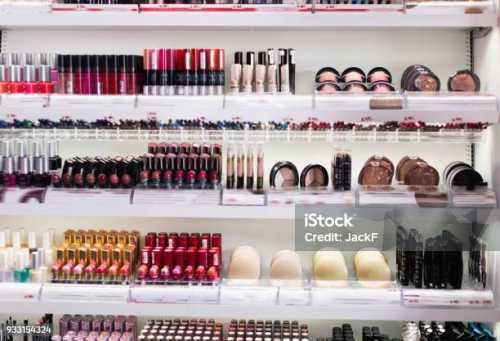
Walk through any international airport terminal and the retail logic reads instantly: the duty-free perfume boutique is queued out the door, the nine-dollar lipstick spinner by the gate is being picked clean, and the mid-priced newsstand between them is empty. American beauty has become that terminal. In the first half of 2026, U.S. prestige beauty sales rose 7 percent to $17.1 billion while mass beauty climbed an identical 7 percent to $39.2 billion, per Circana's half-year read — and over the same window, ownership of the category changed hands at a decade's pace, with Kimberly-Clark's $48.7 billion Kenvue bid, Henkel's pursuit of Olaplex, and Estée Lauder simultaneously buying the remainder of Forest Essentials while shopping Too Faced, Smashbox and Dr. Jart+ to the highest bidder. Growth at both poles of the price ladder, plus a wholesale reconfiguration of who owns the shelf, is not a recovery story. It is a restructuring story wearing a recovery's clothes.
Three Fault Lines the Headline Conceals
The first fault line is the hollowing of the middle price tier. Identical growth rates at prestige and mass is not parity; it is arbitrage. Mass is compounding on dupe culture and trade-down from prestige color, while prestige is compounding on fragrance as the last affordable luxury — and the department-store prestige tier between them, too expensive to be a treat and too ordinary to be a status good, is losing shelf space to both. That is why e.l.f. Beauty closed fiscal 2026 with net sales up 25 percent, "our seventh consecutive year of industry-leading growth," in chairman and chief executive Tarang Amin's words, while mid-market color houses are quietly accepting private-equity term sheets just to fund working capital. Brand equity in cosmetics is no longer a function of heritage; it is a function of velocity.
The second fault line is what the merger wave is actually buying. Read the deal list as one document and the thesis is capability, not trophy. Kimberly-Clark's chairman and chief executive Michael D. Hsu framed the Kenvue combination as "a generational opportunity to create the preeminent personal wellness company," which is to say the deal purchases scale in skin health, women's health and active aging — clinical adjacencies, not lipstick. Henkel's twin moves on Olaplex and Not Your Mother's purchase haircare chemistry and mass distribution; L'Oréal's reported interest in the Armani stake purchases fragrance licensing permanence. Cathy Leonhardt, global head of retail investment banking at Barclays, puts the capital logic plainly: "Fundamentally, this category is still very, very attractive. It grows both in price and volume, unlike anything else in CPG." Capital is also rotating toward the clinical end of beauty — Hugel's record first half in aesthetics contrasts with BeautyHealth's 7.8 percent revenue decline in devices — signaling that the industry's growth frontier is migrating from the vanity to the treatment room, directly onto big pharma's turf in hair loss and injectables.
The third fault line is a rotation inside fragrance that the 7 percent headline buries. Canadian prestige data show fragrance growth moderating to 1 percent while body oils surge 26 percent on scent-layering behavior — a within-category rotation from designer juice to layered, entry-price scent rituals. Niche houses such as Amouage, growing 74 percent in the half, are capturing the connoisseur end of that shift. Rotations of this kind typically appear in North American data two to three quarters after they show in early-adopter markets, which means the U.S. fragrance growth rate printed for holiday 2026 will likely flatter an inventory position that is already turning. Retailers holding deep designer-fragrance stock heading into Q4 are, in effect, holding the last exit of a rotation that began eighteen months ago.
Counterpoint: The Lipstick Effect Also Sends an Invoice
The consensus that beauty is recession-proof deserves the same scrutiny the market applies to any consensus with a decade of good press behind it. A material slice of mass growth is prestige trade-down, which flatters mass volume while quietly eroding the margin mix that funds prestige innovation budgets; the category's celebrated price-and-volume growth is partly the prestige sector subsidizing its own disruption. Coty's strategic review of its mass color business and BeautyHealth's contraction show that participation in this expansion is highly selective, and the autumn's tariff-driven price increases — Kering's finance chief has already flagged "measured" hikes — will test elasticity at the mass tier for the first time since the dupe economy matured. The lipstick effect is real, but it has a receipt, and the receipt is due the quarter consumers stop believing a $9 dupe performs like a $40 original.
2016 Called: The Indigestion Precedent
The industry has run this acquisition cycle before, and the digestion took ten years. In 2016, Estée Lauder paid $1.45 billion for Too Faced and acquired Becca in the same breath, while L'Oréal bought IT Cosmetics for $1.2 billion — the peak of the last indie-beauty bidding war. The divergence in outcomes is the lesson. IT Cosmetics compounded because L'Oréal bought a distribution capability anchored at Ulta and fed it global scale; Becca was shut down entirely in 2021; and Too Faced and Smashbox, a decade after their trophy-price acquisitions, are now the assets Estée Lauder is divesting. Momentum bought at a category peak decays; capability bought at a category peak compounds. Every deal in the current wave — Kenvue, Olaplex, Forest Essentials — should be underwritten against that single test: does it purchase a shelf, a chemistry, or a client list that survives the founder's exit, or does it purchase a growth rate?
Counterpoint: Surgeons, Not Tourists
The bubble analogy, however, misreads the buyer base. In 2016 the marginal bidder was a tourist — conglomerates paying for growth rates with no integration plan. In 2026 the marginal bidder is a surgeon: strategics are divesting before they acquire, private equity's bar is, in Leonhardt's phrasing, "higher," and Rich Gersten, co-founder of True Beauty Ventures, notes that "the overall universe of buyers has broadened" even as traditional consumer funds stepped back. Multiples on color cosmetics assets are a fraction of 2016's, earn-outs have replaced upfront trophies, and the Kenvue transaction is priced on cost synergies a spreadsheet can verify. The write-down risk in this cycle concentrates in any deal that pays niche-fragrance or celebrity-brand multiples for what is, on inspection, a growth rate — not in the cohort as a whole.
Positioning Before the Rotation
- Indie and mid-tier brands: prepare for surgical diligence now. Acquirers are underwriting retail velocity data, clean P&Ls and distribution rights, not follower counts. A brand that can document sell-through at two mass retailers will command a control premium this autumn that a brand with superior social metrics cannot.
- Local retailers and medspas: follow the capital into the treatment room. The Hugel signal says services margin is where product margin used to be; independent retailers should convert shelf space to service revenue — consultations, treatments, subscriptions — before the clinical consolidators price that capacity.
- Consumers: trade down where parity is real — color cosmetics — and spend up where differentiation is chemical or olfactory: actives-led skincare and fragrance. The dupe economy has made the $10 lipstick rational; the $10 retinol is not.
- Investors: watch the body-oil and scent-layering rotation as the leading indicator for U.S. fragrance. Peak designer-fragrance multiples are a sell signal two quarters before the deceleration prints.
- Suppliers and contract manufacturers: lock multi-year agreements before the Kenvue integration resets procurement. A $48.7 billion combination rationalizes supplier lists within eighteen months of close, and the excluded vendors absorb the margin.
February 2027: Reading the Scent Trail
Six months out, expect the Kenvue combination to have closed with at least one non-core beauty asset flagged for review; Henkel's Olaplex pursuit to have resolved either in a signed merger or a broken bid that re-rates the entire haircare M&A complex downward; and Estée Lauder to have completed at least two of its three divestitures, with private equity absorbing the color assets at multiples that will set the floor for the indie market. e.l.f. should hold its 18-to-20 percent guidance and take further share in mass color, while U.S. fragrance growth decelerates toward low single digits as the body-oil rotation completes — exactly the pattern the Canadian data printed two quarters early. The first tariff-led price increases will land in the fourth quarter, and the elasticity question will move from analyst notes to earnings calls. The defining storyline of the period, though, will be clinical: as beauty's capital chases hair loss, injectables and aesthetics, the boundary between the cosmetics industry and biopharma will thin to the point where the next $10 billion beauty acquisition is announced by a company the beauty desk has never covered. The terminal, in short, is reorganizing — and the middle seat stays empty.
Related Articles
The Upstream Acquisition of Human Capital: How Medical Aesthetics and the WNBA Syndicate are Repricing the Beauty Economy
Aug 13, 2026
The Molecular Enclosure of Global Beauty: How Regulatory Shocks are Engineering a Cosmetics Oligopoly
Aug 13, 2026
Comments (0)
No comments yet. Be the first to share your thoughts!
Want to join the discussion?
Please log in to post a comment.
Login NoworCreate an Account