
Big Food's Courtroom Blitz: How Junk-Food Giants Weaponised Lawsuits to Freeze Public-Health Policy

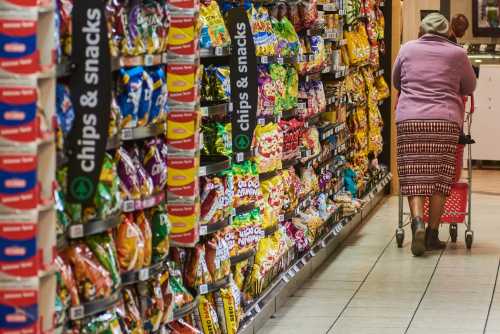
Nobody drops dead clutching the wrapper. That quiet absence — the degenerative creep of heart disease, stroke, diabetes and cancer — is precisely what bought the ultra-processed food industry four decades of plausible deniability. The deniability is now collapsing in plain sight, and the industry's answer is neither reform nor retreat. It is litigation, pursued on an industrial scale.
The tobacco playbook, repackaged
Since 2010, food and drink companies and their lobby groups have filed 239 lawsuits against governments attempting to regulate junk diets, from Mexico's sugar taxes to Britain's promotion curbs. Cumulatively, the cases amount to 595 years of litigation, according to Lighthouse Reports, the investigative group that tracked the pattern with the Guardian and academic partners. More than a third of the identifiable plaintiffs were a handful of global majors, led by Coca-Cola, PepsiCo and Mondelēz. The strategy is cynical, and it works.
"Litigation has been used to oppose or weaken public health measures on obesity and unhealthy diets. These delays cost countries billions in healthcare and legal expenses and create a regulatory chill that deters governments from adopting vital protections."
— Tedros Adhanom Ghebreyesus, director general, World Health Organization
That regulatory chill is the point. Even lost cases consume years of ministerial time, legal budgets and political oxygen — a tax deferred is a dividend preserved.
Why the panic now?
Because the science has settled the way it settled on smoking and on climate. In Britain, the United States and Australia, ultra-processed products now supply roughly half the average diet; more than a billion people worldwide live with obesity and two billion more are overweight. Governments are responding — Mexico with levies on sugary drinks, Brazil with pioneering dietary guidance, the UK with controls on promotions for foods high in fat, salt and sugar. The manoeuvres in the courtroom are the sound of an industry that can no longer hold back the tide of evidence.
Kellogg's and the milk defence
Consider the precedent set in London in 2021, when Kellogg's sued the secretary of state for health over planned curbs on promoting high-fat, high-sugar products, arguing — with a straight face — that its cereals looked healthier once you counted the milk consumers poured on them. Mr Justice Linden was unmoved: mixing a sugary cereal with milk does not "alter the fact that it is high in sugar." Kellogg's lost. Yet in losing, it tied up considerable government time and resource, which is rather the game. Its lawyers even leaned on case law developed by British American Tobacco, a detail that tells you everything about whose playbook is being followed.
The ledger: 239 lawsuits against public-health policies since 2010 · 595 cumulative years of litigation · more than one in three identifiable cases traced to nine parent groups · Big Food lost over 80% of examined cases — and still delayed rules for years.
An existential arithmetic
The problem for the manufacturers is existential. Ultra-processed food is built from cheap, subsidised commodity crops — corn, soya, cane and beet — stripped of fibre and micronutrients, then reassembled with additives into long-shelf-life profit. Washington has only deepened the distortion; Donald Trump's One Big Beautiful Bill Act added further support to American farmers in 2025. My working rule remains that shareholder value runs in inverse proportion to nutritional value, and the arrival of GLP-1 weight-loss drugs has forced a tacit admission: as appetites shrink, shoppers buy fewer ultra-processed products, and retailers are quietly repositioning "nutrient-dense" meals at a premium — as if meals were ever entitled to be anything else.
Small rules that bite
There is a lesson, and it is a hopeful one. Clearer labelling, an end to two-for-one offers, the banishment of confectionery from the checkout: individually these look like small fry. Yet the industry's willingness to fight them through years of costly litigation is the clearest evidence that incremental measures genuinely work. Redirecting farm subsidies from commodity surplus toward fruit and vegetables would be transformative, and negotiating that globally is daunting. But small battles, patiently won, do move the tide. The manufacturers understand that government action is a threat. It needs to be.
Source reporting: The Guardian, 7 August 2026 · "If all else fails, sue" — the Lighthouse Reports investigation
From the investigators who built the dataset:
Exposed: Big Food’s 239 lawsuits against life-saving policies. Our investigation, #BigFood vs The People reveals how food giants use tobacco-style legal tactics to challenge public health regulations around the world.
— Lighthouse Reports (@LHreports) July 22, 2026
Related Articles

The Healthcare Policy Fracture: How September 2026 Exposed the Structural Limits of Market Consolidation
Sep 18, 2026
The Fracturing of Chronic Care Economics: How 2026 Drug Policy is Rewiring the Healthcare System
Sep 17, 2026
Comments (0)
No comments yet. Be the first to share your thoughts!
Want to join the discussion?
Please log in to post a comment.
Login NoworCreate an Account