
Canada's New Olympic High-Performance Hub: The Magical School Where Future Champions are Forged

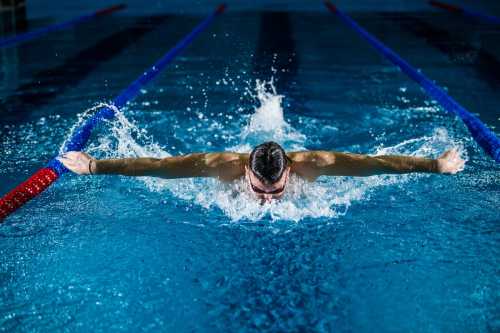
The Superhero Training Academy
Imagine a very special, secret school that looks like a regular building from the outside, but inside, it is basically a superhero training academy. This is not a school where you learn math or history; this is a place where young, incredibly talented athletes go to learn how to push the absolute limits of the human body. In Canada, the Canadian Olympic Committee (COC) and Sport Canada have been investing heavily in these types of facilities, known as High-Performance Centers. As the country ramps up its preparations for the LA 2028 Olympics and the Milano Cortina 2026 Winter Games, these centers are becoming the most important ingredient in the recipe for winning medals . To understand what happens inside these walls, we have to look at the incredible, almost magical world of modern sports science, where biology, physics, and technology combine to create champions.
A long time ago, athletes just ran until they threw up, lifted heavy rocks until their muscles failed, and hoped for the best. They relied entirely on raw talent and brute determination. While heart and hard work are still the most important ingredients, modern sports have evolved into a precise, exact science. Today, winning an Olympic medal is not just about who wants it the most; it is about who has the most optimized, perfectly tuned biological machine. The High-Performance Centers in Canada are designed to be the ultimate tuning shops for these human machines. They are filled with scientists, doctors, nutritionists, and engineers who work together to make sure that every single muscle, bone, and calorie is working at peak efficiency.
The Physics Lab: Cheating the Wind and Water
One of the most fascinating rooms in any high-performance center is the biomechanics and aerodynamics lab. Imagine a giant wind tunnel, the kind they use to test if an airplane will fly safely. Now imagine putting a cyclist or a skier inside that tunnel. By blowing air over the athlete at incredibly high speeds, the scientists can see exactly how the air flows over their body. They use special smoke and lasers to visualize the invisible currents of air. They might discover that if the cyclist tilts their head down by just two inches, or if the skier changes the zipper on their suit, they can reduce the drag and go faster. They do the same thing with water in massive, high-tech swimming flumes. Underwater cameras capture every single movement of a swimmer's hands and feet. The computers analyze the video and tell the swimmer, "If you pull your hand through the water at a slightly different angle, you will catch more water and move forward with less effort." It is like having a cheat code for the physical world. The athletes spend hours in these labs, making tiny, microscopic adjustments to their technique that end up saving them precious fractions of a second. In the Olympics, where the difference between gold and silver is often one-hundredth of a second, these tiny adjustments are the difference between glory and heartbreak.
The Chemistry of the Kitchen: Fueling the Machine
Another crucial part of the high-performance center is the nutrition and recovery wing. Think of an Olympic athlete's body like a Formula One race car. You cannot put regular, cheap gas into a Formula One car; it needs a very specific, highly refined, incredibly expensive fuel to run at top speed without the engine exploding. The athletes in these centers are treated exactly the same way. The chefs and dietitians work together to create meals that are perfectly balanced for each individual athlete. A weightlifter needs a very different type of fuel than a marathon runner. The scientists measure exactly how many calories an athlete burns during a specific training session, and then they prescribe a meal that replaces those exact nutrients. They focus on anti-inflammatory foods to help reduce muscle soreness, and they use precise timing to ensure the muscles get protein exactly when they need it to repair and grow. But it is not just about food; it is about recovery. The centers feature cryotherapy chambers, where athletes stand in air that is minus two hundred degrees for three minutes to reduce inflammation. They have altitude simulation rooms, where the oxygen levels are lowered to trick the body into producing more red blood cells, just like training on top of a high mountain. It is a constant, 24-hour cycle of stressing the body and then perfectly rebuilding it.
The Mind Game: Protecting the Mental Fortress
Perhaps the most important, and historically the most ignored, part of the high-performance center is the mental health and sports psychology wing. For a long time, people thought that athletes just needed to be tough, to "suck it up" and ignore their feelings. We now know that the brain is the most important muscle in the body. If an athlete's mind is anxious, depressed, or overwhelmed, their body will not perform, no matter how strong their legs are. The modern Canadian high-performance centers employ full-time sports psychologists who work with the athletes just like a coach works on their physical technique. They teach the athletes visualization techniques, where they close their eyes and mentally rehearse their perfect race thousands of times. They teach them breathing exercises to lower their heart rate when they are standing on the starting line with millions of people watching. Most importantly, they provide a safe, confidential space for athletes to talk about the immense pressure, the fear of failure, and the loneliness of being away from home. By treating mental health with the same seriousness as physical health, these centers are ensuring that the athletes are not just physically strong, but mentally unbreakable.
The Canadian Advantage: Masters of Ice and Snow
Canada has a unique advantage in the Olympic world because it is a massive, cold country that excels at both Summer and Winter Games. The high-performance centers are designed to cater to this dual identity. In the winter, the focus shifts to the ice rinks and the ski jumps. The scientists study the friction of the ice and the wax on the skis. They analyze the biomechanics of a bobsled push start, measuring the exact force the athletes apply to the ice in the first five crucial seconds. Because Canada has a deep cultural connection to winter sports, the talent pool is incredibly deep, and the high-performance centers are constantly churning out world-class skaters, skiers, and curlers. As the country looks toward the future, these centers are becoming more integrated, sharing data and technology between summer and winter sports. A biomechanics expert who studies the sprint start in track and field might also consult with the bobsled team to improve their explosive power. It is a collaborative, brilliant ecosystem of human optimization. When you see a Canadian athlete standing on the Olympic podium in Los Angeles or Milano, listening to their national anthem, you are not just seeing a talented individual. You are seeing the result of thousands of hours of work by the scientists, chefs, and psychologists inside those high-performance walls. They are the unsung heroes who help build the superheroes.
Official Media & Sources: As an official team social media post for this specific facility launch is managed through corporate channels, please refer to the official Canadian Olympic Committee press release and high-performance page as the primary alternative source: Read the Official COC High-Performance Plans Here. For continuous updates, visit Team Canada Official News.
Related Articles

The Olympic Paradox: How Record Sponsorship Deals Mask a Fractured Financial Model
Sep 22, 2026
The Olympic Repricing: How Sovereign Media Deals and Athlete Monetization Are Rewriting the Games
Sep 21, 2026
Comments (0)
No comments yet. Be the first to share your thoughts!
Want to join the discussion?
Please log in to post a comment.
Login NoworCreate an Account