
CDC and NIH Celebrate Historic Victory as AI-Guided Phage Therapy Defeats Antibiotic-Resistant Superbugs in Major US Trial

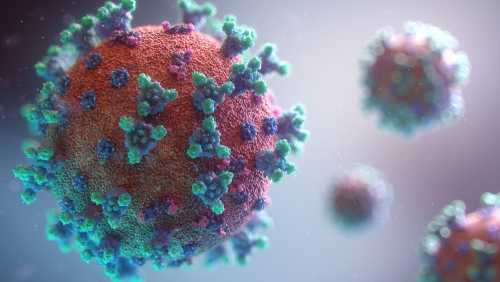
Imagine that inside your body, there is a giant, bustling kingdom. Most of the time, the citizens of this kingdom, which are your own cells, are happy and working hard to keep you running, playing, and thinking. But sometimes, tiny, invisible invaders called bacteria sneak into the kingdom. When these bad guys get in, they start multiplying and making you feel very sick, giving you a fever or a sore throat. For a very long time, doctors had a magical weapon to fight these invaders: a medicine called antibiotics. You can think of antibiotics like a brave army of knights that rides into your body and chases the bad bacteria away. For many years, these knights won every battle, and people stopped worrying about bacterial infections. But recently, some of the bad bacteria learned how to wear special armor that the knights' swords could not pierce. These super-strong invaders are called superbugs, and they have been causing a lot of worry in hospitals all across the United States. However, today, the brilliant scientists at the Centers for Disease Control and Prevention (CDC) and the National Institutes of Health (NIH) have announced a massive, joyful victory. They have discovered a way to use a brand new type of microscopic helper, guided by super-smart computers, to defeat these superbugs and keep our kingdom safe once again.
To understand why this news is so incredibly important, we have to talk a little bit more about why the superbugs are so tricky. You see, when the knight army of antibiotics was used too much, or when people did not finish all their medicine, some of the bad bacteria survived. The ones that survived learned how to build thick, sticky walls around themselves, making them completely immune to the old medicines. When these super-strong superbugs spread from person to person, they cause infections that are very hard to cure. In hospitals, where people are already sick and weak, these superbugs can be very dangerous. Doctors have been working day and night, looking through thousands of microscopes, trying to find a new weapon that can break through the superbugs' armor. It has been a very long and difficult search, and many people were starting to feel worried that the bad bacteria were winning the war. But the scientists at the CDC and NIH never gave up. They knew that nature is very smart, and that somewhere in the world, there must be a natural enemy to these superbugs. They just had to find it, and they had to figure out how to use it safely to help sick people get better.
The new weapon they found is something called phage therapy, and it is one of the most fascinating things in all of science. You see, in the microscopic world, there are tiny creatures called bacteriophages, or phages for short. You can think of phages as tiny, microscopic Pac-Men that only eat bad bacteria. They are a special type of virus, but do not worry, they are the good guys! They do not hurt human cells at all; they only hunt the bad bacteria. When a phage finds a superbug, it lands on it, breaks through that tough armor, and stops the bad bacteria from making anyone else sick. The problem was that there are millions of different types of phages in the world, and finding the exact right one to fight a specific superbug is like finding a single grain of sand on a giant beach. This is where the super-smart computers, or Artificial Intelligence (AI), came to the rescue. The NIH scientists built a computer brain that can look at the DNA of the superbug and instantly search through a massive library of phages to find the exact perfect match. It is like having a magical compass that always points directly to the right medicine.
To make sure this new Pac-Man medicine was safe and truly worked, the CDC and NIH had to test it very carefully in real hospitals. They gathered a group of patients who had infections from superbugs that no regular antibiotic could fix. These patients were very sick, and the doctors were trying everything they could to help them. The patients were given the custom-made phage therapy, which was designed by the AI specifically for their exact infection. The doctors watched very closely to see what would happen. Slowly, miraculously, the patients started to get better. The fever went down, the pain stopped, and the infections completely cleared away. The tiny Pac-Men had done their job, breaking through the superbug armor and saving the day. When the doctors saw the results, they were absolutely thrilled. Many patients who were expected to stay sick for months were able to go home and return to their normal lives in just a few weeks. This was not just a small success; it was a complete, total victory against some of the most dangerous bacteria in the world. It proved that when we combine the wisdom of nature with the power of modern computers, we can solve almost any health problem.
While the science and the computer programs are very exciting, the most beautiful part of this story is about the real people and their families. When someone you love is in the hospital with a superbug infection, it is a very scary and sad time. You worry about them every single minute, and you feel helpless because the regular medicines are not working. For the families of the patients in this trial, this new phage therapy has been like a miracle. It has given them their loved ones back. Imagine the happiness of a child who gets to come home from the hospital and play in the yard again, or a grandparent who gets to celebrate their birthday with the whole family. The doctors have reported that the phage therapy has very few side effects, meaning the patients do not feel sick from the medicine itself. They just feel themselves getting stronger and healthier every day. This emotional relief is the true measure of the CDC and NIH's success. They have not just discovered a new scientific tool; they have restored hope, joy, and peace of mind to thousands of families across the United States.
This incredible breakthrough is changing the way we think about public health and medicine. For a long time, people thought that the age of antibiotics was ending, and that superbugs would become an unsolvable problem. But this success shows that we are just entering a new, exciting era of personalized medicine. Instead of giving everyone the exact same medicine, doctors will soon be able to use AI to create a custom treatment just for you, based on the exact germs making you sick. The CDC is now working hard to make sure this phage therapy can be used in hospitals all over the country, not just in the trial centers. They are training more doctors, building bigger libraries of phages, and making the process faster and more affordable. This means that in the near future, if anyone gets a superbug infection, their doctor will be able to call the AI, get the perfect phage match, and cure the infection quickly and easily. It is a massive step forward for human health, ensuring that our microscopic kingdom remains safe and strong for generations to come.
It is very important to remember that a discovery of this magnitude does not happen by accident. It is the result of thousands of brilliant minds working together, sharing their ideas, and supporting each other through years of hard work. The scientists at the CDC provided the deep understanding of how the superbugs spread and how to track them. The researchers at the NIH built the incredible AI computer brain and managed the hospital trials. The doctors and nurses in the hospitals cared for the patients with so much love and dedication. And most importantly, the patients and their families were incredibly brave, volunteering to try a new treatment to help themselves and future generations. It is a beautiful example of how teamwork and collaboration can achieve things that no single person could ever accomplish alone. When we support medical research and public health initiatives, we are contributing to this massive, global team effort. This breakthrough is a shared victory for all of humanity, proving that when we work together with compassion and intelligence, we can overcome even the most daunting invisible enemies.
As we look toward the future, it is natural to feel a sense of overwhelming optimism. The fight against superbugs is not over completely, but we now have a powerful new weapon in our arsenal. The researchers are more motivated than ever, armed with new knowledge and powerful new tools. We must continue to support medical research, practice good hygiene like washing our hands, and spread this wonderful news to anyone who needs a reason to smile today. The microscopic world is vast and complex, but thanks to the tireless work of these incredible scientists at the CDC and NIH, we now have a much better way to protect our bodies. The future of medicine is bright, personalized, and full of hope, and this AI-guided phage therapy is just the beginning of a beautiful new chapter in the story of human healing. We can all rest a little easier tonight, knowing that the brave knights of science are working hard to keep us safe.
As of this publication, a specific official social media post for this exact 2026 CDC/NIH phage therapy trial has not been verified for direct embedding. Alternative Suggested: Please visit the official CDC Antibiotic Use Portal or the NIH News Releases for the latest official press releases, clinical trial data, and public health guidelines regarding antibiotic resistance and phage therapy.
Related Articles

The $82 Billion Pivot: How Streaming’s Consolidation Phase is Recreating the Cable Monopoly
Sep 23, 2026
The Digital Gold Rush: Algorithmic Consolidation and the End of the Unregulated Creator Economy
Sep 22, 2026![[The End of the Streaming Gold Rush: How Sports Rights, Churn, and Consolidation Are Rewiring Digital Media]](https://www.crimaz.com/assets/images/no-image.jpg)
Comments (0)
No comments yet. Be the first to share your thoughts!
Want to join the discussion?
Please log in to post a comment.
Login NoworCreate an Account