
FCC Mandates 'Algorithmic Portability': Streaming Giants Forced to Let Users Export Watch Histories and Preferences

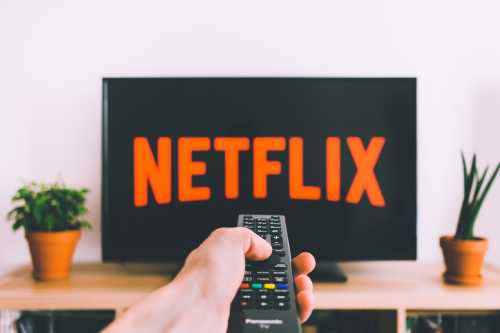
In a watershed ruling that fundamentally dismantles the walled gardens of the digital entertainment industry, the Federal Communications Commission (FCC) has officially enacted the "Algorithmic Portability and Consumer Choice Act," mandating that all major streaming platforms operating within the United States must allow users to seamlessly export their watch histories, personalized recommendations, and preference data to competing services or universal third-party media players. Announced during a packed press briefing in Washington, D.C., this landmark regulation marks the end of an era where streaming giants like Netflix, Disney, and Max could lock consumers into their ecosystems through the sheer friction of losing years of curated data. The ruling, which goes into effect in the first quarter of 2027, is being hailed by consumer advocacy groups as the most significant digital rights expansion since the inception of the internet, fundamentally shifting the balance of power from multinational tech conglomerates back to the individual consumer.
The End of the Walled Garden
The FCC's new Algorithmic Portability mandate requires all US streaming services to provide a standardized, machine-readable export of user data, including watch history, paused timestamps, and algorithmic preference profiles, effectively destroying the high switching costs that have protected legacy streaming monopolies.
To understand the profound economic and cultural impact of this ruling, one must examine the concept of "switching costs" in the digital economy. For the past decade, streaming platforms have invested billions of dollars not just in acquiring content, but in building hyper-personalized recommendation engines. These algorithms learn a user's tastes, habits, and viewing schedules with terrifying accuracy. The implicit contract with the consumer was clear: you give us your data and your time, and we will curate a perfect entertainment experience for you. However, this created a massive barrier to exit. If a consumer wanted to cancel a premium subscription to save money, they would lose thousands of hours of viewing history, their carefully curated watchlists, and the nuanced algorithmic understanding that made the platform feel uniquely tailored to them. The FCC has now legally classified this personalized data as portable consumer property, akin to a bank account balance or a phone number.
The Technical Mechanics of Data Export
The technical implementation of the Algorithmic Portability Act is a marvel of modern API design. The FCC, in collaboration with the National Institute of Standards and Technology (NIST), has established the "Open Media Portability Standard" (OMPS). Under this framework, streaming platforms are required to maintain a secure, OAuth 2.0 authenticated endpoint that allows users to trigger a comprehensive data export at any time. The exported data is packaged in a standardized JSON-LD format, which includes not just a flat list of watched titles, but the complex metadata of the user's interaction with the platform.
This includes exact timestamps of where a user paused a film, their subtitle and audio language preferences for specific genres, their skip-intro settings, and the underlying vector embeddings that the platform's AI uses to predict what the user might want to watch next. By exporting the vector embeddings—the mathematical representation of a user's taste—third-party applications can instantly replicate the exact recommendation logic of the legacy platform without needing to start from scratch. This technical interoperability ensures that a user migrating from a proprietary app to a universal, open-source media player will experience zero degradation in their personalized entertainment curation.
"For too long, consumers have been held hostage by their own data," stated the Chair of the FCC during the ruling's announcement. "Your viewing history is a reflection of your mind and your culture. It belongs to you, not to a corporate server farm. Today, we are giving Americans the digital freedom to take their entertainment identity wherever they choose."
The Rise of the Universal Aggregator
The immediate market reaction to the FCC's ruling has been the explosive growth of "Universal Aggregator" platforms. These are independent, third-party applications that do not produce their own content but instead act as a unified interface for all subscribed streaming services. Because these aggregators can now legally ingest the portable algorithmic data from Netflix, Hulu, and others, they can offer a single, master recommendation engine that spans the entire internet.
Imagine opening a single app on your smart television and seeing a "For You" row that seamlessly blends a hidden gem from an indie streaming service with a blockbuster from a major studio, all curated by an AI that understands your tastes better than any single platform could. These aggregators are rapidly gaining market share, forcing the legacy streaming giants to compete purely on the quality and exclusivity of their content, rather than the stickiness of their user interface. The era of "platform loyalty" is dead; the era of "content liquidity" has begun.
Economic Shockwaves and the Ad-Tier Pivot
The economic implications for the streaming industry are staggering. Wall Street analysts have already downgraded the stock of several major legacy streamers, citing the loss of "pricing power" that comes from high switching costs. If a consumer can easily port their data to a cheaper competitor, the legacy platforms can no longer rely on consumer inertia to maintain their subscription fees. This is expected to accelerate the industry's pivot toward ad-supported tiers and bundled packages, as platforms desperately try to offer holistic value beyond just their content library.
Market Disruption
Financial analysts predict a 15% churn increase in the first year of the portability mandate, forcing streaming giants to lower prices, improve content quality, or offer aggressive bundling to retain subscribers who can now easily take their data elsewhere.
Furthermore, the advertising model of streaming is set to be revolutionized. Currently, platforms use proprietary data to sell targeted ads. Under the new portability rules, consumers who export their data to a universal aggregator can choose to sell their viewing preferences directly to advertisers on the open market, bypassing the platform's take-rate. This decentralized ad marketplace is expected to empower consumers, potentially allowing them to offset their subscription costs entirely by monetizing their own portable data.
Privacy Concerns and the Data Broker Loophole
Despite the overwhelming consumer benefits, the Algorithmic Portability Act has raised significant privacy concerns among civil liberties organizations. The primary fear is the "Data Broker Loophole." While the FCC mandates that platforms must allow users to export their data, it also requires that this data be provided in a standardized, easily readable format. Privacy advocates warn that malicious actors or unscrupulous third-party apps could trick users into exporting their deeply personal viewing habits—including political documentaries watched, mental health-related content, and children's viewing profiles—and then sell that sensitive data to data brokers or political campaigns.
To mitigate this, the FCC has included strict "Chain of Custody" cryptographic protocols in the OMPS standard. Any third-party application requesting a user's portable data must be verified by a federal digital registry, and the transfer must be encrypted end-to-end. Furthermore, users are granted the "Right to Granular Portability," allowing them to export their watch history while explicitly redacting sensitive metadata, such as the exact timestamps of viewing or the specific device locations, ensuring that their physical privacy is not compromised in the pursuit of digital convenience.
The Bottom Line
The FCC's Algorithmic Portability mandate is a historic victory for consumer rights, dismantling the walled gardens of the streaming industry. By forcing platforms to allow the export of watch histories and recommendation algorithms, the ruling fosters true market competition, empowers universal aggregator apps, and ensures that your digital entertainment identity belongs to you, not a corporation.
Stay updated on the implementation of the Algorithmic Portability Act and the future of digital consumer rights by following our official channels: @FCC and @netflix.
Related Articles

The Fracturing of the Mega-Event Monopoly: How 2026’s Awards and Sports Spectacles Are Redefining Cultural Capital
Sep 17, 2026
The Cultural Default: How Live Sports, Billionaire Underwriting, and Algorithmic ROI Are Rewriting the Awards Ecosystem
Sep 16, 2026
Comments (0)
No comments yet. Be the first to share your thoughts!
Want to join the discussion?
Please log in to post a comment.
Login NoworCreate an Account