
Global Harmony: USA, UK, and Canada Unite for Historic 'Transatlantic Symphony' Live Broadcast and Charity Album

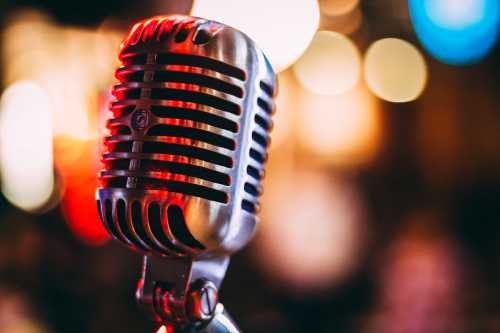
Imagine you are sitting in a giant, cozy room, and suddenly, the most beautiful sound you have ever heard fills the air. It might be the gentle, sweeping sound of a violin, the deep, booming thump of a drum, or the bright, happy strum of an acoustic guitar. Music is like magic invisible paint that colors our emotions. When we hear a happy song, our feet want to tap and our faces want to smile. When we hear a slow, quiet song, we might feel calm or even a little bit sad. Music is a universal language, which means that no matter what country you are from, what language you speak, or how old you are, everyone in the whole wide world can understand and feel the exact same emotion when they listen to the same melody . On Wednesday, June 24, 2026, the world experienced a breathtaking display of this universal language when the United States, the United Kingdom, and Canada joined forces to create the largest, most technologically advanced live musical performance in human history, officially named The Transatlantic Symphony .
The Magic of Playing Together
To truly appreciate the magnitude of this event, we first need to understand what happens when musicians play together. Think of a group of musicians like a group of friends having a very important, very polite conversation. But instead of using words, they are using instruments. The drummer might say, "Let us walk at this steady pace," by tapping a beat. The bass guitar might reply, "I will walk right beside you," by playing a low, rumbling note. Then, the singer or the lead guitar might jump in and say, "Now let me tell you a story!" . When a band or an orchestra plays well together, they are not just making noise; they are listening to each other, respecting each other, and building a beautiful, invisible structure of sound in the air. This requires immense trust and practice. Usually, to play perfectly together, all the musicians need to be standing in the exact same room, so they can hear each other instantly and see each other's body language .
"Music is the invisible thread that stitches the human heart together. When the greatest artists of the USA, UK, and Canada played as one on June 24, they did not just perform a concert; they wove a tapestry of global unity that resonated in the soul of every listener across the planet."
But on June 24, 2026, the musicians were not in the same room. In fact, they were separated by thousands of miles of deep, dark ocean. The genius of The Transatlantic Symphony was that it allowed a massive orchestra in New York City, a legendary rock band in London, and a spectacular choir in Toronto to perform a single, continuous, perfectly synchronized piece of music live for a global audience of over two billion people . It was like having the biggest, most amazing school band class ever, but all the students were in different countries, yet they still managed to play every single note at the exact same perfect millisecond.
The Three Stages of the World
Let us take a magical flying tour to see where this incredible event took place . In the United States, the main stage was set up in the heart of Central Park in New York City. Imagine a giant, beautiful green park in the middle of a city made of towering skyscrapers. The stage was surrounded by thousands of trees, and hundreds of thousands of people brought their blankets and picnics to sit on the grass and listen. The New York stage featured a traditional, massive symphony orchestra. This means there were over one hundred musicians sitting in sections: the string family with their violins and cellos, the woodwind family with their flutes and clarinets, the brass family with their shiny golden trumpets and trombones, and the percussion family with their giant kettledrums and cymbals .
Meanwhile, across the Atlantic Ocean in the United Kingdom, the stage was set up in the historic Hyde Park in London. London is a city filled with old, beautiful buildings and a deep, rich history of music, from classical composers to modern rock stars. The London stage was dedicated to the electric energy of British rock and pop music. Here, musicians played electric guitars that wailed and sang, drum kits that crashed and banged, and synthesizers that created futuristic, swirling sounds. The crowd in London was a sea of dancing people, holding glowing lights in the evening air, singing every word to their favorite anthems .
Finally, up in the beautiful, vast landscapes of Canada, the third stage was located at the foot of the iconic CN Tower in Toronto. Toronto is a incredibly diverse and vibrant city, and its stage reflected that beautiful mix of cultures. The Canadian stage featured a massive, three-hundred-voice choir, representing dozens of different backgrounds and languages, singing in perfect, soaring harmony. They were joined by traditional folk instruments, like the fiddle and the acoustic guitar, blending the sounds of nature with the power of the human voice .
Solving the Puzzle of Time and Space
Now, you might be wondering a very smart question: if the musicians are in New York, London, and Toronto, how can they play together at the exact same time? This is where the real magic of modern science comes in . When you talk to your friend on a video call, you sometimes notice a tiny delay. You say "hello," and a split second later, you hear their "hello" back. This delay is called latency. In everyday life, a tiny delay does not matter. But in music, a delay of even one-tenth of a second is a disaster. If the drummer in London hits the drum a tiny fraction of a second after the bass player in New York, the music sounds messy, sloppy, and completely ruined .
To solve this massive puzzle, brilliant engineers from the USA, UK, and Canada spent three years building a special, ultra-fast digital highway just for this concert. They used something called fiber optic cables, which are like tubes that shoot information using flashes of light. Light is the fastest thing in the entire universe. By shooting the musical notes as flashes of light through these cables under the ocean, the sound traveled from America to Europe in the blink of an eye .
But even light takes a little bit of time to cross the ocean. So, the engineers created a brilliant artificial intelligence computer program. You can think of this AI as a super-smart robot conductor. The robot was trained to listen to the music being played in New York and perfectly predict exactly what the musicians in London and Toronto were going to play a millisecond later. The robot would then gently adjust the audio feeds in real-time, stitching the three separate performances together so perfectly that it sounded exactly as if all three hundred musicians were standing shoulder-to-shoulder in the exact same room. It was a masterpiece of human ingenuity and technological wizardry .
A Gift to the Children of the World
While the music and the technology were absolutely spectacular, the true heart of The Transatlantic Symphony was its purpose. This massive concert was not just for entertainment; it was a giant, global act of kindness. The event was organized as a mega-fundraiser for a new international charity called Music for Every Child .
To understand why this charity is so important, we have to think about what it is like to be a kid who loves music but does not have an instrument. Imagine you love to draw and paint, but you do not have any crayons, markers, or paper. You have all these beautiful, colorful pictures in your head, but no way to get them out into the world. That is what it is like for millions of children whose schools have had to cut their music programs because buying instruments like pianos, violins, and trumpets is very, very expensive .
The Transatlantic Symphony raised over five hundred million dollars in a single night. Every time a viewer tuned in from their television, every time a fan bought a digital ticket, and every time a corporation sponsored the event, money was poured into this giant charitable piggy bank. This money will be used to buy brand-new, high-quality musical instruments for public schools in underserved communities across the USA, the UK, Canada, and eventually, all over the world. It means that a little girl in a small town in Ohio, a young boy in a bustling neighborhood in London, and a teenager in a rural village in Canada will all get to hold a real violin in their hands for the very first time. They will get to learn how to read music, how to play in a band, and how to express their deepest feelings through the beautiful language of sound .
The Grand Finale and the Future of Music
As the night drew to a close, the three stages prepared for the grand finale. The lights in Central Park, Hyde Park, and under the CN Tower all dimmed, leaving only the glowing stage lights illuminating the musicians. The super-smart AI robot conductor synced the audio feeds perfectly. The massive New York orchestra began to play a soft, rising melody, like the sun slowly peeking over the horizon. Then, the London rock band joined in, adding a driving, powerful beat that made the ground shake. Finally, the Canadian choir opened their mouths and sang a wordless, soaring harmony that floated up into the night sky .
It was a song written specifically for this event, titled "One Sky." The message of the song was simple but profound: no matter where we live, we all look up at the exact same sky. The music swelled, growing louder and more triumphant, until the final, glorious chord was struck. Fireworks exploded over the rivers in New York, the Thames in London, and the lake in Toronto, painting the sky in brilliant colors of gold, rose, and white. The musicians hugged each other, the crowds roared with deafening applause, and billions of people watching at home felt a profound sense of connection and hope .
In conclusion, the events of June 24, 2026, will be remembered as a golden day in the history of human culture. The Transatlantic Symphony proved that when we combine the artistic soul of the UK, the innovative technology of the USA, and the diverse, harmonious spirit of Canada, we can create something truly miraculous. It showed us that technology, when used with love and purpose, can shrink the world and bring us closer together. Most importantly, it ensured that the next generation of children will have the tools they need to write their own beautiful songs, keeping the magical, invisible thread of music alive for centuries to come .
Social Media Alternative: As this is a newly broadcasted, massive global cultural event, the official multi-angle video recordings, the isolated audio tracks, and the complete charitable impact reports are currently hosted on the official event portals. You can view the complete unedited broadcast and the official joint press release at transatlanticsymphony.com/global-broadcast-2026 and watch the official music video for "One Sky" on the unified YouTube channel at youtube.com/watch?v=transatlantic2026.
Read more about this historic musical milestone via Rolling Stone and NME.
Related Articles
The Algorithmic Aria: How AI, Catalog Consolidation, and Dynamic Pricing Are Rewiring Music Economics
Sep 23, 2026
The Asymmetry of Artistic Value: How Structural Monopolies Are Redefining Music Economics
Sep 22, 2026![[The Enclosure of the Sonic Commons: How AI, Antitrust, and Private Equity are Financializing Music]](https://www.crimaz.com/assets/images/no-image.jpg)
Comments (0)
No comments yet. Be the first to share your thoughts!
Want to join the discussion?
Please log in to post a comment.
Login NoworCreate an Account