
Hollywood's Quiet Truce: The Four-Year Deals That Bought Peace by Pricing the Future

A household that refinances during a rate dip is rarely celebrated; it is simply relieved. The deal is signed quietly because the alternative was foreclosure. That is the correct lens for Hollywood's 2026 labour cycle, the sleepiest negotiation season since the streaming boom began.
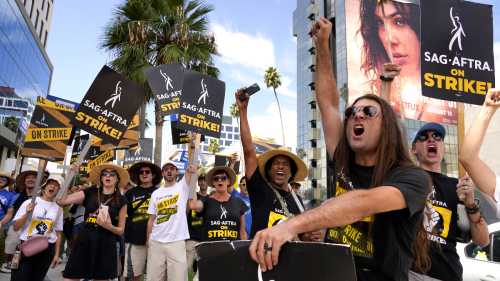
All three major guilds, the WGA, SAG-AFTRA and the DGA, have sealed unusually long four-year contracts with the AMPTP: SAG-AFTRA's deal, ratified by more than 91 percent of members in June, compounds 3 percent annual wage increases with new digital-replica restrictions whose enforcement phase activated July 1, while the WGA extracted a $321 million health-plan infusion approved by over 90 percent of voting writers.
What the Handshakes Actually Purchase
First, production restarts. Entertainment employment in Los Angeles fell 25 percent between 2022 and 2025 per the Otis College of Art and Design report, with The Wall Street Journal measuring a 30 percent decline since late 2022. Labour peace is the prerequisite for the 2027 slate rebuild, and below-the-line crews are the first asset class to reprice.
Second, AI governance becomes contract law. SAG-AFTRA's consent-based digital-replica regime, building on the 2023 framework and now enforceable, is the most significant private-ordering experiment in generative AI anywhere in the world. Every industry that licences human likeness, from advertising to video games, will borrow its architecture.
Third, power asymmetry is now structural. Four-year terms give studios labour certainty into 2030, a strategic asset for consolidated buyers navigating the Paramount-Warner Bros antitrust saga, in exchange for front-loaded benefits. As SAG-AFTRA co-chair Danielle Sanchez-Witzel told The Hollywood Reporter, "the big difference in 2026 is that they came ready to talk about really what we needed and what they needed." Union president Sean Astin credited AMPTP's Greg Hessinger with helping "reset the relationship between our organizations."
Against the Capitulation Narrative
Critics calling this surrender should read the receipts: a $321 million health-plan rescue and compounding wage floors are concessions bought with strike leverage the unions no longer possessed, not gifts. And the WGA's $122 million cumulative health-plan losses in 2023-24 explain the diplomacy better than ideology does; you cannot negotiate aggressively while your members' insurance is technically insolvent.
The 2007 Precedent, Rehearsed in a New Key
The Writers Guild's 2007-08 strike ended without adequately pricing the streaming economy, and the guild spent the next fifteen years chasing residuals it had conceded in a quiet moment of technological transition. The risk now is the mirror image: a peaceful cycle that underprices generative AI's deflationary effect on mid-tier creative work. Notably, WGA West president Michele Mulroney has already signalled a return to three-year terms next cycle, suggesting the guilds understand that four years of peace is a hedged position, not a permanent one.
Practical Moves Before the Rebound
- Independent producers should lock crew and stage space now, before the 2027 production rebound reprices capacity.
- Performers should document every likeness scan and audit digital-replica consent language; the July 1 enforcement regime makes paperwork worth money.
- Content buyers and advertisers should anticipate a glut of delayed inventory in early 2027 and negotiate accordingly.
February 2027: Peace Tests
Expect production volumes to climb meaningfully by early 2027, and expect the first formal AI-replica arbitration to surface in the same window, the true stress test of the 2026 architecture. The truce held because both sides were tired and solvent anxiety is a powerful mediator. Whether it holds when the business recovers is the only question that matters.
Primary sources:SAG-AFTRA ratification statement · The Hollywood Reporter labour analysis
Related Articles

Premier League's Nine-Figure Summer: Transfer Inflation Is Now a Regulated Asset Market
Aug 14, 2026
Fernando Mendoza's Preseason Debut Is a Capital Allocation Problem for the Raiders
Aug 14, 2026
Comments (0)
No comments yet. Be the first to share your thoughts!
Want to join the discussion?
Please log in to post a comment.
Login NoworCreate an Account