
New 2026 Dietary Guidelines Spark Controversy: Experts Warn Protein Obsession May Crowd Out Fiber and Plant Foods

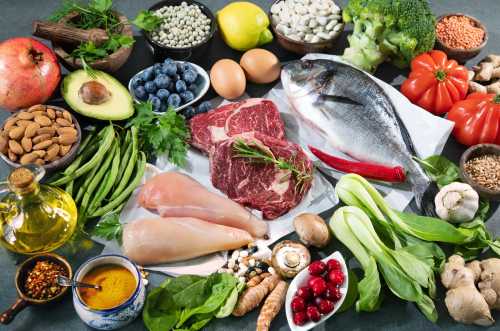
BALTIMORE — In a disquieting turn of events for the nutrition community, the newly released Dietary Guidelines for Americans 2025-2030 have ignited a contentious debate over the colossal increase in recommended protein intake and its potential deleterious effects on public health.
The guidelines, which were officially released in January 2026 and continue to reverberate through the medical and nutrition communities, recommend that adults consume between 1.2 to 1.6 grams of protein per kilogram of body weight daily—a stark increase from the previous recommendation of 0.8 grams per kilogram nutritionsource.hsph.harvard.edu . This represents a 50-100% increase in the indispensable macronutrient that has left many registered dietitians and public health experts befuddled.
Expert Analysis:
"The obsession with protein is actually driven by the perception that more protein equals better health. But the real issue isn't that Americans need dramatically more protein—it's that we need to diversify our protein sources and eat more fiber-rich foods."
— Daphene Altema-Johnson, MPH, MBA, RDN, LD, Johns Hopkins Center for a Livable Future publichealth.jhu.edu
The Nutritional Paradigm Shift
The Trump administration's "historic reset" of federal nutrition policy represents a paradigmatic departure from decades of dietary guidance www.hhs.gov . The new framework prioritizes high-quality protein foods at every meal, including red meat, poultry, seafood, eggs, and full-fat dairy products, while simultaneously cautioning against highly processed foods and refined carbohydrates www.hhs.gov .
However, this partisan approach has drawn scathing criticism from leading nutrition scientists who argue that the guidelines trivialize the importance of plant-based proteins and fiber-rich foods publichealth.jhu.edu .
The Exercise Prerequisite
Perhaps most troubling to exercise physiologists is the guidelines' omission of a critical caveat: increasing protein intake without concomitant physical activity is unlikely to improve muscle health physoc.onlinelibrary.wiley.com .
The Muscle Health Conundrum
Research published in The Journal of Physiology in March 2026 unequivocally states that "adequate protein intake is necessary but not sufficient for muscle health" physoc.onlinelibrary.wiley.com . The study emphasizes that in the absence of mechanical loading through resistance exercise, higher protein intake alone provides negligible benefits for muscle maintenance or growth physoc.onlinelibrary.wiley.com .
"Exercise remains the primary stimulus required to translate protein intake into functional muscle outcomes," the researchers concluded, a pivotal finding that many argue should have been prominently featured in the federal guidelines physoc.onlinelibrary.wiley.com .
New research shows that increasing protein intake without increased physical activity is unlikely to improve muscle health. Exercise is still the primary stimulus for muscle growth. View official post
— The Journal of Physiology (@JPhysiol) July 12, 2026
The Plant Protein Discourse
The guidelines' predilection for animal-based proteins has also raised concerns among environmental scientists and public health advocates who argue that the myopic emphasis on red meat and dairy marginalizes the multifarious health benefits of legumes, beans, lentils, and other plant-based protein sources publichealth.jhu.edu .
"Protein isn't just protein," explains Altema-Johnson. "It comes in different forms, with different nutrient profiles and long-term health implications" publichealth.jhu.edu . The perpetual conversation about protein quantity has eclipsed the more paramount message about protein quality and diversity.
Published: July 12, 2026
Related Articles

The Metabolic Enclosure: How Oral Agonists, Regulatory Crackdowns, and Diagnostic Mandates Are Restructuring Fitness Economics
Oct 12, 2026
The Metabolic Toll Booth: How Triple-Agonists, UPF Taxation, and Precision Monitoring are Restructuring the Wellness Economy
Oct 11, 2026
Comments (0)
No comments yet. Be the first to share your thoughts!
Want to join the discussion?
Please log in to post a comment.
Login NoworCreate an Account