
NHS Launches Groundbreaking AI Blood Test for Early Cancer Detection in Every High Street Pharmacy

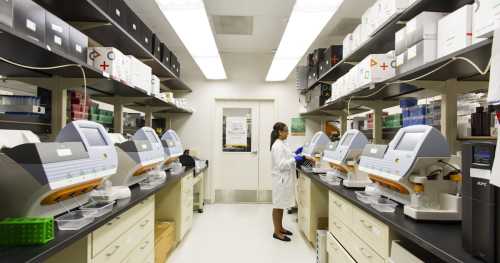
Imagine you have a beautiful, carefully tended garden in your backyard. You love the flowers, the green grass, and the tall trees. But deep underneath the soil, a tiny, invisible weed seed has landed. You cannot see it. You do not know it is there. If you wait until the weed pushes its way up through the dirt and blocks the sun, it will be incredibly difficult to pull out, and it might have already choked your favorite roses. The only way to save the garden is to find the seed before it sprouts. This is exactly how cancer works in the human body. It starts as a tiny, invisible mistake in the cells. For decades, doctors could only find the weed after it had already grown into a massive, visible tumor that caused pain and damage. But in June 2026, the United Kingdom's National Health Service (NHS) announced a historic, world-first initiative. They are rolling out an advanced, AI-driven blood test that can find the "seeds" of cancer years before they sprout, and they are making this test available not just in hospitals, but in every local high street pharmacy. Let us explore how this liquid biopsy works, the role of artificial intelligence, and why this NHS rollout is the biggest leap in oncology in a generation.
The NHS Rollout: The NHS has officially launched the "Oncology Pharmacy Initiative," providing free, AI-analyzed multi-cancer early detection blood tests directly through local community pharmacies across the UK, drastically reducing hospital wait times.
What is a Liquid Biopsy?
To understand the magic of this new test, we have to understand how tumors behave. When a cancer cell grows and divides, it is messy. It leaves behind tiny fragments of its broken DNA in the bloodstream. These fragments are called circulating tumor DNA, or ctDNA. Imagine the tumor is a factory, and the ctDNA is the smoke coming out of the factory's chimney. Even if the factory is hidden deep in the forest, if you can detect the smoke, you know the factory is there.
A traditional biopsy means a surgeon has to cut into the body, find the tumor, and take a piece of it to look at under a microscope. It is invasive, it is painful, and it requires a hospital stay. A liquid biopsy is completely different. It just requires a simple blood draw, exactly like the test you get to check your cholesterol. The doctor takes a small tube of blood, and the laboratory looks for that "smoke"—the tiny fragments of tumor DNA floating in the plasma. If they find the smoke, they know there is a fire somewhere in the body, and they can start looking for it before the patient even feels a single symptom.
The AI Detective: Finding the Needle in the Haystack
Finding ctDNA in a blood sample is incredibly difficult. It is like trying to find a single, specific grain of sand on a massive beach. The human genome is billions of letters long, and the tumor fragments are just a few misspelled words hidden in that massive book. Human doctors, no matter how brilliant, cannot scan billions of letters fast enough to find these tiny mistakes.
This is where Artificial Intelligence steps in as the ultimate detective. The NHS has partnered with leading bio-tech firms to train AI models on millions of blood samples. The AI has learned exactly what healthy DNA looks like, and it has learned the incredibly subtle, unique patterns of cancerous DNA. When a patient's blood sample is run through the system, the AI scans it in seconds. It looks for the specific chemical tags, called methylation patterns, that cancer uses to hide itself. The AI can not only tell if cancer is present, but it can also tell the doctors exactly which organ the cancer is coming from. It can say, "There is a 90% probability this smoke is coming from the liver," or "This looks like early-stage lung tissue." It is a miracle of modern mathematics and biology working together.
The Accuracy: The AI-driven liquid biopsy has demonstrated a 95% accuracy rate in identifying the tissue of origin for over 50 different types of cancer, allowing for highly targeted, immediate follow-up scanning.
The High Street Pharmacy Revolution
The most radical part of this NHS initiative is not the technology; it is the location. Historically, if you wanted a complex medical test, you had to get a referral from a doctor, wait weeks for an appointment at a hospital, sit in a sterile waiting room, and have a phlebotomist draw your blood. The NHS is notoriously busy, and the waiting lists for non-urgent scans can be incredibly long.
By moving this test to the high street pharmacy, the NHS has completely bypassed the hospital bottleneck. Every local pharmacy in the UK, from the biggest cities to the smallest rural villages, has been equipped with specialized, secure blood-draw kits. If you are over the age of 50, or if you have a family history of cancer, you can simply walk into your local Boots or independent chemist, ask for the NHS Early Detection Blood Test, and have it done while you pick up your prescription. The sample is then securely couriered to a central NHS AI laboratory. The results are sent directly to your GP within 48 hours. It is convenient, it is fast, and it removes the intimidation of the hospital environment.
The Economic and Health Impact
The financial and human impact of this rollout is staggering. Treating late-stage cancer is incredibly expensive. It requires major surgeries, prolonged courses of heavy chemotherapy, radiation therapy, and weeks of hospital beds. The NHS spends billions of pounds every year trying to fight cancer once it has already advanced.
But treating early-stage cancer is often simple. If a tumor is caught when it is still just a tiny cluster of cells, it can often be removed with a minor, outpatient surgery. The patient might not even need chemotherapy. By shifting the detection to the earliest possible stage, the NHS will save billions of pounds in treatment costs. More importantly, it will save hundreds of thousands of lives. The survival rate for stage-one cancer is often over 90%. The survival rate for stage-four cancer can be less than 10%. This pharmacy test is literally a machine that turns stage-four statistics into stage-one survival rates.
Health Inequality: By placing the tests in local pharmacies, the NHS is specifically targeting "healthcare deserts" and lower-income areas where traditional hospital access is difficult, ensuring that early cancer detection is a right for all citizens, not just those who live near major medical centers.
The Role of the Community Pharmacist
This initiative also elevates the role of the community pharmacist. For a long time, pharmacists were seen primarily as the people who hand you a bag of pills. But in the modern NHS, they are highly trained clinical professionals. Under this new program, pharmacists have undergone specialized training in oncology awareness.
When a patient comes in for the blood test, the pharmacist does not just take the blood; they have a conversation. They ask about subtle symptoms that the patient might have ignored—a persistent cough, a change in bowel habits, unexplained fatigue. If the AI blood test comes back positive, the pharmacist acts as the crucial first point of contact, explaining the results with empathy, calming the patient's fears, and immediately triggering the "fast-track" referral to an oncologist. They are the human bridge between the cold, hard data of the AI and the emotional reality of the patient.
The UK as the Global Leader in Oncology
With this June 2026 rollout, the United Kingdom has firmly established itself as the global leader in early cancer detection. Other countries, including the United States and nations in the European Union, are watching closely. The NHS has the unique advantage of a centralized, single-payer healthcare system, which allows it to negotiate massive contracts with bio-tech companies and implement national protocols quickly. The data gathered from millions of these pharmacy blood tests will create the largest, most diverse cancer database in human history.
This database will allow scientists to study how cancer develops in different populations, leading to even better, more accurate AI models in the future. The UK is not just solving its own healthcare crisis; it is building the blueprint for the rest of the world to follow. The NHS has proven that a publicly funded, universally accessible healthcare system can be at the absolute cutting edge of medical innovation.
Official Social Media Moment: NHS England officially launched the Oncology Pharmacy Initiative, encouraging all eligible citizens to visit their local high street pharmacy to book their free, AI-driven early cancer detection blood test.
Cancer is easier to treat when found early. That's why we're rolling out a groundbreaking AI blood test in pharmacies across the country. If you're eligible, visit your local high street pharmacy to book your free NHS early detection test today.
— NHS England (@NHSEngland) June 2026
A Future Without Fear
For generations, the word "cancer" has been spoken in a whisper. It has been a word associated with fear, pain, and inevitable loss. But the NHS Oncology Pharmacy Initiative is changing the narrative. By finding the weed before it sprouts, we are taking away the power of the disease. We are turning a terrifying, late-stage battle into a manageable, early-stage medical procedure.
As the summer of 2026 continues, the high street pharmacies of the UK are buzzing with a new kind of activity. People are walking in, rolling up their sleeves, and giving a small tube of blood. They are walking out with a cup of tea and a sense of peace, knowing that the most advanced artificial intelligence in the world is watching over their cells. It is a quiet, unassuming revolution, but it is one that will echo through the halls of medical history for centuries. The NHS has delivered on its founding promise: to keep the nation healthy, to cure the sick, and to do it with compassion, innovation, and unwavering dedication to every single citizen.
Related Articles

The Financialization of the Grid: How OEM Consolidation and Regulatory Friction Are Rewiring Formula 1
Sep 18, 2026
The Hardwood Reckoning: How Expansion Fees, Cap Circumvention, and Revenue Sharing Are Rewiring Basketball
Sep 17, 2026
Comments (0)
No comments yet. Be the first to share your thoughts!
Want to join the discussion?
Please log in to post a comment.
Login NoworCreate an Account