
Ofcom Approves 'Volumetric Broadcasting': BBC and ITV Launch Life-Sized 3D Streaming for AR Glasses

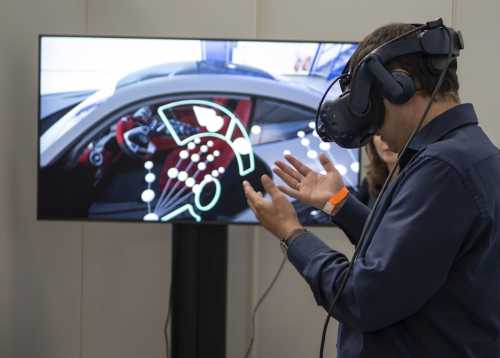
In a breathtaking leap forward for broadcast technology and home entertainment, the United Kingdom's communications regulator, Ofcom, has officially approved the framework for "Volumetric Broadcasting," paving the way for the BBC and ITV to launch life-sized, three-dimensional streaming content directly into the living rooms of consumers equipped with next-generation augmented reality (AR) glasses. This landmark decision, announced following a successful six-month technical trial in Greater Manchester, marks the transition of volumetric video from a niche experimental medium to a mainstream broadcast standard. By utilizing advanced neural rendering and multi-access edge computing, UK viewers will soon be able to watch the Premier League, national news, and flagship dramas not on a flat screen, but as photorealistic, life-sized holograms occupying physical space in their homes, fundamentally redefining the relationship between the audience and the broadcast.
The Holographic Living Room
Ofcom's approval of Volumetric Broadcasting allows the BBC and ITV to stream life-sized, 3D holographic content to AR glasses, transforming flat-screen television into an immersive, spatial experience where broadcasters occupy physical space in the viewer's home.
The concept of watching television in three dimensions is not entirely new, but previous attempts were hindered by prohibitive bandwidth requirements, clunky hardware, and the uncanny valley effect of early 3D rendering. The 2026 breakthrough lies in the convergence of three distinct technologies: 3D Gaussian Splatting, AI-driven foveated rendering, and the nationwide rollout of 5G Advanced and early 6G edge networks. Together, these innovations have solved the "hologram bottleneck," allowing for the transmission of photorealistic, dynamic 3D environments at frame rates indistinguishable from reality, without requiring the consumer to own a supercomputer.
The Science of 3D Gaussian Splatting
At the heart of the volumetric broadcast pipeline is a revolutionary rendering technique known as 3D Gaussian Splatting. Unlike traditional polygon-based 3D modeling, which requires massive computational power to render millions of geometric shapes, Gaussian Splatting represents scenes as millions of colorful, semi-transparent "splats" or point clouds. When captured by specialized volumetric camera rigs—such as the massive, multi-lens arrays now installed at Wembley Stadium and the BBC Television Centre—these splats can capture the exact lighting, texture, and depth of a live event in real-time.
The true magic happens during compression and transmission. The BBC's engineering team has developed an AI codec that predicts how the human eye will perceive these splats from any given angle. Instead of transmitting the entire 3D environment, the broadcaster sends only the geometric data required for the user's specific viewpoint, dynamically updating as the user turns their head. This reduces the bandwidth required for a life-sized, 3D live broadcast from an impossible 400 gigabits per second to a highly manageable 50 megabits per second, making it perfectly suited for current high-speed broadband and 5G networks.
"We are no longer broadcasting to a screen; we are broadcasting to a space," explained the Director of Technology at the BBC. "When a football player scores a goal, the consumer doesn't just see it on a rectangle in the corner of the room. They see the player celebrating at life-size, right in front of their coffee table. The emotional impact is indescribable."
The Consumer Experience and Hardware Integration
To experience Volumetric Broadcasting, consumers require a pair of AR glasses capable of spatial computing. Fortunately, the market for these devices has matured rapidly in 2026, with lightweight, stylish frames from major tech companies becoming as common as smartwatches. When a user tunes into a volumetric broadcast on BBC iPlayer or ITVX, the app utilizes the glasses' internal LiDAR sensors to map the physical dimensions of the living room.
The software then anchors the 3D content to the physical environment with millimeter precision. If a user is watching a dramatic Shakespearean production from the Royal National Theatre, the actors will appear to stand on the user's actual rug, casting dynamic, real-time shadows that interact with the physical lighting of the room. If the user walks around the "actors," they can view them from any angle, achieving a level of presence and immersion that flat-screen television simply cannot replicate. The audio is equally revolutionary, utilizing spatial audio algorithms to ensure that the voices emanate from the exact physical location of the holographic figures.
The Production Revolution: Filming for Space
The approval of volumetric broadcasting has forced a complete reimagining of how television and sports are produced. Directors and cinematographers can no longer rely on traditional framing, close-ups, and editing cuts to guide the viewer's attention. In a volumetric broadcast, the viewer has total agency over their camera angle; they can look at the background, inspect the details of a set, or focus on a minor character in the corner of the room.
Directing in 360 Degrees
Traditional editing techniques are obsolete in volumetric broadcasting. Directors now use spatial audio cues, dynamic lighting, and environmental storytelling to guide the viewer's attention within a continuous, unedited 3D space.
To adapt, production companies are employing "Spatial Directors" who use lighting, sound design, and actor blocking to subtly guide the viewer's gaze. Furthermore, the physical sets must be built to withstand 360-degree scrutiny. There are no more "cheat angles" or unfinished backdrops; every prop, texture, and shadow must be perfect from every conceivable perspective, leading to a massive surge in demand for skilled set designers, carpenters, and practical effects artists in the UK production sector.
Infrastructure and the Edge Computing Network
Delivering this level of immersive content to millions of simultaneous viewers requires a robust, decentralized infrastructure. The BBC and ITV have partnered with major UK telecommunications providers to deploy Multi-access Edge Computing (MEC) nodes at local cellular towers and exchange points across the country. These edge servers process the heavy AI rendering and viewpoint calculations locally, ensuring that the latency between the user's head movement and the visual update is less than five milliseconds. This near-zero latency is critical; any lag would cause motion sickness and shatter the illusion of the hologram's physical presence.
This infrastructure investment has had a profound side benefit: it has dramatically improved the overall broadband and mobile connectivity in the UK. The fiber-optic networks and edge servers built to support volumetric broadcasting are now being utilized to enhance cloud gaming, remote work applications, and telemedicine, creating a lasting technological legacy for the nation.
The Bottom Line
Ofcom's approval of Volumetric Broadcasting marks the end of the flat-screen era. By leveraging 3D Gaussian Splatting and edge computing, the BBC and ITV are delivering life-sized, immersive holographic content directly to consumers' living rooms, revolutionizing sports, drama, and the fundamental nature of the broadcast audience.
Experience the future of spatial entertainment and get updates on the UK's volumetric broadcast rollout by following our official channels: @BBC and @OfcomOfficial.
Related Articles

The Fracturing of the Mega-Event Monopoly: How 2026’s Awards and Sports Spectacles Are Redefining Cultural Capital
Sep 17, 2026
The Cultural Default: How Live Sports, Billionaire Underwriting, and Algorithmic ROI Are Rewriting the Awards Ecosystem
Sep 16, 2026
Comments (0)
No comments yet. Be the first to share your thoughts!
Want to join the discussion?
Please log in to post a comment.
Login NoworCreate an Account