
One Fortnight, Five Signals: Inside Sport's Monetization Supercycle

When airlines first unbundled the economy cabin, the base fare bought exactly one thing: a seat. Bags, snacks and aisle access became line items, and the industry learned that loyalty could be monetized one fee at a time — until the customer relationship became a spreadsheet. Global sport now runs the same playbook at industrial scale, and the first two weeks of August 2026 produced the clearest evidence yet that the live fan is becoming the industry’s ancillary revenue line.
Five Signals, One Balance Sheet
In a single fortnight, Major League Baseball processed a record 70 trades — 47 on deadline day alone — Europe’s transfer window cleared nine-figure fees for Morgan Rogers and Elliot Anderson, the NFL opened its 107th season in Canton, and post-tournament auditors began reconciling FIFA’s USD 47 billion World Cup output claim against a genuine ticket-price backlash. These five items are one data point: the sports economy has entered a monetization supercycle in which players, fixtures and spectators are being repriced simultaneously.
The Mid-’90s Rhyme
The industry last repriced itself this aggressively in the mid-1990s, when the Premier League’s formation, the BSkyB rights boom, the 1994–95 MLB work stoppage and the Bosman ruling converted clubs from civic institutions into tradable assets inside a single 36-month window. The decade that followed supplies the two available endings for the current cycle: baseball alienated its core consumer and required a generation to rebuild trust, while English football monetized ruthlessly but thrived by exporting demand to a global audience. The differentiating variable then and now is substitutability — a league that can replace displaced local fans with remote consumers can price without mercy; a league that cannot will discover its pricing power is a depreciating asset.
Rosters Are Now Portfolios
The first under-reported implication is that roster construction has been subordinated to balance-sheet arbitrage; front offices trade players the way desks trade duration. MLB executives describe a market segmented into short-term rentals and hoarded prospect capital.
“Clubs weren’t willing to pay for that much more control.” — National League executive, post-deadline review via MLB.com
That is the language of asset managers, not scouts. Its second-order effect is churn: when 47 deals clear in a day, the fan’s emotional position is marked to market and reset, and the attachment that justifies a nine-figure broadcast premium is diluted by the very transactions meant to optimize the product.
The Seat Becomes a Luxury Good
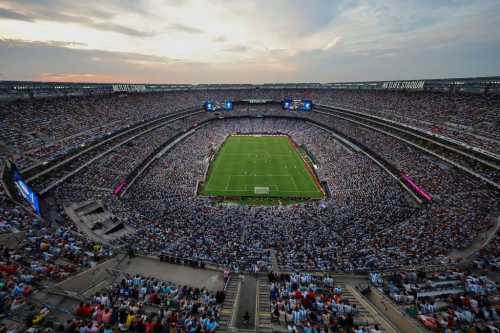
That divergence is structural, not cyclical. The World Cup stress-tested it: record pricing produced stranded ticketholders and a quiet, late-cycle USD 60 remediation — a pattern local operators should read as a leading indicator. Live attendance is migrating from mass consumption to luxury good, and because broadcast value is partly a function of stadium atmosphere, leagues are borrowing against the television product to subsidize today’s gate.
The Bull Case Is Real
The extraction thesis carries a credible rebuttal. Venues still sell out at peak prices, so dynamic pricing is currently discovering real demand rather than fabricating it. The capital flooding the ecosystem finances better facilities, higher player compensation and the professionalization of women’s leagues, while the priced-out fan can consume the product on a phone at a fraction of the 1990s cost. Pricing power, in this reading, is a symptom of product strength — and public shaming would tax a boom, not cure a disease.
Fans as Counterparties
The third implication is the least discussed in mainstream coverage: wagering is altering fandom’s microeconomics. Siena College Research Institute tracking shows 27 percent of Americans now hold an active online sports-betting account, up from 22 percent a year earlier, and U.S. books processed more than USD 40.4 billion in handle in Q1 2026 alone. A bettor is not a spectator but a counterparty with a position against the product, and his marginal dollar migrates from the concession stand and the sports bar to the app. For local economies that is a quiet transfer of game-day spend from Main Street to remote servers; for leagues, an integrity liability compounding in the background.
Why the Recession Call Keeps Failing
Skeptics will note, correctly, that collapse forecasts have a poor record. Sports demand is habit-forming; betting delivers genuine fiscal revenue — states collected USD 3.71 billion in sportsbook tax in 2025 — and the American Gaming Association’s tracker shows ordinary monthly variance, not structural decay. Leagues also operate integrity frameworks that did not exist before the pre-television gambling scandals, and FIFA’s own audience studies document a global demand cushion 1990s baseball never possessed. The monetization machine has more shock absorbers than its critics allow.
Six Months Out: The Affordability Correction
By February 2027, expect the cycle to produce its first correction, not its first crisis. The European window will close Sept. 1 at record gross outlay, yet within six months at least two major leagues will quietly introduce legacy-fan or capped-price inventory — the World Cup’s USD 60 fix formalized as policy — because the BLS divergence is approaching the middle-class consumer’s elasticity limit. Sportsbook consolidation will accelerate as promotional margins compress; state legislatures will convene advertising hearings; secondary platforms will expand last-hour discount inventory as algorithms meet the same ceiling airlines met with bag fees. With MLB’s collective bargaining agreement expiring Dec. 1, the revenue-sharing fight will be framed explicitly around who pays for the supercycle.
What Main Street Should Do Before the Whistle
- Hospitality operators: build second-screen inventory — licensed watch-parties, bundled F&B tiers — aimed at the cohort the BLS data shows is being priced out of the bowl; that cohort is not vanishing, it is relocating spend.
- Consumers: treat face value as a ceiling, not a price, and target secondary-market windows inside 72 hours of first pitch or kickoff, when dynamic algorithms release unsold inventory.
- Municipal governments: discount headline event-impact projections — economists Robert Baade and Victor Matheson have repeatedly documented shortfalls of USD 5.5–9.3 billion against such forecasts — and condition public subsidy on enforceable community-benefit clauses.
- Regional investors: watch sportsbook margin compression, not handle growth, as the telling metric through Q1 2027.
The seat, the screen and the wager are now one bundled balance sheet. The only question the next six months will answer is whether the fan is a customer on that sheet — or a line item.
Related Articles

The Bio-Perimeter Premium: How Thermal Liabilities and Zoonotic Tracking are Rewiring Mass Gathering Economics
Aug 11, 2026
The Bio-Logistical Margin Call: How Federal Divestment and Zoonotic Spillover are Rewiring Public Health Economics
Aug 11, 2026
Comments (0)
No comments yet. Be the first to share your thoughts!
Want to join the discussion?
Please log in to post a comment.
Login NoworCreate an Account