
Tennis' $90 Million Stress Test: Eala's Breakthrough, Swiatek's Rout, and the End of the Superstar Economy


TENNIS · IMPACT ANALYSIS & OPINION · HARD-COURT SWING BRIEFING
Tennis’ $90 Million Stress Test: Eala’s Breakthrough, Swiatek’s Rout, and the End of the Superstar Economy
Five wires crossed the desk this fortnight — a Filipina champion in Washington, a top-seed rout in Toronto, a defending champion’s surge in Montreal, a legend’s return in Cincinnati and a record US Open purse. Read together, they are one story: the repricing of the business of professional tennis.
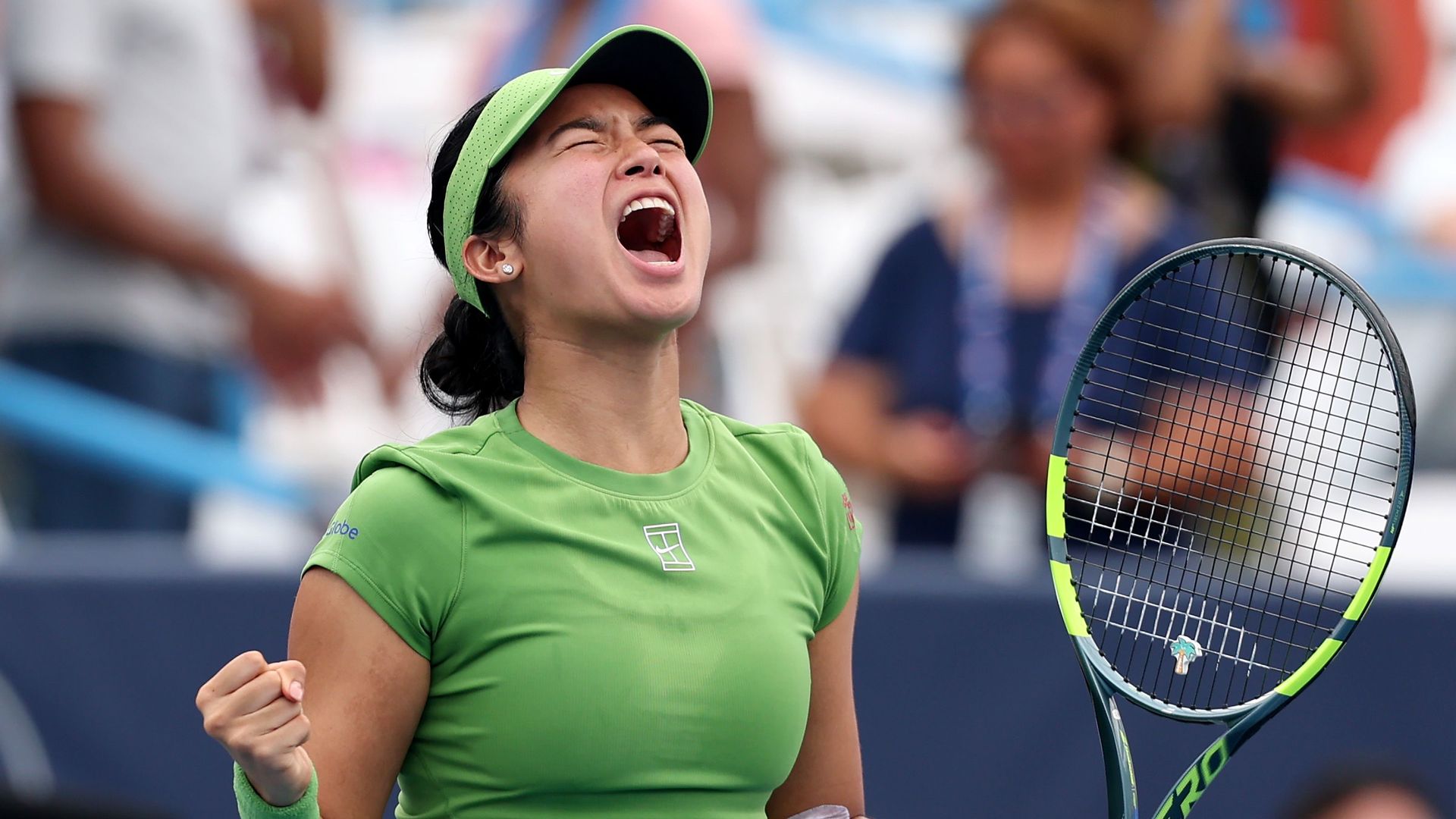
When a streaming platform’s flagship series ends, Wall Street does not rewatch the finale; it tracks two numbers: subscriber churn and pricing power. Professional tennis is running that exact test live across the North American hard-court swing, fielding a more fragmented set of headline names than at any point in a decade while simultaneously raising its prices to records — the US Open will pay $5M to each singles champion, anchored to the largest player-compensation package in tennis history. A Filipina champion in Washington, a top-seed rout in Toronto, a defending champion’s surge in Montreal, a three-year absence ended in Cincinnati, rain-delayed qualifying in Ohio: five stories on the wire, one story on the ledger — whether the sport’s commercial model has decoupled from its star system.
The Hard-Court Ledger
In the past fortnight Alexandra Eala rallied from a set down to defeat world No. 3 Jessica Pegula 4-6, 6-4, 6-0 for the Mubadala DC Open — the first WTA title by a Filipina — while in Toronto Iga &Swiatek; dismantled Diana Shnaider 6-2, 6-1 to reach her 23rd WTA 1000 semifinal, and in Montreal Ben Shelton carried a defending champion’s run on a serving performance in which he won all 16 of his second-set service points. As the Cincinnati Open’s main draw opens after two consecutive days of weather delays, with Novak Djokovic returning to the event for the first time in three years, the US Open has confirmed the $5M champion’s cheque that anchors its record purse.
What the Scoreboard Doesn’t Show
The first underpriced variable is the migration from a concentrated to a distributed star economy, and what it does to sponsorship mathematics inside the commercial ecosystem of professional tennis. For two decades the endorsement and rights market ran on a barbell: a handful of globally bankable names carried the premium while everyone else filled draws. Eala’s title changes that calculus in a way a top-10 ranking never could — “I feel all the love,” as she put it, “especially the Filipino community… I really feel it” — because it converts an entire national market, one of South-East Asia’s largest and youngest consumer bases, into a measurable broadcast cohort, exactly as Victoria Mboko’s breakthrough re-rated Canada. When breakthroughs cluster like this, brands stop buying individuals and start buying market access in portfolios; expect the Q4 endorsement cycle to price regional reach ahead of Grand Slam counts, and the next WTA rights negotiation to be pitched on audience dispersion rather than star concentration.
The second is the widening spread between major economics and the rest of the calendar. A $90M package and a $5M winner’s cheque are not inflation in the colloquial sense; they are the price the sport’s richest events pay to keep the top of the labour market inside the tent. Yet the same week, qualifying in Ohio was compressed by weather inside a six-week Washington–Canada–Cincinnati–New York corridor in which players outside the top 100 still subsidise their own logistics. The tour is turning K-shaped: majors and combined 1000s print record compensation while the 250-level ecosystem — the development layer — absorbs cost pressure. That spread, not the headline purse, determines the depth of the player pool a decade out.
The third is infrastructure. Back-to-back rain delays at Cincinnati qualifying and a rain-suspended final in Washington expose what calendar compression has quietly converted into a balance-sheet item: weather exposure is now a direct threat to broadcast inventory in the sport’s most valuable six weeks. Every rained-out session without a roof is unmonetised product inside a window that underwrites US Open rights fees. Roofs and night-session capacity stop being facilities stories and become capital-expenditure stories — and capex favours the events with the strongest cash flows, further entrenching the K-shaped structure above.
The 2021 Echo: Churn Is Not Collapse
The closest structural precedent is the WTA’s 2017–2021 cycle, when nine different women won majors, the tour was repeatedly declared to be in star crisis, and its global audiences and commercial partnerships nonetheless kept compounding into record rights valuations. The 2021 US Open is the cleanest single data point: Emma Raducanu’s victory produced a transient endorsement spike — a Nike, Porsche and Tiffany portfolio assembled within months — and a documented participation surge in British club tennis, while the tour-level economy tracked an entirely different variable: participation and media distribution, not star concentration. The lesson for 2026 is precise. Breakthroughs are marketing events; the asset is the participation-and-distribution base. Tours that converted churn into market expansion compounded; tours that waited for a saviour stalled.
The Demand-Side Defence
The fragmentation bear case, however, has its own blind spot. Tennis’s attention economy has repeatedly proved more durable than its star system: the same week commentators fretted about headline names, &Swiatek;’s 64-minute rout — “Today I just followed the plan. I was really focused,” she told the Toronto press room — drew a prime-time crowd, and Eala’s run moved ratings in a market of more than 100M potential viewers. New-market stars do not replace old stars; they expand the addressable audience, which is why the US Open can confirm $5M cheques against contracted revenue rather than hope. Churn at the top is a marketing problem; churn in the audience would be a business problem, and the evidence says the latter is not occurring.
Inflation With a Balance Sheet
Nor is the prize-money boom a bubble awaiting correction. The record package is funded by verifiable revenue expansion — attendance at or near capacity and a US media market in a bidding cycle — and player compensation at that level is a negotiated share of real income, not a subsidy. The honest critique is distributional: purse growth concentrates where revenue concentrates. The risk to the tour is not that the top of the market is overpaying; it is that the floor — 250s and the Challenger/125 development layer — is not indexed to the same inflation. That is a governance choice, not an economic law, which means it is fixable.
Pricing the Swing: A Playbook
- Hospitality operators, Mason and Queens: sell flexibility, not forecasts. Weather-compressed schedules shift demand by the hour; staff to dynamic-pricing triggers and keep rain-contingency plans.
- Bars, broadcasters, second-screen operators: programme to market narratives — the Filipino audience behind Eala, the Canadian audience behind Mboko. The distributed-star economy means niche audiences spike; buy targeted inventory, not generic slots.
- Retailers: stock market-specific merchandise late in the swing; breakout-star demand is short-dated. No long positions.
- Clubs and municipal parks departments: the participation effect is the durable dividend. Budget junior-programme capacity now; the demand wave lands 6–12 months after the breakthrough.
- Fans: secondary-market tickets for weather-affected sessions trade at same-day discounts. That is the arbitrage.
February 2027: The Distributed-Star Economy
Six months out: the US Open will have crowned a champion seeded outside the top two, and the star-fragmentation narrative will be quietly retired by the ratings audit. Eala and Mboko will sit inside or at the door of the top 10 on portfolio endorsement structures priced by regional reach, and the WTA’s next rights cycle will be marketed on audience dispersion across South-East Asia and North America. The tours will open a formal conversation on indexing lower-tier prize money — not charity, but player-pool protection — and at least one North American event will announce roof or night-session capex financed against record 2026 receipts. The game will look identical on television. The ledger behind it will not.
Related Articles

The Logistical Node: How the Rwandan Grand Prix is Shattering the F1 Freight and Carbon Offset Model
Sep 25, 2026
The Telemetry Divergence: How the Hamilton-Ferrari Synergy Friction is Exposing the Limits of Driver Adaptability
Sep 25, 2026
Comments (0)
No comments yet. Be the first to share your thoughts!
Want to join the discussion?
Please log in to post a comment.
Login NoworCreate an Account