
The Appetite Recession: How the GLP-1 Boom and Washington's Ingredient Crackdown Are Redrawing the Food-and-Fitness Economy

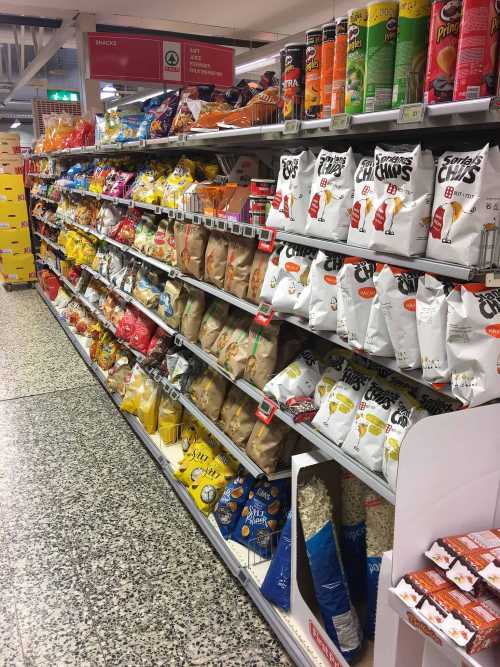
A casino prices every game on one dependable assumption: the house does not need to win every hand, it only needs the patron to keep playing. For four decades, the American packaged-food industry has run on the same arithmetic, building margin less on persuasion than on volume — on the actuarial certainty that appetite will show up, reliably, three times a day plus snacks. That certainty is now being withdrawn from two directions at once: a class of injectable drugs that chemically caps appetite, and a federal regulator that has decided to read the ingredient ledger line by line.
The August 10 Pincer
On Monday, August 10, 2026, the Department of Health and Human Services proposed requiring manufacturers to notify the Food and Drug Administration every time they self-declare an ingredient "generally recognized as safe," and simultaneously submitted for final review the federal government's first formal definition of ultra-processed food, as reported by CNBC. Read against JPMorgan's projection that GLP-1 treatments will erase $30 billion to $55 billion of annual food and beverage revenue by the early 2030s (JPMorgan Research), the announcement converts a cultural argument about "real food" into a balance-sheet event.
"Nearly 60% of the American diet is made up of ultra-processed foods, and childhood obesity now affects more than one in five American children. We cannot reverse America's chronic disease epidemic without transforming our food system." — Robert F. Kennedy Jr., HHS Secretary
Regulation Lands on a Shrinking Base
What mainstream coverage misses is sequencing. A compliance burden imposed on a growing category is a cost of doing business; the same burden imposed on a contracting category is an accelerant for consolidation. KPMG's consumer data show adults on GLP-1s consuming 21 percent fewer calories and cutting grocery bills by nearly a third (CNBC), while market trackers clock savory snacks down 10.1 percent, sweets down 8 percent and baked goods down 7.5 percent. Mandatory GRAS notification now raises the marginal cost of defending precisely the SKUs whose volumes are already declining. Expect R&D budgets to pivot from line extensions to reformulation, and expect mid-tier ingredient suppliers — the firms selling emulsifiers, flavor systems and shelf-life chemistry — to discover their addressable market redefined by an administrative filing.
The numbers: household grocery spending falls an average of 5.3 percent within six months of GLP-1 initiation, per a January 2026 research release (ScienceDaily).
Fitness Becomes the Offset Market
The second blind spot sits in the fitness column of the ledger. A record 81 million Americans held gym memberships in 2025, Gen Z posts the highest penetration of any cohort at 35.5 percent, and the American College of Sports Medicine names wearable technology the number-one trend for 2026 (ACSM). The connective tissue nobody reports is that fitness is migrating from discretionary consumer category to clinical adjunct. GLP-1 therapy strips lean mass along with fat unless paired with resistance training and adequate protein, which positions gyms, coaches and wearable platforms as the offset infrastructure of the pharmacology boom — a recurring-revenue business of defending muscle while drugs delete fat. The wearable layer matters doubly: it is becoming the measurement rail for drug efficacy and dietary adherence alike.
The Supplement Aisle's Quiet Reckoning
The third under-covered front is the supplement shelf, the least audited basement of the food system. The Dietary Supplement Listing Act of 2026 and the companion Regulatory Uniformity Act would create a mandatory product registry and reaffirm FDA preemption over a patchwork of state rules (CRN). Combined with the agency's March 2026 public meeting on the scope of dietary ingredients — peptides and novel probiotics sit in the grey zone — the effect is a forced separation between manufacturers with auditable quality systems and marketing companies with a toll-free number. In a market where "protein" and "GLP-1 support" claims currently carry zero verification cost, that separation is the entire investment thesis.
Counterpoint: Transparency Is Not a Guillotine
Precision requires stating what Monday's proposal is not: a ban. The branded-food lobby's skepticism is not frivolous. The Consumer Brands Association argues "any so-called definition that captures 80% of the nation's food supply while picking winners and losers is fundamentally flawed," and the definition's breadth is a genuine analytic problem — a category that sweeps fortified breads and breakfast cereal into the same bucket as candy has weak discriminative power. Scott Melville of the Consumer Healthcare Products Association is likewise right that "improving transparency does not require upending a system that has long relied on scientific expertise and risk-based oversight." A notification requirement produces a database, not a toxicology, and notice-and-comment rulemaking puts operative requirements years, not quarters, away.
Counterpoint: Capital Has Absorbed Shocks Before
Nor is the demand-destruction thesis airtight. The same industry that swapped out trans fats, cut sugar and built the "better-for-you" shelf is already re-architecting menus and pack sizes around protein and fiber for GLP-1 users, as restaurant chains have done since early 2026. Yogurt and protein-forward categories grow even as confectionery contracts, and pack-price architecture — smaller formats at maintained price points — has historically defended margin through volume declines. The snack aisle is not dying; it is being repriced.
Echoes of 2006: The Trans Fat Precedent
The nearest historical analog is the FDA's 2006 trans fat labeling mandate. No ban was required: the label alone triggered an industry-wide reformulation race, rewarding first movers who went trans-fat-free early with premium shelf space and punishing laggards with catch-up costs and litigation tail-risk. The lesson for 2026 is that disclosure regimes reallocate market share faster than they shrink markets. The cautionary footnote is equally instructive — the scramble to replace partially hydrogenated oils seeded interesterified fats and palm fractions whose health credentials proved no better, a warning that compliance-driven reformulation can optimize for the regulator's checklist rather than the patient's metabolism.
Positioning for the New Plate
For operators, the playbook is actionable now:
- Independent grocers: shift shelf allocation toward perimeter and protein-forward formats now, rather than waiting for a federal label to do the merchandising.
- Restaurant groups: build half-portion, protein-dense menu architecture that serves GLP-1 users without stigmatizing them.
- Gym owners: formalize lean-mass retention programming — progressive resistance training, protein targeting, body-composition tracking — and pursue referral relationships with prescribing clinics before national chains sign exclusive partnerships.
- Households: treat "reformulated" as a regulatory claim, not a health claim; read ingredient lists; and if a prescription drug is suppressing appetite, spend the calorie budget on protein and the training budget on iron.
Six Months Out: The Ledger by February
By February 2027, expect the ultra-processed definition to exit OMB review as a white paper with no statutory force but substantial de facto pull — procurement rules, school meals and state-level incentives will adopt it regardless. The GRAS proposal's comment window will have closed and the first legal challenges will be docketed. A wave of "MAHA-aligned" and "reformulated" front-of-pack claims will invite FTC scrutiny of the health-halo economy. Snack-brand valuations will keep compressing, placing acquisition targets in private equity's crosshairs, and at least one major gym chain will have launched a branded GLP-1 companion program. The house always adapts to a new count; the difference this time is that the count is being written into the Code of Federal Regulations.
Related Articles

The Architecture of Attrition: Algorithmic Enclosure and the Financialization of the Digital Turnstile
Aug 14, 2026
The Week Washington Repriced Food: An Impact Analysis of the Nutrition–Fitness Economy's New Regulatory Reality
Aug 13, 2026
Comments (0)
No comments yet. Be the first to share your thoughts!
Want to join the discussion?
Please log in to post a comment.
Login NoworCreate an Account