
The Asset-Backed Hype Cycle: How Optical Monopolies and P2P Auctions are Rewiring Streetwear Economics

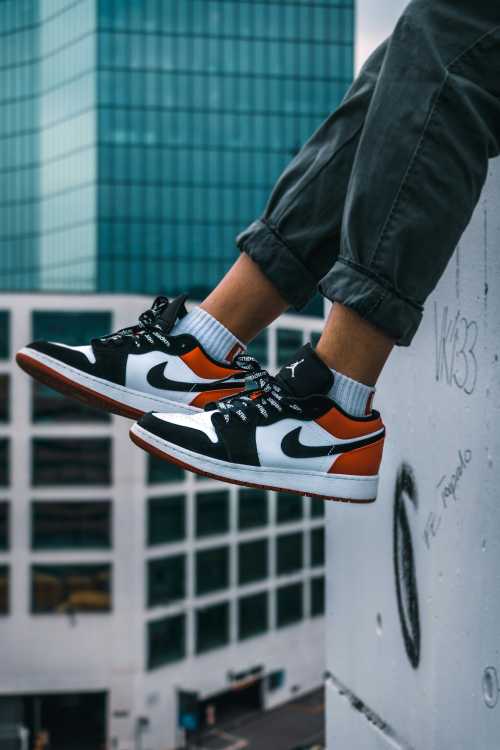
Think of the global streetwear economy as a high-frequency commodities exchange where the traders spent a decade hoarding physical barrels of oil in their garages, only to wake up and discover the exchange has transitioned to trading oil futures, the refinery has been bought by a sunglasses conglomerate, and the storage fees are now being crowdsourced to the retail buyers. This is the precise structural paradox defining the global streetwear and sneaker resale landscape in the third quarter of 2026. We are witnessing the aggressive financialization of counter-culture, packaged into secondary derivatives and sold to the highest-bidding institutional monopolies.
The Core Event
EssilorLuxottica’s absorption of Supreme from VF Corporation and StockX’s aggressive pivot to peer-to-peer "Listings" and live auctions signal the definitive financialization of the streetwear secondary market. This dual milestone marks the end of the artificial scarcity "drop culture" era and the dawn of the algorithmic, asset-backed streetwear cartel.
The Unseen Implications
The transition of Supreme to EssilorLuxottica—an eyewear and luxury optics monopoly—from an apparel conglomerate proves that heritage streetwear brands are no longer valued for their textile output, but for their licensing architecture and accessory margin multipliers. With the streetwear market size in 2026 estimated at USD 218.3 billion, legacy houses are being stripped of their low-margin cotton-blend core and repackaged as high-margin lifestyle accessory ledgers www.mordorintelligence.com . The unseen implication for [[Streetwear Economics & Secondary Market Architecture]] is the permanent defunding of the independent cut-and-sew manufacturer. When the apex predator of the hype cycle is acquired to sell injection-molded acetate frames, the cultural cachet of the brand is entirely decoupled from its garment construction, reducing the apparel to a mere billboard for high-EBITDA hardgoods.
Simultaneously, StockX’s launch of P2P "Listings" and "StockX Live" real-time auctions dismantles the traditional, centralized bid/ask authentication toll-booth [[23], [25]]. By allowing users to buy and sell pre-owned and vintage apparel directly, the platform is transitioning from a centralized clearinghouse into a decentralized, high-frequency trading floor. The unseen reality is the violent compression of the mid-tier reseller margin. Resellers who relied on information asymmetry and bot-driven checkout speeds are being priced out by pure algorithmic liquidity and peer-to-peer price discovery. The secondary market is no longer a shadow economy of sneakerheads; it is a fully regulated, publicly visible financial exchange where cultural volatility is day-traded in real-time, generating secondary market premiums that can exceed 200% of retail prices for archival pieces www.mordorintelligence.com .
Furthermore, the foundational economic model of the industry is undergoing a violent correction. As industry analysts note, "Anyone telling you streetwear is dying is confusing the death of a particular economic model — the hype cycle, the drop culture, the resale" theunrivaledbrand.com . Brands are shifting their focus to secondary market strengthening to extend product lifecycles and validate brand equity www.sourceready.com . The unseen implication is that the primary Thursday "drop" is no longer a profit center; it is a heavily subsidized customer acquisition cost designed to seed the secondary auction block. By intentionally underpricing the primary retail asset, brands manufacture an immediate secondary market premium, effectively forcing the consumer to underwrite the brand's marketing budget via resale arbitrage.
Counter-Argument: The Optical Licensing Fallacy
Proponents of the EssilorLuxottica acquisition argue that moving Supreme to a global optics and luxury accessories giant will rejuvenate the brand's stagnant hardgoods category, introducing high-margin eyewear to a captive, youth-driven demographic. However, this perspective ignores the severe brand dilution of stripping a counter-culture apparel label of its textile identity. When a brand built on the subversive ethos of downtown skate shops is reduced to a logo-licensing vehicle for plastic frames, it permanently alienates the core community that built the brand's equity, transforming a cultural movement into a sterile, mall-kiosk commodity.
The Historical Precedent
This 2026 convergence perfectly mirrors the 1990s Japanese vintage denim boom and the subsequent rise of premium archival reproduction. When the secondary market for vintage Levi's 501s and early Evisu denim completely eclipsed the primary retail market in Tokyo, the original heritage brands were forced to launch premium, archive-focused sub-labels (like Levi's Vintage Clothing) to recapture the margin from independent dealers. The lesson for 2026 is that when the secondary market establishes a transparent, algorithmic price floor for cultural artifacts, the primary brand must either internalize the resale exchange or cede absolute pricing power to independent archivists. The medium of extraction changes, but the arbitrage physics remain absolute.
Counter-Argument: The Communal Adrenaline Illusion
Conversely, legacy streetwear founders and cultural purists argue that abandoning the localized, event-driven Thursday "drop" model in favor of continuous secondary market liquidity destroys the communal adrenaline that made streetwear a global movement. This argument ignores the mathematical reality of modern inventory risk and macroeconomic tightening. In an era of global supply chain friction, holding physical inventory for a localized weekly drop is a catastrophic capital inefficiency compared to seeding a permanent, liquid secondary market where the consumers and independent archivists bear the physical inventory holding costs and depreciation risks.
Official Industry Update: StockX is expanding beyond its traditional bid/ask model. The platform's new StockX Listings feature lets users buy and sell pre-owned sneakers, vintage apparel, and other items directly from sellers, while StockX Live introduces real-time auctions [[23], [25]].
Actionable Takeaways
For local streetwear boutiques, independent brands, and collectors, the immediate action must be the aggressive pivot toward archive curation and zero-inventory production. Local boutiques must abandon the capital-intensive weekly drop model and pivot to acting as physical authentication nodes and consignment brokers for high-net-worth collectors, capturing a percentage of the secondary transaction fee rather than gambling on primary wholesale margins. Independent brands must utilize data scraping to decode community demand and transition to made-to-order, zero-inventory production models, entirely bypassing the wholesale trap and the secondary market dilution www.instagram.com . Furthermore, citizens and collectors must treat vintage streetwear as an uncorrelated alternative asset class, utilizing live auction platforms to day-trade cultural volatility rather than hoarding deadstock in climate-controlled storage.
Future Forecast
In six months, as the holiday retail cycle collides with the maturation of peer-to-peer resale infrastructure, we will witness the first major heritage streetwear brand launch a proprietary, blockchain-verified P2P resale exchange, entirely bypassing third-party platforms like StockX to capture the secondary transaction fees directly. Concurrently, the EssilorLuxottica integration will result in Supreme releasing a purely optical and hardgoods-focused "season," triggering a massive short-selling wave on traditional, inventory-heavy streetwear apparel manufacturers. The bifurcation of the streetwear economy will be complete: a premium, heavily gated tier of asset-backed hardgoods and archival vintage, and a stagnant, heavily discounted tier of mass-produced, algorithmic cotton basics.
Related Articles
The Algorithmic Register: How BAPE’s Dynamic Pricing is Capturing the Secondary Market Arbitrage
Sep 25, 2026
The Tokenized Tribe: How Stüssy’s DAO Sub-Label is Shifting Power from Brand Dictatorship to Community Equity
Sep 25, 2026
Comments (0)
No comments yet. Be the first to share your thoughts!
Want to join the discussion?
Please log in to post a comment.
Login NoworCreate an Account