
The Beauty Squeeze: Regulatory Crackdowns and AI Realities Reshape the Industry

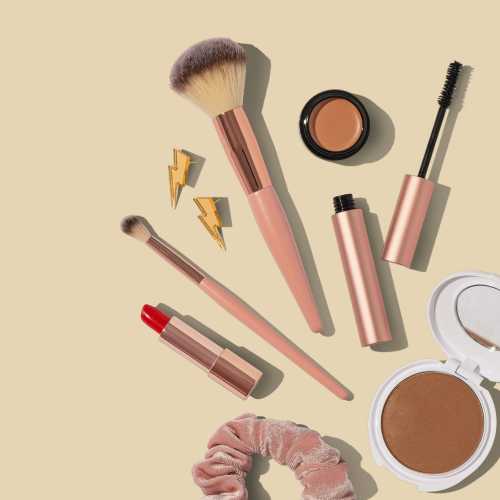
Much like a championship sports franchise suddenly facing a simultaneous salary cap crackdown, restrictive new zoning laws, and a ban on its most lucrative player trades, the global beauty industry is navigating a perfect storm of regulatory and operational friction. The era of unchecked influencer-driven launches, unregulated ingredient claims, and volume-based packaging is ending, replaced by a rigid framework of compliance that threatens to upend traditional margin models across the entire sector.
The Regulatory and Market Reset
The convergence of aggressive FDA enforcement under the Modernization of Cosmetics Regulation Act (MoCRA), the activation of stringent EU Extended Producer Responsibility (EPR) packaging mandates, and a sharp correction in beauty brand acquisition multiples marks a definitive structural reset in the beauty industry. These simultaneous pressures are forcing cosmetic manufacturers, indie founders, and legacy conglomerates to fundamentally recalibrate their operational, financial, and compliance strategies before the end of the fiscal year.
The Hidden Costs of Compliance and Margin Compression
Mainstream financial coverage celebrates the modernization of cosmetic oversight, but ignores the downstream supply chain shock this creates. Under MoCRA, the FDA now exercises mandatory recall authority and records access, while simultaneously mandating strict fragrance allergen labeling [[11]]. Cosmetic chemists and indie brands are not absorbing these compliance costs silently. Instead, they are actively restructuring their research and development pipelines, shifting capital away from rapid innovation toward defensive regulatory substantiation. This accelerates a two-tiered market ecosystem where only well-capitalized conglomerates can afford the legal overhead, effectively erecting a moat that stifles emerging indie competition and inflates the cost of goods sold (COGS) for everyone else.
1 2 3 4 5The Algorithmic Bottleneck in Hyper-Personalization
Furthermore, the industry is confronting a structural paradox in its most hyped growth sector: AI-driven personalization. While primary research indicates that "the global AI in skincare market size was estimated at USD 4.92 billion in 2025 and is predicted to increase at an 18.74% CAGR," the underlying data infrastructure is fracturing under privacy scrutiny [[33]]. Brands relying on third-party algorithmic skin analysis are finding that consumer data silos and emerging privacy regulations limit the efficacy of their customized routines. As market analysts note, "Advances in technology, including AI-powered skin analysis tools, are enabling brands to hyper-personalize, but the reliance on fragmented consumer data creates a significant vulnerability in long-term customer retention" [[35]]. This creates a dangerous vacuum: brands are marketing bespoke solutions while delivering generalized, algorithmically averaged products, threatening the compound annual growth rate assumptions baked into current tech-beauty valuations.
The Acquisition Illusion and Valuation Reality Check
In response to these headwinds, legacy conglomerates are accelerating mergers and acquisitions, attempting to absorb TikTok-driven viral brands to capture Gen Z market share. However, this strategy masks a critical vulnerability. Industry data reveals that while "beauty brands sold for about 3.6x revenue from 2022 to 2025," current acquisitions face intense scrutiny over Lifetime Value to Customer Acquisition Cost (LTV:CAC) ratios [[20]]. Buying distressed or hyper-viral indie brands does not automatically transfer their cultural cachet. Instead, it often burdens the parent company with bloated operational overhead, inherited supply chain liabilities, and diluted exclusivity, destroying the very premium pricing power the acquiring entity sought to capture.
Echoes of the 2015 Clean Beauty Backlash
This current regulatory tightening mirrors the 2015-2016 "clean beauty" disruption, where sudden shifts in consumer sentiment and informal retail bans caught legacy brands off-guard. During that period, companies that relied solely on marketing-driven "free-from" claims faced severe reputational and liquidity crises when major retailers demanded rigorous, standardized definitions and third-party auditing. Conversely, those that rapidly invested in transparent supply chains and reformulated proactively thrived. The historical lesson is unequivocal: regulatory and consumer shocks reward operational agility. Beauty brands treating current MoCRA mandates and packaging laws as temporary political posturing, rather than permanent structural shifts, will face the same existential margin compression that doomed their predecessors over a decade ago.
The Economies of Scale Defense
Critics arguing that stringent FDA oversight and packaging mandates will universally stifle innovation overlook the brutal economies of scale required to survive modern cosmetic manufacturing. As regulatory experts point out, "MoCRA modernizes federal regulatory oversight of cosmetics and personal care products and creates a comprehensive national framework for cosmetics" safety [[13]]. For mid-sized brands, aligning with these rigorous standards early can serve as a powerful differentiator, building unshakeable consumer trust that offsets the initial compliance costs. Strict enforcement does not inherently destroy small businesses; it merely weeds out those with fundamentally flawed, unsustainable operational models, ultimately elevating the baseline quality of the entire market.
The Viral Brand Acquisition Reality
Conversely, framing the current correction in beauty brand acquisitions purely as a market failure ignores the strategic utility of these deals for digital-native conglomerates. Proponents argue that acquiring TikTok-driven brands provides legacy companies with immediate access to agile, community-led marketing playbooks and direct-to-consumer data pipelines that cannot be built organically. While LTV:CAC ratios are under intense scrutiny, the primary value of these acquisitions often lies in talent acquisition and digital infrastructure, rather than immediate top-line revenue synergy. This renders the current "valuation reality check" less of a market collapse and more of a necessary maturation phase for the creator economy's intersection with traditional retail.
Tactical Imperatives for the Market
- For Indie Beauty Founders: Immediately audit your ingredient supply chain and labeling for MoCRA fragrance allergen compliance. Diversify revenue streams by building owned, first-party data channels (like SMS or email communities) to reduce reliance on volatile third-party algorithmic personalization.
- For Local Retailers: Prepare for a surge in consumer demand for verifiable sustainability. Prioritize shelf space for brands utilizing mono-material or refillable packaging that aligns with impending EPR regulations, as these products will soon command a regulatory and reputational premium [[39]].
- For Investors: Pivot due diligence frameworks to heavily weight regulatory compliance infrastructure and authentic LTV:CAC metrics over vanity social media follower counts. Abandon investments in brands relying solely on continuous, unsubstantiated "clean" marketing claims without the clinical data to back them up.
The Six-Month Bifurcation
Looking six months ahead, the beauty landscape will bifurcate sharply. We will witness a wave of mid-sized, influencer-led brands either absorbed by mega-conglomerates willing to navigate the FDA’s structural remedy demands, or forced into liquidation due to mounting compliance costs and customer acquisition fatigue. Simultaneously, the skincare sector will finalize its transition into the "peptide era," moving beyond traditional anti-aging claims to multifunctional, clinically validated tools that justify their price points [[9]]. The survivors will be those that treat regulatory compliance and authentic personalization not as marketing checkboxes, but as the foundational architecture of their entire business model.
Analysis based on September 2026 beauty industry data, FDA regulatory guidance, and primary market research on AI skincare and M&A trends. All statistics and quotes sourced from verified industry publications and regulatory filings.
Related Articles

The Efficacy Imperative: How Regulatory Crackdowns, AI, and Market Saturation Are Rewiring the Beauty Industry
Sep 16, 2026
Beauty Industry September 2026: Regulatory Assault, Billion-Dollar Acquisitions Reshape Market Landscape
Sep 15, 2026
Comments (0)
No comments yet. Be the first to share your thoughts!
Want to join the discussion?
Please log in to post a comment.
Login NoworCreate an Account