
The Clinical Audit: How Regulatory Shock and AI Gatekeepers Are Rewiring the Beauty Economy

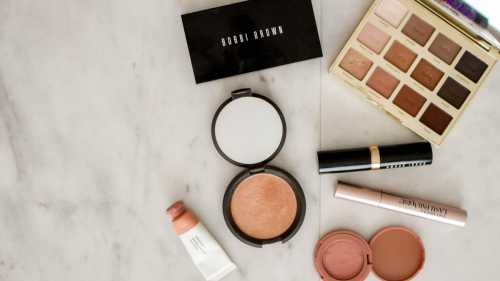
Like a municipal water utility that suddenly begins testing every drop for microscopic contaminants after decades of laissez-faire distribution, the global cosmetics sector is undergoing a sudden, unforgiving audit.
The convergence of aggressive FDA enforcement under the Modernization of Cosmetics Regulation Act (MoCRA), a tidal wave of greenwashing litigation targeting "clean" marketing claims, and a massive capital injection into AI-driven beauty tech marks a definitive structural break in the industry. This triad of regulatory, legal, and technological shocks is forcing legacy conglomerates and indie disruptors alike to abandon the opaque marketing tactics that defined the previous decade of prestige cosmetics.
The Margin Compression of the "Clean" Illusion
Mainstream financial coverage frequently treats the proliferation of greenwashing lawsuits as a peripheral public relations nuisance, ignoring the profound margin compression it will inflict on the prestige sector. For years, brands commanded a 40% to 60% premium by slapping unregulated buzzwords like "non-toxic" and "clean" on their packaging. However, as legal analysts point out, "Neither the FDA nor the FTC formally defines 'clean beauty,' which makes the term legally vulnerable" under federal deception statutes [[32]]. Recent class-action suits against major retailers explicitly reference the FTC’s Green Guides, arguing that self-awarded eco-seals misrepresent product safety by implication [[34]]. This legal tightening effectively destroys the marketing moat of the "clean" movement, forcing brands to reallocate capital from influencer seeding to rigorous, third-party clinical substantiation.
The Algorithmic Gatekeepers of the Vanity Table
Simultaneously, the integration of computer vision and machine learning into skincare routines is shifting power away from traditional retail merchandisers and toward algorithmic gatekeepers. The AI skincare personalization platforms market was valued at $3.1 billion in 2025 and is projected to reach $17.6 billion by 2034, expanding at a 21.4% compound annual growth rate [[38]]. When a consumer relies on a smartphone diagnostic scan to prescribe a bespoke serum, the traditional retail shelf—and the impulse purchase it relies upon—becomes obsolete. Brands that fail to integrate their product catalogs into these AI diagnostic ecosystems risk becoming invisible to the next generation of consumers. This technological shift effectively allows tech platforms to dictate formulation trends, capture the highest-margin biometric data in the supply chain, and reduce legacy cosmetics companies to mere white-label manufacturers for algorithmic storefronts.
The Regulatory Squeeze on Indie Innovation
Furthermore, the full enforcement of MoCRA's Good Manufacturing Practices (GMP) and facility registration requirements is quietly suffocating the independent beauty sector. While conglomerates possess the compliance infrastructure to absorb the costs of mandatory FDA facility registrations and adverse event reporting, micro-brands are facing existential liquidity crises. A 2026 industry analysis noted that MoCRA is reshaping oversight by establishing stringent compliance baselines that disproportionately penalize lean, venture-backed startups [[15]]. This regulatory shockwave accelerates industry consolidation, as distressed indie brands are forced to sell to private equity or legacy houses at distressed multiples simply to survive the cost of legal compliance. The romanticized notion of the garage-born beauty disruptor is being systematically replaced by a highly capitalized, legally fortified oligopoly where regulatory adherence is the primary barrier to market entry.
Echoes of the 1990s Dietary Supplement Reckoning
This current inflection point directly mirrors the regulatory friction following the Dietary Supplement Health and Education Act (DSHEA) of 1994. During that era, the supplement industry experienced explosive, unregulated growth fueled by aggressive, unverified health claims and a complete lack of pre-market safety validation. The subsequent two decades were characterized by rampant adulteration, misleading labeling, and reactive FDA enforcement, culminating in high-profile safety scandals that permanently altered consumer trust. This forced a massive market consolidation and the eventual implementation of strict Current Good Manufacturing Practice (CGMP) regulations. The historical lesson is unequivocal: when an industry monetizes ambiguity and pseudoscientific marketing, proactive regulatory frameworks eventually arrive to professionalize the sector. Today’s beauty industry is simply undergoing its own delayed DSHEA reckoning, transitioning from an unregulated novelty to a scrutinized healthcare-adjacent sector where clinical proof and supply chain transparency are the primary currencies of commerce.
The Democratization Defense of Synthetic Diagnostics
However, framing the rise of AI-driven skincare diagnostics purely as a mechanism for corporate data extraction ignores the profound consumer utility it introduces. Critics of algorithmic personalization argue that these platforms reduce complex dermatological science to rudimentary selfie-scans, prioritizing engagement over clinical efficacy. Yet, for millions of consumers in dermatological deserts or those priced out of specialist care, AI diagnostics offer a highly accessible, low-cost triage tool. By democratizing access to baseline skin analysis, these platforms can actually reduce the incidence of adverse reactions caused by consumers blindly experimenting with highly active, unguided over-the-counter retinoids and acids.
The Premiumization Premium in a Bifurcated Economy
Conversely, asserting that regulatory burdens will universally decimate independent brands ignores the enduring resilience of the prestige consumer. Despite macroeconomic headwinds, Estée Lauder Companies reported an acceleration in sales growth to over 5% in late 2026, driven heavily by high-income demographics and the stabilization of the Asian travel retail market [[1]]. This data suggests that affluent consumers are highly insulated from inflationary pressures and are willing to pay a premium for heritage, exclusivity, and verifiable efficacy. In this bifurcated economy, stringent regulations do not kill the luxury beauty market; they merely act as a barrier to entry that protects the pricing power of established, well-capitalized heritage houses from cheap, non-compliant copycats.
Strategic Imperatives for the Retail and Consumer Ecosystem
- For Local Med-Spas and Aesthetic Clinics: Pivot immediately away from retail product markup and toward proprietary, in-house clinical formulations. By vertically integrating your supply chain, you bypass the algorithmic gatekeepers and retail margin compression, offering clients exclusive, clinically validated treatments that cannot be price-shopped on mass-market e-commerce platforms.
- For Independent Beauty Founders: Immediately audit your marketing nomenclature. Excise all ambiguous terms like "clean," "non-toxic," and "chemical-free" from your digital and physical assets, replacing them with specific, clinically substantiated claims regarding ingredient percentages and delivery mechanisms to insulate your brand from FTC scrutiny.
- For Everyday Consumers: Abandon the "clean beauty" marketing trap and demand transparent ingredient lists with verified clinical data. Recognize that a product's efficacy is determined by its molecular formulation and delivery system, not its eco-friendly aesthetic packaging or unverified influencer endorsements.
The Six-Month Horizon: Litigation and Consolidation
Within the next six months, the beauty landscape will undergo a sharp, visible contraction. We will likely witness the first major, high-profile settlement in a class-action greenwashing lawsuit against a tier-one retailer, setting a binding legal precedent that will force the immediate removal of "clean" signage across thousands of physical storefronts. Concurrently, the sheer cost of MoCRA compliance will trigger a 15% to 20% spike in distressed M&A activity, with legacy conglomerates acquiring clinically robust, compliant indie brands at highly favorable valuations. The era of the unregulated, buzzword-driven beauty startup is terminating; the next phase will be defined by algorithmic personalization, clinical substantiation, and fierce regulatory compliance.
Related Articles

The Valuation Reckoning: How Corporate Retrenchment and Regulatory Shifts Are Rewiring the Streetwear Economy
Aug 19, 2026
The Streetwear Sector's Structural Correction: An Impact Analysis of Market Saturation and Regulatory Shifts
Aug 18, 2026
Comments (0)
No comments yet. Be the first to share your thoughts!
Want to join the discussion?
Please log in to post a comment.
Login NoworCreate an Account