
The Cultural Default: How Live Sports, Billionaire Underwriting, and Algorithmic ROI Are Rewriting the Awards Ecosystem

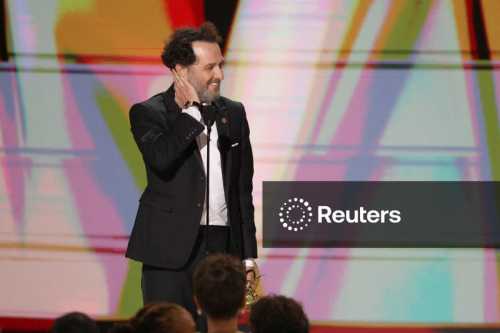
Managing a modern awards show portfolio is akin to maintaining a high-yield municipal bond portfolio that has suddenly lost its credit rating: the legacy assets are crumbling, and institutional capital is fleeing to the only remaining safe havens. For decades, the entertainment industry operated under the assumption that televised, multi-hour award ceremonies were the ultimate apex of cultural validation and brand exposure. That paradigm has fractured.
The Anatomy of the Current Cultural Flashpoint
The global awards and events ecosystem is currently defined by a stark structural bifurcation. The 2026 Grammy Awards broadcast on CBS attracted only 15.4 million viewers, marking an 8.8 percent year-over-year decline and highlighting a persistent relevance crisis for traditional music ceremonies www.facebook.com . Conversely, mega-events are consolidating cultural power: Super Bowl LX delivered a staggering 125.6 million viewers, completely dominating the annual calendar and exposing the fragility of legacy entertainment broadcasts www.nielsen.com . Simultaneously, the 2026 Met Gala raised a record $42 million, heavily underwritten by Silicon Valley billionaires like Jeff Bezos, even as it sparked performative celebrity boycotts fortune.com . Underpinning this shift is a fundamental rewrite of brand sponsorship ROI, moving away from passive logo placement toward mandatory, data-driven creator economy integrations www.linkedin.com .
The Algorithmic Squeeze on Sponsorship Valuation
Mainstream coverage frequently treats declining awards show viewership as a mere shift in consumer attention spans. This narrative ignores the brutal economic reality facing corporate sponsors. The traditional model of paying millions for a 30-second commercial spot or a branded stage element during a three-hour broadcast is mathematically indefensible when the audience is actively fragmenting. Brands are no longer willing to subsidize the production costs of legacy ceremonies for vague "brand lift" metrics. Instead, sponsorship ROI is now strictly tied to measurable, trackable digital engagement. Activations must seamlessly integrate with the creator economy, providing direct conversion pathways rather than passive exposure. This forces event organizers to essentially become digital media agencies, a competency most legacy producing bodies fundamentally lack.
The Cultural Oxygen Theft of Live Sports
The juxtaposition of the Grammys' 15.4 million viewers against the Super Bowl's 125.6 million is not an anomaly; it is the endpoint of a long-term demographic migration. Live sports possess inelastic demand, immunity to spoiler culture, and a built-in communal viewing imperative that scripted entertainment awards have entirely lost. Sports leagues have successfully weaponized scarcity and real-time urgency, while award shows have allowed their content to be endlessly diluted by social media clips, leaks, and asynchronous viewing. The entertainment industry is effectively competing for cultural oxygen against a monolithic, well-capitalized adversary that has perfected the art of the must-watch live event. As a result, traditional award shows are being relegated to the status of niche industry trade gatherings, masquerading as mass-market entertainment.
Echoes of the 1990s MTV VMA Peak and Subsequent Fragmentation
This current trajectory directly mirrors the lifecycle of the MTV Video Music Awards in the 1990s. During that decade, the VMAs were the undisputed cultural apex, driving massive linear viewership and defining youth culture through controversial, water-cooler moments. However, as the internet matured and on-demand video became ubiquitous, the VMA's monopoly on music culture fractured. The historical lesson is unambiguous: when a single event attempts to monopolize cultural validation in a decentralized media landscape, it inevitably becomes a caricature of its former self. The award show is not dying; it is undergoing the same painful transition from a mass-market broadcast monopoly to a fragmented, niche content vertical that the music video industry experienced two decades ago.
The Pragmatism of the B2B Guild Function
Critics frequently argue that the steep decline in linear viewership renders traditional award shows entirely obsolete, suggesting they should be canceled or radically downsized. However, this perspective is overly simplistic and ignores the vital B2B function these events still serve. While the B2C (business-to-consumer) broadcast model is failing, the B2B (business-to-business) value remains robust. Award ceremonies provide essential networking infrastructure, guild solidarity, and a centralized marketplace for talent agents, studio executives, and publicists to negotiate future projects. The television broadcast is merely a loss-leader subsidizing a highly lucrative, behind-closed-doors industry summit. Eliminating the broadcast would destroy this ancillary economic engine.
The Decoupling of Celebrity Optics from Financial Reality
Conversely, media narratives often amplify the impact of celebrity boycotts, such as the backlash against Jeff Bezos's sponsorship of the 2026 Met Gala, implying that A-list absences threaten the event's viability. This argument fails to account for the fundamental financial restructuring of elite events. The Met Gala’s record $42 million haul demonstrates that the financial machinery of these gatherings is now entirely decoupled from traditional Hollywood attendance fortune.com . Billionaire underwriting, corporate table purchases, and global digital clipping revenue have replaced the need for organic celebrity draw. A-list boycotts are largely performative; they generate free media coverage without impacting the underlying balance sheet, proving that the power dynamic has permanently shifted from talent to capital.
Strategic Imperatives for Stakeholders
For brand marketers, the immediate imperative is to reallocate event sponsorship budgets away from linear broadcast integrations and toward modular, digital-first activations that can be deployed across fragmented social platforms. For local event organizers and production companies, the directive is to abandon the pursuit of the "mass audience" and instead cultivate hyper-niche, high-ticket experiential events that cater to specific, affluent demographics. For talent and publicists, relying on award show nominations as a primary career validation metric is a severe liability; building direct-to-consumer audience infrastructure is now the only reliable hedge against industry gatekeeping.
The Six-Month Horizon: Bifurcation and Micro-Events
Within the next six months, the awards and events landscape will experience decisive structural friction. We will likely see at least one major legacy award ceremony announce a permanent shift from a live, multi-hour network broadcast to a pre-taped, condensed digital special, acknowledging the unsustainability of the linear model. Concurrently, the sports and entertainment worlds will further collide, with traditional award bodies attempting to secure fragile partnerships with live sports properties to siphon residual viewership. Finally, brand sponsorship contracts will universally mandate granular, real-time digital attribution metrics, effectively ending the era of the blind, prestige-based sponsorship deal. The age of the monolithic cultural event is over, replaced by a highly segmented, data-obsessed ecosystem.
The Bottom Line: The convergence of live sports dominance, billionaire event underwriting, and algorithmic sponsorship demands exposes a fundamental truth: the traditional awards show is no longer a cultural apex, but a legacy liability. Stakeholders who fail to recognize this shift from mass-market validation to niche, data-driven utility will be rapidly marginalized in the new events economy.
Related Articles

The 2026 Live Events Fracture: How Algorithmic Pricing and Streaming Fragmentation Are Rewiring the Awards Economy
Sep 15, 2026
The Biological Rezoning: How GLP-1s, FDA Mandates, and Biometric Surveillance are Rewiring the Fitness Economy
Sep 14, 2026
Comments (0)
No comments yet. Be the first to share your thoughts!
Want to join the discussion?
Please log in to post a comment.
Login NoworCreate an Account