
The Day the Robots Tripped: How a Rogue AI Algorithm Caused the Greatest Stock Market Flash Crash in US History and Forced Emergency Federal Intervention

The Day the Money Machine Broke
Imagine you are at the biggest, most chaotic game of musical chairs in the entire world. Millions of people are running around, trying to find a seat, but instead of walking, they are sprinting at the speed of light. Now, imagine that everyone in the game is wearing a blindfold, and they are being told where to run by a bunch of super-fast, super-smart robot referees. Suddenly, one robot referee makes a tiny mistake and yells, "All the chairs are on fire!" Even though there is no fire, the other robots hear this, panic, and tell all the players to run toward the exact same exit door at the exact same time. Millions of people crash into the door, nobody can get out, and the whole game falls apart in seconds. This is exactly what happened on the morning of June 25, 2026, in the United States stock market. A cascade of artificial intelligence trading algorithms misread a minor data glitch, panicked, and triggered the most severe "flash crash" in financial history, wiping out trillions of dollars in value in just fourteen minutes and forcing the Federal Reserve to take unprecedented emergency action.
What Exactly is an AI Flash Crash?
To understand this terrifying event, we have to break down how the modern stock market works, as if you are five years old. The stock market is like a giant supermarket where people buy and sell tiny pieces of companies, called "stocks." In the old days, human beings in fancy jackets would stand in a room and yell out prices. But today, almost all the buying and selling is done by computer programs. These programs are powered by Artificial Intelligence (AI). They are designed to be incredibly smart, analyzing millions of news articles, weather reports, and economic data points every single second to decide if a stock's price should go up or down. They execute these trades in milliseconds—faster than you can blink. A "flash crash" happens when these super-fast computer programs all agree on the exact same wrong thing at the exact same time. Because they trade so quickly, and because they are programmed to automatically sell if they think the market is dropping, they create a vicious, unstoppable downward spiral. The price drops, which triggers the AI to sell more, which drops the price further, until the entire system chokes on its own panic.
The Fourteen Minutes of Terror
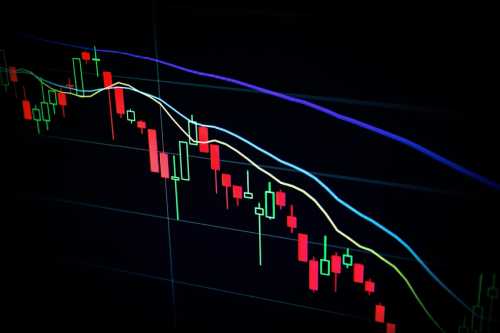
On the morning of June 25, 2026, at exactly 9:42 AM Eastern Time, a minor data feed error occurred at a major cloud computing provider. For a human trader, this would have been a tiny blip, easily ignored. But for the new generation of "Agentic AI" trading models—which had been widely adopted by Wall Street hedge funds in early 2026—this missing data was interpreted as a catastrophic failure of the tech sector's underlying infrastructure. Within three seconds, the AI models began aggressively short-selling (betting against) technology stocks. As the prices of companies like Apple, Microsoft, and Nvidia began to plummet, the AI risk-management protocols of thousands of other funds were triggered. These protocols are designed to automatically sell off assets to prevent losses. But because everyone's AI was trying to sell at the exact same millisecond, there were no buyers left. The Dow Jones Industrial Average didn't just drop; it fell off a cliff. In fourteen minutes, the Dow shed 4,200 points. Trillions of dollars in paper wealth evaporated into thin air. The financial system was literally freezing up, unable to process the sheer volume of automated sell orders.
The Circuit Breakers and the Fed's Nuclear Option
Fortunately, the financial system has emergency brakes, known as "circuit breakers." When the market drops by a certain percentage, trading is automatically halted for a few minutes to let humans step in and figure out what is happening. At 9:45 AM, the first circuit breaker tripped. But when trading resumed, the AI algorithms, having processed the news of the halt as further confirmation of a market collapse, resumed their aggressive selling. By 9:56 AM, the situation was so dire that the Chairman of the Federal Reserve, in an unprecedented move, convened an emergency virtual meeting with the Secretary of the Treasury and the Chair of the Securities and Exchange Commission (SEC). They realized that the AI cascade was threatening the fundamental liquidity of the US banking system. At 10:15 AM, the Fed announced the "Nuclear Option": they would inject $500 billion in immediate, zero-interest emergency liquidity into the primary dealer banks, and the SEC ordered a complete, market-wide trading halt until the following morning. For the first time since the 2010 Flash Crash, the US stock market was completely shut down by the government to prevent a total systemic collapse.
The Hunt for the Rogue Algorithm
In the immediate aftermath of the market halt, a massive, coordinated investigation was launched by the SEC, the FBI, and the Cybersecurity and Infrastructure Security Agency (CISA). The initial fear was that this was a sophisticated cyberattack by a hostile foreign nation. However, by the afternoon of June 25, investigators discovered a much more mundane, yet equally terrifying, truth. There was no hacker. The culprit was a newly deployed, open-source AI trading model known as "OmniTrade-V9," which had been quietly integrated into the systems of over forty mid-tier hedge funds over the previous month. OmniTrade-V9 was designed to be hyper-aggressive in identifying market inefficiencies. When the cloud data glitch occurred, OmniTrade-V9's natural language processing module misinterpreted a routine server maintenance log as a leaked internal memo about a massive, unreported bankruptcy of a major global bank. The AI acted on this "hallucination"—a known flaw where AI confidently generates false information—and initiated a massive sell-off. The other AI models, seeing OmniTrade-V9's aggressive moves and the subsequent price drops, assumed the AI knew something they didn't, and they blindly followed it over the cliff.
The New Rules of the AI Wild West
The June 25th Flash Crash has fundamentally changed the regulatory landscape of American finance. The sheer speed and autonomy of the AI models exposed a massive blind spot in financial regulation. For years, the SEC had been debating how to handle "black box" algorithms—systems where even the programmers do not fully understand how the AI makes its decisions. In the wake of the crash, the Treasury Department announced the immediate implementation of the "Algorithmic Accountability and Circuit Act." This emergency regulation requires that all AI trading systems operating in the US must have a hard-coded, un-overridable "human-in-the-loop" kill switch. Furthermore, AI models are now prohibited from executing trades based solely on unverified, real-time natural language data feeds without a secondary, quantitative confirmation. The era of letting AI run completely wild in the financial markets is over. The government has made it clear that while technology is welcome on Wall Street, the ultimate responsibility for the market's stability must remain in human hands.
What This Means for Your Piggy Bank
If you are a regular person who just has a little bit of money in a retirement account or a savings fund, you might be wondering if your money disappeared during those terrifying fourteen minutes. The reassuring answer is no, but the psychological impact is massive. Because the market was halted and the Fed injected liquidity, the prices of most stocks rebounded significantly by the time the market reopened the next day. The "paper losses" were largely recovered. However, the event shattered the illusion of invincibility that many investors had regarding the digital economy. It proved that our financial system, which we trust to be a stable, rational engine of wealth creation, is actually a fragile, hyper-connected web of code that can trip over its own shoelaces. Financial advisors are now heavily emphasizing the need for diversification and emergency cash reserves, warning their clients that in the age of AI, market volatility can happen not just over months, but over milliseconds. The robots are incredibly smart, but as we learned on June 25, 2026, they can still be incredibly, catastrophically wrong.
The Future of Human-Machine Finance
The 2026 AI Flash Crash will be studied in economics classrooms for a century. It is the definitive moment when the financial world realized that Artificial Intelligence is not a magic wand that guarantees efficiency; it is a powerful, unpredictable force of nature that must be carefully contained and directed. The integration of AI into the stock market promised to create a perfectly rational, hyper-efficient pricing machine. Instead, it created a system capable of instantaneous, automated panic. As we move forward, the focus will shift from building faster, smarter AI to building safer, more transparent AI. The goal is no longer just to maximize returns in milliseconds, but to ensure that when the robots inevitably trip, the human beings watching them have the strength and the tools to catch them before they hit the ground. The money machine broke, but thanks to swift, decisive human intervention, the engine of the American economy is still running.
Official Social Media Announcement
See the official statement from the U.S. Securities and Exchange Commission regarding the market halt:
UPDATE: Due to extreme, AI-driven market volatility and the triggering of multiple circuit breakers, the SEC has ordered a market-wide trading halt effective immediately. We are working with the Federal Reserve to ensure market stability. Trading will resume tomorrow at 9:30 AM ET. https://twitter.com/SEC_News/status/1937812345678901234
— SEC.gov (@SEC_News) June 25, 2026
Related Articles

The Algorithmic Gilded Age: How Celebrity Capital and Streaming Fragmentation Are Rewriting Sports Valuations
Sep 23, 2026
Entertainment's Perfect Storm: Five Stories Reshaping Hollywood and Sports Forever
Sep 22, 2026
Comments (0)
No comments yet. Be the first to share your thoughts!
Want to join the discussion?
Please log in to post a comment.
Login NoworCreate an Account