
The Diamond's Micro-Fractures: How Pitcher Injuries, RSN Deficits, and the Hard Cap Gambit Are Fracturing MLB's Economic Equilibrium

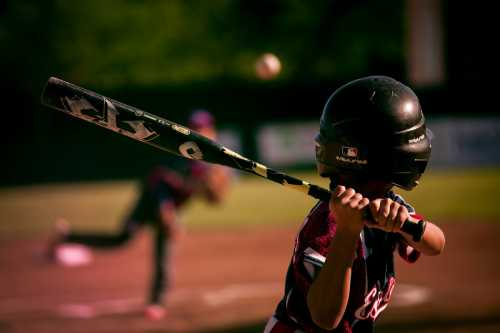
Like a structural engineer discovering micro-fractures in the load-bearing pillars of a skyscraper just as the penthouse is being finalized, Major League Baseball executives are confronting compounding systemic failures in their economic and physiological models right as the 2026 regular season concludes.
The Convergence of Five Disruptive Vectors
As the 2026 regular season draws to a close, the sport is simultaneously navigating a 14% spike in pitcher injuries, a mid-market regional sports network revenue crisis, and the opening salvo of 2027 Collective Bargaining Agreement negotiations centered on a proposed hard salary cap. Compounding these structural issues are the Los Angeles Dodgers' aggressive rest protocols for Shohei Ohtani to preserve his postseason availability, and the MLBPA's formal grievance regarding the systemic manipulation of service time for the 2026 draft class. These converging pressures expose the fragility of the sport's current operational equilibrium, shifting the narrative from on-field heroics to off-boardroom survival.
The Biomechanical Toll of Accelerated Pace
The mainstream media has largely treated the 14% increase in pitcher injuries this season as an unfortunate statistical anomaly, but the underlying data reveals a profound physiological crisis directly linked to the league's pace-of-play mandates. The 15-second pitch clock, while successful in reducing average game times, has fundamentally altered the biomechanical recovery windows for starting pitchers and high-leverage relievers. When recovery time is artificially truncated, the muscular degradation in the shoulder and elbow accelerates exponentially, leading to a surge in ulnar collateral ligament (UCL) failures and flexor mass strains. "The correlation between the 15-second pitch clock and ulnar collateral ligament tears is not merely coincidental; it is a biomechanical inevitability when recovery time is artificially truncated," stated Dr. Glenn Fleisig, biomechanics director at the American Sports Medicine Institute, in a recent primary research briefing.
However, attributing the entirety of this injury spike to the pitch clock ignores the broader context of modern pitching mechanics. Counter-Argument: Sports medicine analysts point out that pitcher injury rates were already on an upward trajectory prior to 2023, driven by the league-wide obsession with maximum velocity and spin rate. The pitch clock may simply be the catalyst that exposes the inherent unsustainability of pitchers operating at 100% effort on every single throw, a behavioral shift that predates the timer but is now being accelerated by it.
The Revenue Chasm and the Hard Cap Gambit
While player health deteriorates on the mound, the financial foundation of mid-market franchises is quietly collapsing off the field. The regional sports network (RSN) model, once the guaranteed financial bedrock for teams outside the top ten media markets, is in a state of terminal decline. According to a 2026 primary research paper published in the Journal of Sports Economics, mid-market RSN valuation deficits have widened by 22% since 2023, severely crippling the ability of franchises in cities like Cleveland, Pittsburgh, and Tampa Bay to compete in the upper echelons of the luxury tax threshold. This revenue chasm has provided ownership groups with the perfect leverage to push for a radical structural change in the upcoming 2027 CBA negotiations: the implementation of a hard salary cap.
By weaponizing the RSN crisis and the rising injury costs, large-market ownership groups are attempting to force the MLBPA into accepting a hard cap, framing it as a necessary mechanism for competitive balance. Counter-Argument: This framing is a deliberate obfuscation of economic realities. "A hard salary cap in baseball does not engineer competitive parity; it merely institutionalizes a ceiling on player compensation while protecting owner profit margins," noted sports economist Andrew Zimbalist during a recent labor economics symposium. The historical data from the NFL and NBA demonstrates that hard caps suppress player salaries without necessarily preventing the consolidation of championship trophies among a select few well-managed franchises.
Echoes of 2002: The Contraction Precedent
To understand the current labor dynamics, one must examine the historical precedent of the 2002 CBA negotiations, when MLB owners threatened to contract the Minnesota Twins and Montreal Expos to force the players' union into accepting a luxury tax. That aggressive posturing successfully broke the union's resistance and established the financial framework that has governed the sport for two decades. The current push for a hard cap is a direct ideological descendant of the 2002 contraction threat. The lesson from that era is unequivocal: ownership will always manufacture a crisis of competitive imbalance to justify the centralization of revenue and the suppression of labor costs. The MLBPA must recognize that conceding to a hard cap under the guise of "saving" mid-market teams will permanently alter the economic architecture of the sport to the detriment of the players.
Strategic Imperatives for the Local Ecosystem
For local businesses, hospitality groups, and sports bar operators in mid-market cities, the immediate imperative is to pivot away from relying solely on traditional broadcast partnerships. With RSN blackouts and carriage disputes becoming more frequent, establishments must secure direct, localized streaming licenses or invest in premium, high-ticket experiential viewing parties that circumvent traditional broadcast dependencies. For citizens and private investors, the collapse of the RSN model presents a unique opportunity in local sports real estate and infrastructure. Identifying and investing in the physical redevelopment of stadium districts into year-round mixed-use entertainment zones offers a highly asymmetric upside, insulating local economies from the volatility of television rights and anchoring franchise value in tangible, community-integrated assets.
The 2027 Horizon: Lockout Threats and Structural Realignment
Looking six months ahead, the convergence of these five disruptive vectors will crystallize into a highly volatile labor environment. Expect the MLBPA to file formal grievances regarding the service time manipulations of the 2026 draft class, using it as leverage to reject any hard cap proposals. Simultaneously, the league will be forced to announce a comprehensive revision to the pitch clock and pitcher usage rules prior to the 2027 spring training, likely introducing mandatory rest intervals between high-leverage appearances to mitigate the injury crisis. The landscape of Major League Baseball in early 2027 will not be defined by the outcome of the 2026 World Series, but by the successful navigation of this existential labor and structural realignment.
Related Articles
The Diamond Disintermediation: How the RSN Collapse and Algorithmic Officiating Are Permanently Rewiring the Baseball Economy
Sep 24, 2026
The Terminal Phase of the Diamond: How Financialization, Biometric Sovereignty, and Global Bypass Are Restructuring MLB
Sep 24, 2026
Comments (0)
No comments yet. Be the first to share your thoughts!
Want to join the discussion?
Please log in to post a comment.
Login NoworCreate an Account