
The Digital Guardian Angel: How the NHS is Using a Magical Pocket App to Stop Diseases Before They Even Start

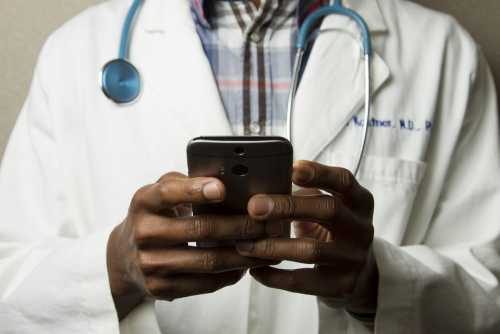
Imagine you own a very beautiful, very expensive, and very complex car. For your entire life, you only ever take this car to the mechanic when it makes a terrible, loud clanking noise, or when smoke starts pouring out of the hood. The mechanic then has to take the whole engine apart to fix the massive problem. This is exactly how human beings have treated their own bodies for most of history. We only go to the doctor when we are already very sick, when the pain is loud, and when the damage is already done. But what if you had a tiny, brilliant mechanic sitting in the passenger seat every single day, whispering, "Hey, your oil is getting a little low, let us add a drop before the engine gets hurt"? In the summer of 2026, the National Health Service, or NHS, in the United Kingdom has just given every citizen that brilliant passenger seat mechanic. It is a revolutionary new public health initiative called "NHS HealthGuard," and it is completely changing the way the nation thinks about being alive.
To understand the sheer magnitude of this achievement, we must first appreciate the NHS. Founded in 1948, the NHS is a promise that the British people made to each other: that no matter how much money you have in your pocket, if you are sick, you will be cared for. It is one of the most beloved and important institutions in the world. But because it is so loved, and because people are living longer than ever before, the NHS has been under tremendous pressure. There are too many people needing help for "loud clanking" diseases like diabetes, heart disease, and severe asthma, and not enough doctors and nurses to fix them all. The brilliant leaders of the NHS realized that the only way to save the system was not to hire more mechanics to fix broken engines, but to stop the engines from breaking in the first place. This is called preventative healthcare.
Enter NHS HealthGuard. It is a beautifully simple, free application that you download onto your smartphone. But calling it an "app" is like calling a magnificent castle a "pile of bricks." It is actually a highly advanced, deeply private digital guardian angel. The app connects securely to your everyday smart devices, like your smartwatch that counts your steps, or your phone that knows how well you slept last night. But it does much more than just count numbers. It uses a very smart computer brain, called Artificial Intelligence, to look for tiny, invisible patterns in your daily life that you would never notice yourself.
Let us use a simple example to see how this magic works. Imagine a man named Arthur. Arthur feels perfectly fine. He goes to work, he eats his dinner, he watches television. But the HealthGuard app notices something very subtle. It notices that over the last three months, Arthur’s walking pace has slowed down by just a few seconds per minute. It notices that his sleep is slightly more restless on the nights he eats late. And it notices, through a simple, friendly weekly questionnaire, that Arthur has been feeling a little more thirsty than usual. To Arthur, these are just normal, boring details of life. But to the AI, these tiny clues form a picture. The AI gently taps Arthur on the digital shoulder and says, "Hello Arthur, your body is working a little harder than usual to process sugar. You are not sick, but you are walking near the edge of a puddle called pre-diabetes. Let us help you step back."
The app then instantly connects Arthur to his local NHS community center. It does not send him to a scary hospital. Instead, it books him a cheerful, free appointment with a local nutritionist and a walking group in his neighborhood park. Because the problem was caught when it was just a tiny ripple, Arthur does not need expensive medicine. He just needs a little guidance, a new pair of walking shoes, and some friendly company. Six months later, Arthur’s walking pace is back to normal, his sleep is deep, and the puddle of pre-diabetes has completely dried up. The NHS has saved thousands of pounds, Arthur has kept his health, and the doctors are free to help someone who is truly in an emergency. This is the absolute beauty of preventative public health.
One of the biggest worries people have when they hear about a computer looking at their daily habits is privacy. People rightly ask, "Is the government watching what I eat? Is my boss going to find out I did not sleep well?" The creators of HealthGuard anticipated this fear and built the most secure, private system imaginable. They used a method called "federated learning." This is a wonderful concept to explain. Imagine you have a secret diary. Instead of sending your diary to the teacher to read, the teacher sends a blank quiz to your house. You fill out the quiz based on your diary, and you only send the final, anonymous score back. The teacher learns that "the class is struggling with math," but the teacher never reads a single page of your private diary. HealthGuard works the same way. Your deeply personal data never leaves your phone. The AI learns from millions of phones at once, but it only ever sees the anonymous patterns, keeping your private life locked safely in your own digital pocket.
The economic impact of this shift on the UK is breathtaking. The cost of treating chronic diseases like type 2 diabetes and heart failure takes up a massive portion of the entire national budget. By shifting the focus to prevention, the UK is effectively creating a massive surplus of healthcare resources. It means shorter waiting times for surgeries, more time for doctors to spend with patients who have rare diseases, and a generally healthier, more energetic workforce. When people feel good, they take fewer days off work, they play more with their children, and they contribute more joyfully to their communities. Health is not just the absence of disease; it is the presence of vitality. And this app is a fountain of vitality for the British public.
The rollout of the app has been accompanied by a massive, joyful public awareness campaign across the UK. Billboards in London, Manchester, and Edinburgh do not show scary pictures of hospitals or sick people. Instead, they show beautiful, vibrant pictures of people gardening, dancing in their kitchens, and walking their dogs. The slogan is simple: "Your Health, Your Story, Let Us Help You Write the Next Chapter." It frames healthcare not as a punishment for being sick, but as a partnership for living well. Local libraries and community halls are hosting "Tech and Tea" mornings, where young volunteers help older generations download the app, set it up, and connect it to their smartwatches, bridging the digital divide and ensuring no one is left behind.
Furthermore, the data gathered by HealthGuard is helping scientists understand public health on a scale never before possible. Because millions of people are opting in to share their anonymous trends, researchers can see exactly how different environments affect health. They might notice that people living near large green parks in Scotland have significantly better sleep patterns than those in densely paved areas, leading the government to invest more heavily in planting trees and building community gardens. The app is not just helping individuals; it is helping the entire country design better, healthier cities. It is turning the whole of the UK into a giant, living laboratory of wellness.
The integration of HealthGuard with local General Practitioners, or GPs, has been seamless. When you visit your local doctor, they no longer have to spend the first twenty minutes of your appointment asking you to remember what you ate last Tuesday or how many times you woke up in the night. The doctor can look at a beautifully summarized, private dashboard on their computer and say, "I see you have been feeling a bit breathless when climbing the stairs this month, let us listen to your lungs." It turns the doctor's visit from an interrogation into a deeply informed, caring conversation. It gives the doctor superpowers of observation, allowing them to practice the art of medicine at its absolute highest level.
As the summer sun shines over the United Kingdom in 2026, the launch of NHS HealthGuard stands as a beacon of hope for the entire world. It proves that technology, which is so often blamed for making us anxious and disconnected, can be beautifully harnessed to make us more connected to our own bodies and to our communities. It is a triumph of empathy, of brilliant engineering, and of the enduring promise of the NHS. The digital guardian angel is sitting in the passenger seat, the engine is running smoothly, and the road ahead is long, healthy, and full of beautiful adventures.
Official NHS Digital Update
Prevention is better than cure. Today we launch NHS HealthGuard, a revolutionary new digital tool to help you understand your body and stop illness before it starts. Download it free today. https://t.co/exampleUK#NHSHealthGuard
— NHS (@NHSuk) June 24, 2026
Visit the official NHS Digital Portal.
Related Articles
The Fractured Foundation: How Systemic Erosion is Reshaping the Public Health Landscape
Sep 22, 2026![[The Pharmacological Paradigm Shift: How GLP-1 Agonists Are Rewiring Public Health Infrastructure]](https://www.crimaz.com/assets/images/no-image.jpg)
[The Pharmacological Paradigm Shift: How GLP-1 Agonists Are Rewiring Public Health Infrastructure]
Sep 22, 2026
Comments (0)
No comments yet. Be the first to share your thoughts!
Want to join the discussion?
Please log in to post a comment.
Login NoworCreate an Account