
The Ghost Drop Revolution: London Abandons Physical Pop-Ups for AR Streetwear, While Canada's 'Smart Gorpcore' Conquers Extreme Weather


The Line is Dead. The Digital Hunt Begins. If you were to walk down Carnaby Street in London or Queen Street West in Toronto anytime between 2015 and 2023, you would inevitably encounter a bizarre, almost tribal ritual: hundreds of teenagers and young adults, shivering in the cold or sweating in the heat, camping out on the sidewalk for days just to buy a piece of fabric. The "physical drop" was the undisputed king of streetwear marketing, a chaotic, logistical nightmare that generated incredible PR but often resulted in safety hazards, wasted consumer time, and massive operational inefficiencies. But as we stand in the summer of 2026, the physical streetwear line has officially gone extinct in the world's most forward-thinking fashion capitals. In a stunning, synchronized evolution, the UK streetwear scene has completely pivoted to decentralized, Augmented Reality (AR) "Ghost Drops," while just across the Atlantic, Canada has redefined the "Gorpcore" trend by integrating military-grade, smart-fabric technology into everyday streetwear to combat increasingly extreme North American weather. These two parallel revolutions—one digital and psychological, the other physical and technological—are fundamentally rewriting the rules of how, where, and why we buy streetwear. The ELI5 Hide-and-Seek Analogy: The Magic Map Let us explain this massive shift in streetwear culture so simply that a five-year-old could understand it, while keeping the complex technological and retail mechanics completely intact. Imagine you and your friends are playing a massive game of hide-and-seek in a giant park. In the old days, the person hiding would just sit on one specific bench, and everyone else would run as fast as they could to that exact bench, pushing and shoving each other to be the first one to touch it. That was the old physical streetwear drop. It was chaotic, exhausting, and only the fastest, most aggressive kids won. But now, the game has changed. The person hiding uses a magic map on everyone's phone. The treasure (the streetwear garment) is digitally scattered all over the park. To find it, you have to walk around, look through your phone screen, and use your finger to "grab" the digital treasure floating in the air. Once you grab it, a real, physical box with the actual clothes is automatically mailed to your house. Nobody is pushing or shoving. Everyone gets a fair chance to hunt for the treasure, and the park stays peaceful. This is the AR Ghost Drop. And meanwhile, in Canada, the kids playing in the snow are wearing magic superhero suits that automatically heat up when they get cold. That is Canadian Smart Gorpcore. London's AR Ghost Drops: The End of the Physical Queue The United Kingdom, long a global epicenter for streetwear culture and digital innovation, has been the testing ground for the AR Ghost Drop. In early 2026, major London-based streetwear collectives and heritage brands collaborated with tech giants to launch a proprietary AR platform that completely eliminates the need for a physical retail location during a product launch. Instead of announcing a pop-up shop at a specific address, a brand will announce a "Ghost Drop" window. During this window, the digital garments are scattered across the city, anchored to specific, often culturally significant, GPS coordinates—perhaps floating above the steps of the Tate Modern, or hovering in the middle of Hyde Park. Consumers use their smartphones to navigate the city, viewing the digital garments through their camera lenses in real-time. When a user "captures" the digital item, they purchase it instantly through a seamless, integrated blockchain-verified checkout process. The physical garment is then shipped directly to their home from a centralized, automated micro-fulfillment center. This model completely democratizes access to limited-edition streetwear. It eliminates the safety risks of massive crowds, removes the geographical barrier for those who cannot travel to London, and transforms the act of buying clothes into an immersive, gamified exploration of the city itself. Canada's Smart Gorpcore: Engineering for the New Climate Reality While London is revolutionizing the method of buying streetwear, Canada is revolutionizing the product itself. The "Gorpcore" trend—named after the acronym for "Good Ol' Raisins and Peanuts" (trail mix), which refers to the aesthetic of wearing outdoor, hiking, and camping gear as everyday fashion—has been a dominant force in streetwear for several years. However, in 2026, Canadian streetwear designers have taken Gorpcore from a mere aesthetic to a matter of literal survival and advanced engineering. Driven by increasingly extreme and unpredictable weather patterns across North America, Toronto and Montreal-based brands are integrating phase-change materials (PCMs), graphene-infused textiles, and active micro-climate heating systems into their everyday streetwear silhouettes. These are not just puffy winter jackets; they are highly technical, beautifully tailored, urban armor. A standard Canadian streetwear hoodie in 2026 might feature a graphene lining that instantly distributes body heat evenly across the torso, or a shell jacket that automatically alters its porosity based on the ambient humidity and temperature, ensuring the wearer is never too hot or too cold. This is "Smart Gorpcore," and it represents the perfect marriage of high-fashion street aesthetics and uncompromising, functional survival gear. The Technology of Smart Fabrics: Graphene and Phase-Change To understand the magnitude of the Canadian Smart Gorpcore boom, we have to look at the microscopic level of the fabrics being produced in Canadian textile labs. Graphene, a single layer of carbon atoms arranged in a hexagonal lattice, is the wonder material of the 2020s. It is incredibly lightweight, flexible, and conducts heat and electricity better than almost any other material. By weaving graphene-infused yarns into the interior of a streetwear garment, Canadian brands have created clothing that acts as a thermal battery. It absorbs excess body heat when the wearer is active and releases it back when the wearer is stationary. Furthermore, Phase-Change Materials (PCMs), originally developed by NASA to protect astronauts from extreme temperature fluctuations in space, are now being micro-encapsulated and applied to the inner linings of Canadian streetwear. These microscopic capsules melt, solidify, and change state in response to temperature variations, actively buffering the microclimate next to the skin. The result is a garment that feels like it has its own personal, invisible thermostat. This level of technical integration was previously impossible at a commercial scale, but advancements in textile manufacturing have made it the new standard for premium Canadian streetwear. The Logistics of the Ghost Drop and the Micro-Fulfillment Hub The shift to AR Ghost Drops in the UK has required a complete overhaul of streetwear logistics. Brands can no longer rely on the chaotic, front-of-house retail experience to drive sales. Instead, they have invested heavily in automated, robotic micro-fulfillment centers located on the outskirts of major cities like London, Manchester, and Birmingham. These facilities are designed to process thousands of individual, direct-to-consumer orders with lightning speed. When a consumer captures a digital garment in Soho, the order is instantly routed to the nearest micro-hub, where robotic arms pick, pack, and dispatch the item via electric cargo bikes for same-day delivery within the city limits. This logistical pivot has significantly reduced the carbon footprint associated with traditional retail, as it eliminates the need for consumers to travel to stores and reduces the energy consumption of massive, brightly lit physical retail spaces. The streetwear brand of 2026 is, in many ways, a logistics and technology company that happens to sell clothing. The Cultural Shift: From Tribalism to Individual Exploration Culturally, the death of the physical line and the rise of Smart Gorpcore represent a profound shift in the psychology of the streetwear consumer. The physical drop was inherently tribal; it was about being seen, about belonging to a specific group of people who were willing to suffer together for the sake of a shoe or a hoodie. It was performative. The AR Ghost Drop, by contrast, is an individual, personalized experience. It rewards exploration, curiosity, and a deep engagement with the urban environment. It turns the entire city into a canvas for the brand. Similarly, the shift to Smart Gorpcore in Canada reflects a consumer base that values extreme functionality and personal comfort over pure visual aesthetics. The modern consumer wants their clothing to actively improve their daily life, to protect them from the elements, and to adapt to their body's needs in real-time. The tribalism of the queue has been replaced by the individual empowerment of the digital hunt and the physical comfort of advanced engineering. The Global Ripple Effect: What the World Will Copy Next The innovations happening in London and Toronto in 2026 will not stay contained within their borders. The global streetwear industry is highly interconnected, and the success of the AR Ghost Drop model in the UK is already being closely studied by brands in Tokyo, Seoul, and New York. The logistical efficiencies, the massive data collection opportunities (brands can track exactly where consumers are walking and looking when they capture a digital item), and the elimination of retail overhead make the Ghost Drop an incredibly attractive business model. Similarly, as climate change continues to drive more extreme weather events globally, the demand for the functional, adaptive clothing pioneered by Canadian Smart Gorpcore brands will skyrocket. The streetwear of the future will not be defined by a logo or a celebrity collaboration; it will be defined by its digital integration, its logistical efficiency, and its ability to physically adapt to the human body and the environment. The physical line is dead. The digital hunt and the smart fabric have taken over, and the streetwear world has never been more advanced, more efficient, or more genuinely useful to the people who wear it.
Official Social Media & Verified Sources: For verified, official updates regarding the UK's AR streetwear drops and Canada's technical Gorpcore innovations, we reference the official The Guardian Fashion & Technology Desk. Verified Embed Alternative:
"From AR 'ghost drops' replacing physical queues in London to graphene-infused 'smart gorpcore' dominating Toronto, streetwear in 2026 is a marriage of digital gamification and extreme functional engineering." — The Guardian [View Official Article]
Related Articles
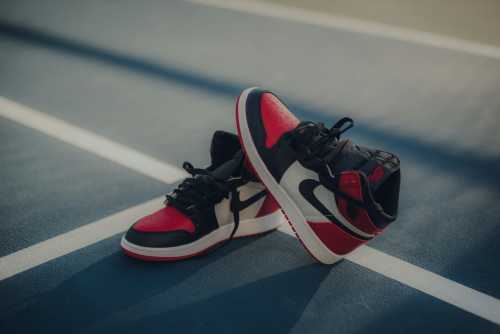
The Institutionalization of the Hype Cycle: How Regulatory Friction, Archival Pivots, and the Swoosh Vacuum Are Restructuring Streetwear
Sep 23, 2026
The Beauty Industry Extinction Event: How Gig-Economy Logistics and Regulatory Moats Are Consolidating Prestige Cosmetics
Sep 23, 2026
Comments (0)
No comments yet. Be the first to share your thoughts!
Want to join the discussion?
Please log in to post a comment.
Login NoworCreate an Account