
The Giant Choose-Your-Own-Adventure: How Netflix’s New AI 'Project Echo' is Changing the Way America Watches Television Forever

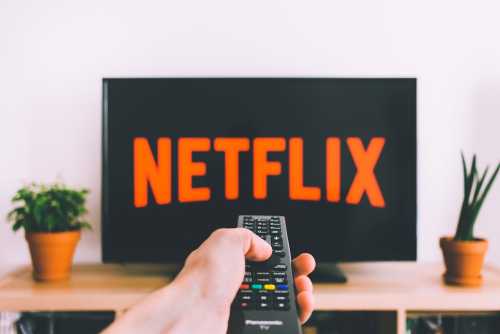
Imagine you are sitting in your living room, watching your favorite cartoon or movie. For your entire life, watching television has been a very simple, one-way street. The people who made the movie decided exactly what happens. The hero opens a door, the monster jumps out, the hero runs away, and the movie ends. You just sit on the couch, eat your popcorn, and watch it happen. You cannot yell at the screen to tell the hero to open the other door, because the movie does not care what you think. It is like reading a book where all the pages are glued together, and you just have to turn them one by one. But in the United States, in the summer of 2026, the biggest television company in the world, Netflix, has completely torn up the rulebook. They have launched something called 'Project Echo,' and it is changing the very nature of how we watch stories, turning millions of lonely viewers into a giant, unified team of directors.
To understand how massive this is, we have to look at what Project Echo actually does. It is not just a regular movie. It is a live, interactive, artificial intelligence-driven streaming event. When you press play on Project Echo, the story begins, but it does not have a fixed ending. Instead, the artificial intelligence, or AI, which is like a super-fast, invisible computer brain, watches you and millions of other people watching at the exact same time. Every few minutes, the story pauses, and a choice appears on the screen. 'Should the hero trust the stranger, or run away?' Everyone watching the show votes on their phone or remote. But here is the magical part: the AI does not just pick the choice that gets the most votes. It takes the votes from all ten million people watching, analyzes their past viewing habits, their ages, and their locations, and it instantly generates brand new, never-before-seen video footage to match the collective mood of the audience. If the audience wants a scary scene, the AI makes it darker. If the audience wants a happy scene, the AI makes it brighter. The movie is literally being directed in real-time by the collective brain of the audience.
The technology required to make this happen is one of the most incredible engineering feats in human history. Think about how much data is moving through the air right now. When you watch a normal movie, Netflix just sends a pre-recorded file from a giant computer, called a server, to your television. It is like a delivery truck bringing a pre-made pizza to your house. But with Project Echo, the delivery truck has to bake the pizza while it is driving down the highway, based on what you yell out the window. The servers in Netflix’s data centers are working at maximum capacity, using advanced generative AI to stitch together thousands of pre-filmed video clips, alter the lighting, change the background music, and even adjust the actors' facial expressions in real-time. They are doing this for ten million people at the exact same millisecond. If the servers slow down even by a fraction of a second, the illusion breaks, and the magic is ruined. The engineers at Netflix have built a digital highway with millions of lanes, ensuring that the data flows so smoothly that the audience never realizes they are watching a computer-generated reality.
The economic impact of Project Echo on the American entertainment industry is a subject of intense debate and massive financial shifts. In the old model of Hollywood, a studio would spend two hundred million dollars to make a movie, and they would just have to hope that people liked it. If the movie was a flop, they lost all that money. It was a giant, terrifying gamble. But with Project Echo, the financial risk is completely transformed. Because the AI can generate different endings and different moods, the same core footage can be reshaped into a comedy for one group of viewers, and a thriller for another. The studio gets to multiply the value of every single dollar they spent filming. Furthermore, because the event is 'live' and interactive, people cannot wait to watch it the next day. They have to watch it live, or they will miss the collective experience. This drives massive, immediate subscription spikes. Advertisers are also going crazy for this model, because they can now insert dynamic, AI-generated product placements into the background of the scenes based on what the audience is voting for. If the audience votes for the characters to go to a beach, the AI instantly generates a billboard for a specific brand of sunscreen in the background. It is a marketer’s dream, and a massive new revenue stream for the streaming giant.
But beyond the money and the technology, Project Echo is having a profound psychological and cultural impact on the American audience. For decades, sociologists have worried that television and smartphones are making us isolated. We sit in our own separate living rooms, staring at our own separate screens, completely disconnected from the people around us. Project Echo reverses this trend in a beautiful, unexpected way. When ten million people are voting on the fate of a character at the exact same time, it creates a powerful sense of shared reality. It is like being in a giant stadium, cheering for the same sports team. People are flocking to watch parties, gathering in living rooms with their friends, arguing passionately about what the hero should do, and celebrating together when their collective choice leads to a happy ending. The screen is no longer a wall that separates us; it is a bridge that connects us. We are no longer just passive consumers of art; we are active participants in a massive, national conversation.
Of course, this new frontier is not without its critics and its dangers. Many traditional filmmakers and artists are deeply troubled by Project Echo. They argue that art requires a single, human vision. A great movie is supposed to be the director’s specific, carefully crafted message to the world. If an AI changes the ending just because the audience wanted a happy resolution, it ruins the artistic integrity of the story. They worry that we are turning cinema into a giant, mindless video game, where the audience only gets what they want, rather than being challenged by what they need. There are also concerns about the AI itself. If the AI is making decisions in real-time, who is responsible if it generates something inappropriate, offensive, or historically inaccurate? The engineers have built complex 'guardrails' into the code, strict rules that prevent the AI from showing certain things, but the sheer speed of the live generation means that mistakes can happen before a human can stop them.
Furthermore, the environmental cost of this massive computational power is a growing concern. The data centers required to run Project Echo consume enormous amounts of electricity. The servers have to be kept ice-cold by massive air conditioning systems so they do not melt from the heat of processing ten million AI decisions a second. Environmental groups are pointing out that while we are enjoying this interactive magic, the carbon footprint of the streaming industry is skyrocketing. Netflix has promised to offset these emissions by investing in renewable energy, but critics argue that the sheer scale of live, AI-driven streaming is fundamentally unsustainable in the long run. They are asking a very important question: just because we can build a giant, interactive, AI-directed movie, does it mean we should, if it costs the planet so much energy?
Despite these valid concerns, the success of Project Echo is undeniable. The first live event broke all previous viewership records, with over fifteen million concurrent streams, crashing the servers for a brief, terrifying ten minutes before the engineers fixed the traffic jam. The cultural conversation around the event dominated social media for weeks. People created thousands of memes, wrote endless theories about the AI’s hidden patterns, and debated the moral choices they made during the live votes. It proved that the American audience is hungry for something new, something that breaks the passive, lonely cycle of traditional streaming. They want to be part of the story. They want their voices to matter, even if it is just for a few hours on a Tuesday night.
As we look to the future of entertainment in the United States, Project Echo is just the beginning. Other streaming services are already scrambling to develop their own interactive, AI-driven platforms. The era of the static, unchangeable movie is slowly coming to an end, making way for a new age of fluid, responsive, and deeply personalized storytelling. We are standing on the edge of a new frontier in human communication, where the line between the creator and the audience is completely blurred. The giant choose-your-own-adventure book has finally been opened, and for the first time in history, the millions of readers holding the pen are writing the story together. It is messy, it is technologically terrifying, and it is profoundly beautiful. The screen is no longer just a window into someone else’s imagination; it is a mirror reflecting our own, collective soul.
Official Netflix Announcements
The future of storytelling is here. Experience Project Echo, the world’s first live, AI-driven interactive streaming event. Your choices. Your story. Streaming now only on Netflix. https://t.co/netflixecho#ProjectEcho#Netflix
— Netflix (@netflix) June 22, 2026
Visit the official site at Netflix Official
Related Articles
The Architecture of Extraction: How Regulatory Whiplash is Dismantling the Creator Economy
Sep 22, 2026![[The End of the Vanity Metric: How FTC Crackdowns and AI Are Rewiring the Influencer Economy]](https://www.crimaz.com/assets/images/no-image.jpg)
[The End of the Vanity Metric: How FTC Crackdowns and AI Are Rewiring the Influencer Economy]
Sep 22, 2026
Comments (0)
No comments yet. Be the first to share your thoughts!
Want to join the discussion?
Please log in to post a comment.
Login NoworCreate an Account