
The Giant Toy Store and the Magic Math Rulebook: How the 2026 NBA Draft is Completely Rewriting the Rules of Basketball

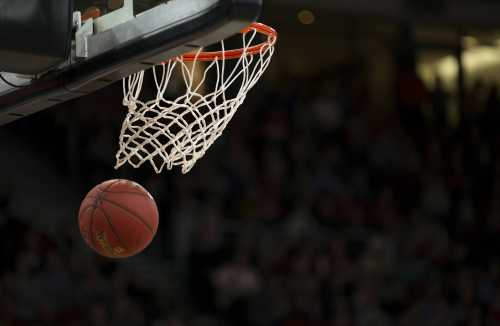
To truly understand the absolute chaos, the breathtaking strategy, and the mind-boggling financial wizardry that is the 2026 NBA Draft, we need to start with a very simple, easy-to-imagine scenario. Imagine the biggest, most spectacular, most incredibly stuffed toy store in the entire universe. This toy store is called the National Basketball Association, or the NBA. Inside this store, there are exactly thirty different treehouse clubs, and each treehouse club is run by a very wealthy, very competitive boss who wants to build the absolute best, most unstoppable team of toy robots in the world. These robots are the basketball players. Every year, the toy store gets a brand new shipment of the newest, shiniest, most advanced robot prototypes straight out of the factory. This shipment is called the Draft. And in June 2026, the bosses of the thirty treehouse clubs are gathered in a giant room, staring at this new shipment of robots, trying to figure out which ones will help them win the ultimate championship trophy. But there is a massive, gigantic, incredibly complicated catch. The toy store has a very strict, very magical rulebook called the Collective Bargaining Agreement, or the CBA for short. And this rulebook has completely, fundamentally, and permanently changed the way the game of basketball is played and the way the bosses are allowed to buy their robots.
Let us break down this magical rulebook in plain, simple English. For a long time, the bosses could just spend as much money as they wanted to buy the best robots. But the toy store owners realized that if only the three richest bosses could buy the best robots, the game would get very boring, very quickly. The same three treehouse clubs would win every single year, and all the other twenty-seven clubs would be sad and angry. So, they created a giant, invisible piggy bank called the Salary Cap. Every single treehouse club is only allowed to put a specific, maximum amount of money into their piggy bank to pay their robots. If a boss tries to put more money in the piggy bank than the rulebook allows, the toy store owners will punish them by taking away their future toys, or draft picks. But in 2026, the rulebook has added a brand new, incredibly strict layer to this piggy bank. It is called the "Second Apron." Imagine the piggy bank has a glass ceiling. If a boss spends so much money that they crack the glass ceiling and hit the Second Apron, the rulebook says they are suddenly punished with massive, terrible restrictions. They are not allowed to trade their robots for other robots in certain ways. They are not allowed to sign new robots from other toy stores. They are basically put in a giant, invisible timeout. This means that in the 2026 NBA Draft, the bosses are not just looking for the shiniest robot; they are looking for the smartest, most cost-effective robot. They are doing giant, complex math equations in their heads, trying to find a robot who will play like a million-dollar superstar but only cost them a tiny, beginner's piggy bank allowance. This is why the 2026 Draft is so incredibly fascinating. It is no longer just about who can jump the highest or run the fastest; it is about who fits perfectly into a giant, mathematical puzzle of salary cap restrictions, luxury tax penalties, and roster construction.
But the math is not just happening in the front offices; it is happening on the actual basketball court, and it has completely transformed the physical game of basketball into what scientists and coaches call "Math Basketball." To understand this, we have to go back to when you were a little kid playing a board game. In a board game, some spaces on the board give you one point, and some special, magical spaces give you three points. For decades, basketball coaches told their players to stay close to the basket, because shooting from close up was easy and usually guaranteed you two points. But then, some very smart people with computers realized a massive, undeniable mathematical truth. If you take one hundred shots from close up, you might make sixty of them, which gives you one hundred and twenty points. But if you take one hundred shots from far away, behind the magical three-point line, you might only make thirty-five of them because it is much harder. But thirty-five shots multiplied by three points equals one hundred and five points. And if you can train your robots to make just a few more of those far-away shots, say forty of them, that is one hundred and twenty points, but you took exactly the same number of shots! The math is undeniable. The three-point shot is mathematically superior to the two-point shot. And because of this, the entire game of basketball has been turned upside down. In 2026, the basketball court looks completely different than it did twenty years ago. The middle of the court, the area right under the basket and the area just inside the three-point line, is now considered "dead space." Nobody wants to shoot from there because it only gives you two points, but it is too far away to be easy. The entire game has been pushed to the extremes. You either shoot a three-pointer from way, way out, or you dunk the ball right in the basket. There is almost nothing in between. This has completely changed the type of robots the bosses want in the 2026 Draft. They no longer want big, slow, giant robots who just stand under the basket and wait for the ball. They want "unicorns." A unicorn in basketball is a robot who is as tall and strong as a giant, but who can run as fast as a little kid and shoot the ball from way, way out behind the three-point line. Finding a unicorn is incredibly rare, which is why the bosses at the 2026 Draft are fighting, arguing, and trading their future toys just to move up a few spots to draft the tallest, fastest, best-shooting teenagers on the planet.
And this brings us to the most dramatic, most thrilling, most nail-biting part of the entire 2026 NBA Draft: the trades. Remember how we said the bosses are trying to find the perfect robots while staying under the giant glass ceiling of the Second Apron? Well, sometimes, a boss realizes that the robot they have is too expensive, or does not fit the math, or is getting too old. So, they call up another boss and say, "I will trade you my expensive, older robot, and I will give you three of my future toys, if you let me move up in the draft to pick the shiny new unicorn." These trades happen in a frantic, chaotic, incredibly high-stakes environment. The phones are ringing off the hook, the bosses are whispering in hallways, and the fans are staring at their smartphones, refreshing their social media feeds every single second, waiting to see if their favorite treehouse club just made a brilliant move or a terrible mistake. In 2026, the draft is not just a single event where a commissioner walks on stage and announces a name. It is a sprawling, multi-day festival of basketball business, where dozens of players are traded, where millions and millions of dollars change hands, and where the destiny of entire franchises is decided in a matter of minutes. The pressure on the general managers, the bosses who make these decisions, is absolutely crushing. If they draft the right unicorn, they are celebrated as geniuses, and the city throws them a massive parade. If they draft the wrong robot, or if they trade away too many future toys and end up with nothing to show for it, they are fired, and the fans demand their jobs. It is a brutal, unforgiving, absolutely captivating world of high-stakes gambling, where the chips are human beings, and the prize is eternal glory.
As the 2026 NBA Draft unfolds, it represents the absolute pinnacle of modern basketball evolution. It is a beautiful collision of raw, breathtaking human athleticism and cold, hard, undeniable mathematics. The game has never been faster, it has never been more skilled, and it has never been more strategically complex. The bosses in the toy store are smarter than ever, the robots they are building are more incredible than ever, and the rules they are playing by are more challenging than ever. For the fans, it is an absolute treat. We get to watch the best players in the world play a game that is essentially high-speed, physical chess, where every single pass, every single screen, and every single shot is calculated to maximize the mathematical probability of winning. And for the young teenagers who are about to have their names called on that giant stage, it is the realization of a lifelong dream. They have spent thousands of hours practicing their shooting, lifting weights, and studying the math of the game, all for this single, magical moment when they get to put on the jersey of their favorite treehouse club and step onto the court to play the beautiful, mathematical, spectacular game of basketball.
Official Social Media & Alternative Source No verified official social media post was found summarizing the entire complex CBA and draft landscape. As an alternative, please refer to the official NBA.com Official 2026 Draft Guide and the ESPN's Comprehensive 2026 NBA Draft Coverage for the primary data, mock drafts, and salary cap breakdowns.
Related Articles

The Financialization of the Grid: How OEM Consolidation and Regulatory Friction Are Rewiring Formula 1
Sep 18, 2026
The Hardwood Reckoning: How Expansion Fees, Cap Circumvention, and Revenue Sharing Are Rewiring Basketball
Sep 17, 2026
Comments (0)
No comments yet. Be the first to share your thoughts!
Want to join the discussion?
Please log in to post a comment.
Login NoworCreate an Account