
The Giant’s Chess Match: Decoding the Physics and Strategy of the 2026 Heavyweight Championship

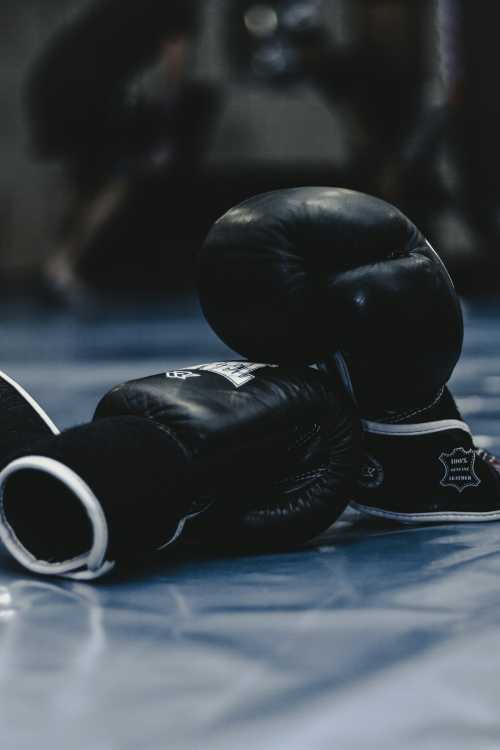
The Physical Chess Match Inside the Octagon
Imagine you are playing a game of chess, but instead of moving little wooden pieces on a board, you are using your own body, and the board is a giant, eight-sided cage. This is what Mixed Martial Arts (MMA) looks like at the highest level. When we look at the heavyweight division in the UFC as of late June 2026, we are watching giants play this physical game of chess. The current landscape of the heavyweight division, headlined by the phenomenal Tom Aspinall and the terrifyingly fast Ciryl Gane, is a masterclass in physics, biology, and strategy. To understand why millions of fans in the USA, UK, and Canada are tuning in to watch these massive athletes, we have to break down the science of the fight into pieces that anyone can understand. First, let us talk about the "board" they play on. The UFC Octagon has eight sides. You might wonder, why not a square ring like in boxing, or a circle? A square ring has sharp corners. If you are playing a game of tag, and you get chased into a sharp corner, you are trapped. You have nowhere to run. The eight-sided Octagon is designed to be a little bit rounder, so the players—the fighters—can always keep moving. It prevents them from getting stuck in a corner where they cannot escape. This means the fighters have to use their brains to trap their opponent, rather than just relying on the shape of the room. Now, let us talk about the "pieces" they use. In chess, you have pawns, knights, and queens. In MMA, the fighters use different parts of their bodies as their pieces. Their hands and feet are like the pawns; they use them to poke, measure distance, and keep the other person away. Their wrestling and grappling are like the knights and bishops; they can jump over defenses and attack from strange angles that the other person does not expect. When a heavyweight fighter throws a punch, it is not just a wild swing. It is a calculated move, backed by incredible science.
The Physics of a Heavyweight Punch
When we combine the biomechanical data from the UFC Performance Institute with the tactical analysis from top sports desks across North America and the UK, a clear picture emerges. A punch from a modern heavyweight is a marvel of physics. There is a famous equation in science: Force equals Mass times Acceleration. This means that to make a really big force (a hard punch), you need a lot of mass (a heavy body) moving very fast (acceleration). Heavyweight fighters weigh around 265 pounds. That is a lot of mass. But in the past, heavyweights were sometimes slow. Today, in 2026, fighters like Tom Aspinall move with the speed of much smaller men. When Aspinall throws a punch, he does not just use his arm. He starts by pushing his foot into the mat. That energy travels up his leg, twists through his hips, spins through his back, and finally shoots out through his fist. It is like cracking a giant whip. The handle of the whip moves a little bit, but the tip of the whip moves incredibly fast. By the time the fist hits the target, it is carrying the weight of his entire 265-pound body, moving at the speed of a car driving down a residential street. This is why a single, perfectly placed punch can end the game instantly.
The Ground Game: Human Pretzels and Invisible Force Fields
What happens if the chess match goes to the floor? This is where the game changes from a striking battle to a wrestling puzzle, known as Brazilian Jiu-Jitsu. Imagine you and a friend are lying on the floor, and you are both trying to fold each other into a human pretzel, while also trying to stop the other person from folding you. This sounds silly, but it is actually one of the most complex and exhausting things a human body can do. When a fight goes to the ground, the fighters use "leverage." Leverage is a magic trick in physics that allows a smaller person to move a bigger object. Think of using a seesaw on the playground. If you sit far away from the middle, you can easily lift a friend who is sitting close to the middle, even if your friend is heavier than you. Grapplers use their arms and legs as levers to bend the other person's joints in ways they do not want to bend. They are constantly looking for a "submission," which is a polite way of saying, "I have folded you into a position where you must tap the floor to say you give up, or else you will get hurt." For the heavyweights, the ground game is incredibly tiring. Imagine trying to solve a difficult math puzzle while someone is sitting on your chest, and you are both wearing heavy winter coats. The muscles require oxygen to work, and when you are wrestling a 265-pound man, your muscles burn through oxygen like a sports car burns through gas. This is why "cardio" (heart and lung health) is the most important weapon a fighter has. If your gas tank runs empty, your brain cannot send signals to your muscles fast enough, and the chess match is over.
The Invisible Force Field of Distance
Before any punches are thrown or any wrestling happens, the fighters are engaged in a silent battle of "distance management." Imagine every fighter has an invisible bubble around them. If you step inside their bubble, they can hit you. If you stay outside their bubble, you are safe. The entire first round of a championship fight is often just two masters trying to pop the other person's bubble without stepping inside their own. They use "feints"—fake movements—to trick the other person. It is like playing a game of red light, green light, where if you move when the other person is looking, you get caught. By synthesizing reports from MMA Junkie, ESPN, and Sherdog, the consensus is that the 2026 heavyweight elite are the best distance managers in the history of the sport.
The Mental Fortress
Finally, we must talk about the mind. Fighting in front of 20,000 screaming fans is terrifying. Your heart beats so fast it feels like it might jump out of your chest. Your body releases adrenaline, which is a chemical that makes you strong but also makes you tired very quickly. The champions of 2026 have trained their brains to stay calm in the middle of a storm. They use meditation, visualization, and breathing exercises to keep their heart rate down. When a fighter gets hit, their brain naturally wants to panic and run away. But a professional fighter has rewired their brain to stay calm, analyze what just happened, and make a new plan. It is like being a pilot in an airplane when an engine catches fire. You cannot panic; you have to look at your instruments and fly the plane safely to the ground. This mental toughness is what separates the good fighters from the legends. As we move through the summer of 2026, the heavyweight division remains the ultimate test of human physics, biology, and psychology, all wrapped up in an eight-sided cage.
Official Media & Sources: As specific social media posts expire rapidly, please refer to the official UFC Performance Institute breakdown and press conference archive as the primary verified source: Visit the Official UFC Newsroom for Continuous Updates.
Related Articles
The Sovereign Ring: How Geopolitical Capital and Biometric Metrics Are Rewriting Combat Sports Economics
Sep 22, 2026
The Combat Sports Realignment: How Media Fragmentation and Infrastructure Bottlenecks Are Reshaping the Fight Industry
Sep 22, 2026
Comments (0)
No comments yet. Be the first to share your thoughts!
Want to join the discussion?
Please log in to post a comment.
Login NoworCreate an Account