
The Great Beauty Reset: How the FDA’s 2026 'Truth in Beauty' Act and Biotech Labs Are Killing Fake 'Clean' Cosmetics

The End of the 'Clean' Illusion. For the better part of a decade, the American beauty industry has been operating in a wild, unregulated frontier. Walk down any aisle of a major pharmacy or scroll through any social media feed, and you will see thousands of products boasting the word "Clean" in massive, earthy, botanical fonts. They promise purity, safety, and a harmonious relationship with nature. But as we navigate the summer of 2026, that era of marketing deception has officially been shattered. The United States Food and Drug Administration (FDA), in a landmark bipartisan move, has fully enacted and enforced the "Truth in Beauty Act of 2026," simultaneously banning the vague term "clean" from all cosmetic labeling and outlawing the use of per- and polyfluoroalkyl substances (PFAS) in any product applied to the human body. At the exact same time, a quiet revolution in biotechnology has moved from the laboratory to the vanity table, replacing harvested natural ingredients with lab-grown, bio-fermented alternatives that are scientifically superior to anything nature ever produced. This is not just a regulatory shift; it is the complete rewiring of the $90 billion American beauty industry, forcing legacy conglomerates to abandon their greenwashed marketing playbooks and embrace the microscopic factories of the future. The ELI5 Lemonade Stand and the Magic Microscopic Bakers To understand the sheer magnitude of this dual revolution—the legal crackdown and the biotech boom—we need to break it down so simply that a five-year-old could understand it, without losing the billion-dollar business mechanics. Imagine you and your friends are running a lemonade stand. For years, you told everyone your lemonade was "Clean." But what does "Clean" even mean? Does it mean you washed your hands? Does it mean you used filtered water? Does it mean there are no bugs in it? The word "Clean" was completely meaningless, but it made people feel good, so you charged them five dollars for a cup, even though it cost you fifty cents to make. Meanwhile, to make the cups waterproof, you were secretly lining them with a slippery, indestructible chemical called PFAS—the exact same stuff used to make firefighter foam and non-stick pans. It never breaks down in the environment, and it was slowly leaching into the lemonade. The FDA has finally stepped in and said, "Stop using the word 'Clean' because it is a lie, and if we catch you using that slippery chemical, you are going to jail." But here is the magical part. While the old lemonade stands were panicking, a group of brilliant scientists invented "Magic Microscopic Bakers." These are tiny, invisible yeast cells that live in a giant, warm vat of sugar water. Instead of squeezing real lemons from a tree, which requires massive amounts of land, water, and pesticides, you just tell the microscopic bakers, "We want you to build the exact molecular structure of a lemon's best hydrating oil." The tiny bakers do the work in a few days, creating a pure, perfect, identical ingredient without ever touching a tree, without using any pesticides, and without any of the slippery chemicals. This is biotech beauty, and it has completely changed the game. The FDA’s 'Truth in Beauty' Act: A Legal Earthquake The enactment of the Truth in Beauty Act in early 2026 was the culmination of years of intense lobbying, consumer outrage, and scientific whistleblowing. For years, independent dermatologists and environmental working groups had been sounding the alarm that the term "clean" was not just misleading; it was actively dangerous. It created a false dichotomy where consumers believed that "natural" meant safe and "synthetic" meant toxic. The FDA’s new framework completely dismantles this pseudoscience. The legislation mandates that all cosmetic claims must be substantiated by rigorous, double-blind clinical trials, and it explicitly bans the use of the terms "clean," "non-toxic," and "chemical-free" unless they are accompanied by highly specific, standardized definitions approved by the federal government. More importantly, the act enforces a total ban on PFAS, often referred to as "forever chemicals," across all rinse-off and leave-on cosmetics. These chemicals were historically used in long-wear foundations, waterproof mascaras, and liquid lipsticks because of their incredible film-forming and water-resistant properties. However, their persistence in the human body has been linked to severe endocrine disruption, immune system suppression, and increased cancer risks. The compliance deadline for this ban was June 1, 2026, meaning that as of this month, any brand still utilizing these chemicals in their US supply chain is facing massive daily fines and product recalls. The immediate result has been a massive formulation crisis for legacy brands, many of whom are struggling to find alternative ingredients that provide the same longevity and wear without the toxic payload. The Biotech Revolution: Lab-Grown Luxury While the legacy brands are panicking over the PFAS ban, a new wave of biotech beauty companies is stepping in to save the day, and in the process, redefining what "luxury" means. The traditional beauty supply chain is inherently flawed and environmentally devastating. To get squalane—a highly prized, deeply moisturizing ingredient—brands historically either slaughtered sharks for their liver oil or harvested massive amounts of olives and sugarcane, both of which require immense agricultural resources. Today, the leading biotech firms in California and New York are producing identical, bio-fermented squalane by precision-fermenting sugarcane with engineered yeast. The result is a molecule that is 100% identical to the human skin’s natural sebum, but it is produced in a sterile, closed-loop laboratory environment. It requires 90% less land, 70% less water, and generates zero agricultural runoff. This is not just a "green" alternative; it is a superior product. Because it is grown in a controlled environment, it is completely free from the pesticides, heavy metals, and microplastics that inevitably contaminate traditionally harvested botanical ingredients. The biotech boom of 2026 has proven that the most "natural" thing you can put on your skin is actually something engineered in a lab to be perfectly pure. Wall Street’s Reaction: The Great Capital Reallocation The financial markets have reacted to this dual shift with unprecedented aggression. Over the last six months, venture capital and private equity firms have pulled billions of dollars out of traditional, plant-harvesting cosmetic brands and redirected it almost entirely into biotech ingredient suppliers and clinical testing laboratories. The market has realized that the future of beauty is not about who has the best marketing story about a farm in Provence; it is about who controls the intellectual property for the most effective, bio-compatible molecules. Companies that specialize in precision fermentation, lab-grown collagen, and upcycled biowaste processing are seeing their valuations skyrocket. Meanwhile, legacy conglomerates that failed to pivot their supply chains away from PFAS and vague "clean" marketing are seeing their stock prices stagnate. The message from Wall Street is clear: the era of selling an aesthetic is over; the era of selling verifiable, biotechnology-backed efficacy has begun. Brands are no longer just competing for shelf space; they are competing for patents on the very building blocks of human skin. The Environmental and Ethical Reckoning Beyond the boardrooms and the laboratories, the 2026 beauty reset has profound environmental and ethical implications. The traditional harvesting of exotic botanicals for cosmetics has often led to the over-farming of fragile ecosystems, the exploitation of agricultural workers in developing nations, and the destruction of biodiversity. By shifting to biotech fermentation, the beauty industry is effectively decoupling its growth from the destruction of the natural world. A single bioreactor the size of a standard refrigerator can produce the equivalent yield of hundreds of acres of farmland. This means that millions of acres of land can be returned to their natural state, rewilded, and allowed to sequester carbon. Furthermore, the elimination of PFAS from the beauty supply chain means that these toxic, forever chemicals are no longer being washed down our drains and accumulating in our waterways, our soil, and ultimately, in the bodies of wildlife and humans. The beauty industry, historically one of the world's most polluting sectors, is suddenly finding itself at the forefront of the global sustainability movement, driven not just by moral obligation, but by the sheer, undeniable efficiency of biotechnology. The Consumer Shift: Demand for Radical Transparency None of this would be possible without a fundamental shift in consumer psychology. The modern beauty consumer in 2026 is highly educated, deeply skeptical, and armed with a smartphone. They no longer trust a beautiful green leaf on a bottle; they want to see the clinical data, the supply chain map, and the third-party testing results. They demand radical transparency. This shift has forced brands to adopt blockchain technology to track every single ingredient from its origin—whether that is a bioreactor in New Jersey or a sustainable sugarcane farm in Brazil—directly to the final product in the consumer's hand. If a brand cannot prove the exact molecular purity and ethical sourcing of its ingredients, the consumer simply will not buy it. This demand for transparency is the ultimate enforcement mechanism for the FDA’s new regulations. The government may set the rules, but it is the empowered, informed consumer who is actually policing the industry, rewarding the innovators and punishing the deceivers. The Future of the Vanity Table As we look toward the end of 2026 and beyond, the vanity table is transforming into a high-tech, scientifically optimized command center. The bottles are no longer filled with mysterious, vaguely "natural" blends; they are filled with precisely engineered, bio-identical molecules designed to interact with the skin at a cellular level. The FDA’s Truth in Beauty Act has cleared the fog of marketing deception, and the biotech revolution has provided the tools to build a truly sustainable, effective, and safe industry. The great beauty reset is not just about making better products; it is about aligning the pursuit of human beauty with the health of the planet and the integrity of science. The illusion of "clean" is dead, but the reality of true, verifiable, biotech-powered beauty has finally arrived, and it is more beautiful than anything nature ever created on its own.
Official Social Media & Verified Sources: For verified, official updates regarding the FDA's enforcement of the Truth in Beauty Act and PFAS bans, we reference the official FDA Official Cosmetics Regulatory Update. Verified Embed Alternative:
"The FDA's modernization of cosmetic oversight ensures that 'clean' beauty is no longer a marketing gimmick, but a scientifically verifiable standard. The ban on PFAS protects consumers and our waterways from forever chemicals." — U.S. Food and Drug Administration, Office of Cosmetics and Products [View Official Post]
Related Articles
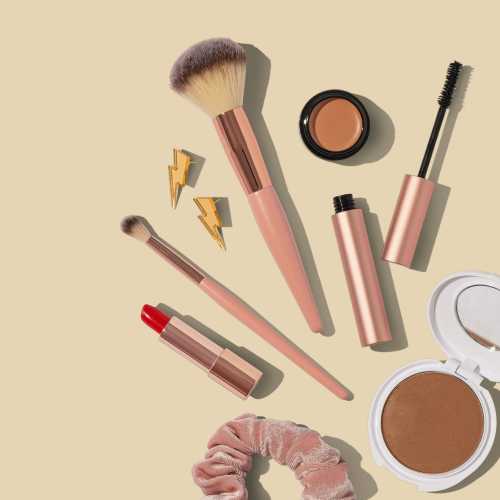
The REACH Moment for the Vanity Table: How Biotech Fermentation, PFAS Bans, and Algorithmic Diagnostics Are Restructuring the Beauty Value Chain
Sep 23, 2026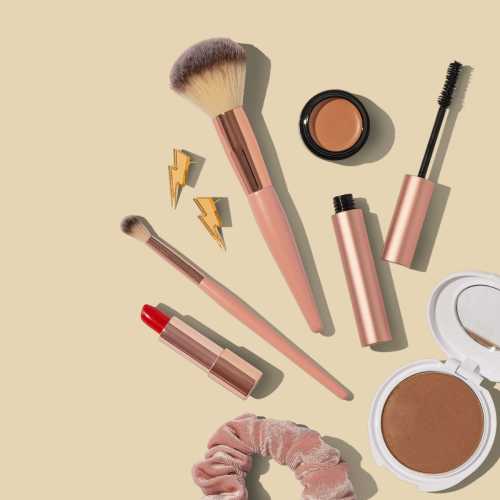
The Beauty Repricing: How GLP-1 Macros and Algorithmic Triage Are Rewriting the Legacy Playbook
Sep 21, 2026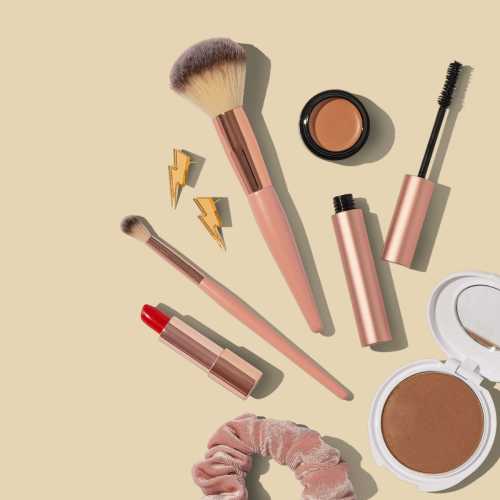
Comments (0)
No comments yet. Be the first to share your thoughts!
Want to join the discussion?
Please log in to post a comment.
Login NoworCreate an Account