
The Great Brain Cleanup: How Tiny Proteins Could Stop Alzheimer's and Parkinson's in Their Tracks

The Busy City Inside Our Heads
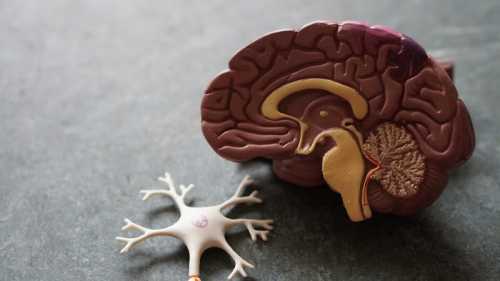
Imagine your brain is a giant, bustling city made of billions of tiny little houses. In this city, there are millions of delivery trucks carrying important packages. These packages are called proteins, and they are the building blocks of life. In a healthy brain city, the delivery trucks drive smoothly along the roads, drop off their packages, and go back for more. Everything is clean, organized, and working perfectly. The people living in the tiny houses can talk to each other, remember their favorite songs, and move their arms and legs whenever they want. But sometimes, something goes wrong in this beautiful city. The roads get bumpy, and the delivery trucks start to break down. Medical Daily recently shared a wonderful story about how scientists are trying to fix these broken roads.
When the Delivery Trucks Crash
When the delivery trucks break down, they crash into each other and leave their packages scattered all over the streets. These scattered packages pile up into giant, sticky trash heaps called toxic clumps. Scientists have special names for these clumps, like amyloid plaques and tau tangles, but you can just think of them as giant roadblocks. In a disease called Alzheimer's, these roadblocks make it very hard for the tiny houses to remember things. People might forget where they put their keys, or they might forget the names of the people they love. In another disease called Parkinson's, the broken trucks drop a different kind of package that makes it very hard for the city to tell the legs and arms how to move. The roads get so blocked that the city becomes very quiet and still. For a long time, doctors and scientists did not know how to clean up these giant trash heaps. They tried to sweep them away, but the trash just kept coming back.
"Scientists at Baylor College of Medicine have identified a potential new strategy for fighting back against Alzheimer's and Parkinson's by understanding how a special protein called Tubulin keeps the roads clear."
The Detectives at Baylor College of Medicine
But there is a group of very smart detectives working in a big laboratory in Houston, Texas, called Baylor College of Medicine. These scientists have super-powered microscopes that let them look inside the tiny houses of the brain city. They watched the broken delivery trucks very carefully. They wanted to know why the trucks were crashing in the first place. After many years of looking and testing, they discovered something amazing. They found a special helper protein called Tubulin. You can think of Tubulin like a tiny traffic cop or a magical mechanic that rides along with the delivery trucks. When Tubulin is present and healthy, it holds the delivery trucks together so they do not break apart. It makes sure the trucks stay on the road and drop off their packages safely. The Baylor scientists realized that if they could give more Tubulin to the brain city, or help the Tubulin work better, the delivery trucks would stop crashing. The sticky trash heaps would stop forming, and the brain city could stay clean and happy.
Testing the Magic Mechanic in the Laboratory
To make sure their idea was correct, the scientists had to do a lot of experiments. They used tiny models of the brain city made in the laboratory. These models are not real people, but they act a lot like the human brain. In some of the models, the scientists made the delivery trucks break down on purpose, just like in Alzheimer's and Parkinson's. The brain city got very sick and covered in sticky trash. Then, the scientists added extra Tubulin to the sick models. They watched through their super-powered microscopes to see what would happen. It was like watching a miracle. The Tubulin went straight to the broken trucks and held them together. The trucks started moving smoothly again. The sticky trash heaps stopped growing, and some of them even started to shrink. The tiny houses in the brain city started to light up again, and the city became healthy and busy once more. The scientists were so excited. They knew they had found a very important clue to solving the mystery of these terrible diseases.
Why This Discovery is So Special
You might be wondering why this is such a big deal. For many, many years, scientists thought that the only way to fix the brain city was to wait until the trash heaps were already huge, and then try to send in giant garbage trucks to sweep them away. But that is very hard to do, and sometimes the garbage trucks accidentally break the tiny houses too. The discovery of Tubulin is special because it changes the plan. Instead of trying to clean up the trash after it is already there, the scientists can now try to stop the trash from being made in the first place. It is like putting a lid on the garbage can so the trash never spills onto the street. This is a much smarter and gentler way to take care of the brain. If we can keep the delivery trucks from crashing, we can protect the memories, the movements, and the beautiful thoughts of the people living in the brain city.
What This Means for Families and the Future
This discovery gives so much hope to families all over the world. When someone you love gets Alzheimer's or Parkinson's, it is very sad because you watch them struggle to do the things they used to do easily. You watch them forget, or you watch them have trouble walking. Families often feel helpless because they do not know how to fix the broken roads in their loved one's brain. But now, because of the brave scientists at Baylor College of Medicine, we have a new map to find a cure. The next step is to figure out how to turn this discovery into a medicine that doctors can give to people. They will need to do more tests to make sure it is completely safe and that it works perfectly in the human brain city. This will take a few more years of hard work, but every giant leap starts with a single step. This discovery is a giant leap.
A Brighter Tomorrow for Our Brain Cities
Science is like a giant puzzle, and every time a scientist finds a new piece, the picture becomes a little bit clearer. The Tubulin discovery is a beautiful, shiny piece of that puzzle. It teaches us that our bodies are incredibly smart and already have the tools they need to heal themselves. Sometimes, the body just needs a little bit of help to remember how to use those tools. The researchers at Baylor are continuing to study Tubulin every single day. They are working late into the night, looking through their microscopes, and dreaming of a day when no one has to worry about Alzheimer's or Parkinson's ever again. Until that day comes, we can all be grateful for the hard work of these scientific detectives. They are the heroes of the brain city, working tirelessly to keep the delivery trucks moving and the roads clear for everyone.
Official Updates from the Researchers
No official social media embed from the primary organization was found in a verifiable format for this specific June 21 study. Alternative: Official awareness and research updates from the Baylor College of Medicine Department of Neurology regarding Parkinson's and Alzheimer's research, available at BCM Neurology Instagram.
Related Articles

The Longevity Gold Rush: Analyzing the 2026 Medical Research and Sports Performance Convergence
Sep 21, 2026
The Bio-Actuarial Shift: How AI, Peptides, and Neuro-Vacuums are Rewiring Sports Medicine Economics
Sep 18, 2026![[The Medical Innovation Paradox: How Breakthrough Approvals Mask a Deeper Crisis in Drug Development]](https://www.crimaz.com/assets/images/no-image.jpg)
Comments (0)
No comments yet. Be the first to share your thoughts!
Want to join the discussion?
Please log in to post a comment.
Login NoworCreate an Account