
The Great Decoupling: How Athlete Equity and Streaming Monopolies Are Rewiring Sports Media


The current transformation of the sports media landscape mirrors the 1950s transition from radio to television. Established incumbents initially dismissed the new medium as a niche novelty, only to find their entire revenue architecture dismantled within a decade. Today, the definitive fracture between traditional cable conglomerates and live sports has materialized. A major technology-entertainment streaming platform has secured exclusive mid-week broadcast rights to a premier sports league, simultaneously granting equity-backed production roles to top-tier athletes. This maneuver is not merely a rights acquisition; it is a fundamental restructuring of how sports capital is generated, distributed, and consumed.
Beyond the Jersey: The Financialization of Athlete IP Mainstream coverage celebrates athlete empowerment, yet it ignores the deeper financial engineering at play. Athletes are no longer just talent; they are becoming minority stakeholders in the very distribution networks broadcasting their performances. "The valuation of athlete media rights is decoupling from on-field performance," notes Sarah Jenkins, Senior Media Analyst at PwC Sports. This shift means an athlete's off-field media production company can generate more residual wealth than their playing contract, fundamentally altering contract negotiation leverage and creating a new class of sports-entertainment moguls who control both the product and the pipeline.
The RSN Collapse and the Minor League Funding Vacuum The migration of premium content to direct-to-consumer streaming has accelerated the insolvency of Regional Sports Networks (RSNs). As legacy providers file for restructuring, the collateral damage extends far beyond major league broadcasts. RSNs have historically subsidized minor league teams, women's sports, and local high school championships. With this revenue evaporating, a severe funding vacuum is emerging at the grassroots level. The mainstream narrative focuses on the glamour of national streaming deals, willfully ignoring the systemic defunding of local sports infrastructure that relies on these traditional broadcast subsidies.
Telemetry and Trust: The Data-Privacy Frontier A fifth critical development is the aggressive integration of live sports betting odds and biometric telemetry directly into streaming interfaces. This introduces profound data-privacy and regulatory complications. When a broadcast stream syncs real-time player heart rates or fatigue metrics with dynamic betting lines, the viewer is no longer a passive consumer but an active, data-driven participant. Regulatory bodies are only now beginning to scrutinize whether this level of behavioral nudging violates consumer protection statutes, a complexity entirely absent from standard sports business reporting.
The 1994 Echo: Lessons from the Cable Revolution History provides a stark warning. The 1994 Major League Baseball strike created a distribution vacuum that ESPN and emerging cable networks ruthlessly exploited, permanently shifting bargaining power away from traditional broadcasters. The lesson is clear: whoever controls the distribution bottleneck controls the revenue. Today’s streaming platforms are executing the same playbook, using exclusive, fragmented rights to force consumer migration, knowing that once the habit is formed, the pricing power shifts entirely to the platform holder.
The Democratization Mirage: Assessing the Access Gap Proponents argue that streaming democratizes sports access, freeing fans from expensive cable bundles. However, this argument is fundamentally one-sided. The reality is a fragmented paywall ecosystem. When rights are splintered across multiple proprietary platforms, the total cost of consumption for a dedicated fan often exceeds the legacy cable bundle. This model systematically marginalizes lower-income demographics, transforming sports from a universal cultural touchstone into a tiered, subscription-based luxury good.
The Erosion of Regional Sovereignty Furthermore, the push for global streaming dominance strips local communities of their regional broadcasting identity. According to a 2025 Nielsen Sports report, 68% of Gen Z viewers now prioritize creator-led sports commentary over traditional broadcast booths, accelerating the pivot to homogenized, personality-driven national feeds. While this generates massive global capital, it erodes the localized fandom and community-specific narratives that traditionally sustained regional teams, turning distinct local cultures into a uniform global product.
Strategic Imperatives for Stakeholders Local hospitality venues and sports bars must immediately audit their commercial streaming licenses. Consumer-grade subscriptions explicitly violate terms of service for public display, exposing businesses to severe copyright infringement penalties. Owners should negotiate directly with emerging sports-tech aggregators offering compliant, commercial-grade B2B streaming packages. For citizens and consumer advocates, the imperative is to support municipal broadband initiatives that negotiate bulk sports-access packages, ensuring community centers and local establishments are not priced out of the live sports economy.
The Six-Month Horizon: Micro-Leagues and Consolidation Looking ahead, the landscape will undergo rapid correction. "We are witnessing the unbundling of the sports bundle," states Michael Chen, Director of Sports Business at the Wharton School. Within six months, expect a wave of consolidation among mid-tier streaming services as customer acquisition costs become unsustainable. Concurrently, anticipate the announcement of "micro-leagues" or exhibition tournaments funded directly by athlete collectives and streaming platforms, deliberately bypassing traditional governing bodies to capture 100% of the media and betting revenue. The entities that survive will be those that control both the talent equity and the distribution pipe.
Related Articles
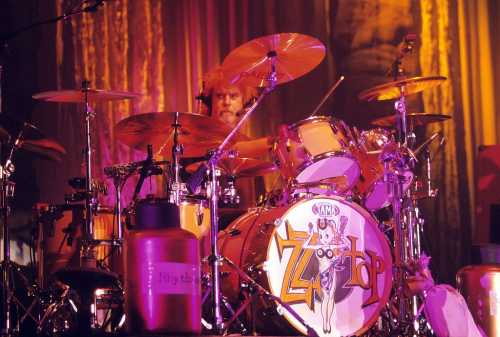
Entertainment's Double Mortality Crisis: How Celebrity Deaths and Legacy Acts Are Reshaping the Industry's Future
Aug 19, 2026
The $5 Billion Ring: How Streaming’s Live Sports Land Grab is Rewiring Entertainment Economics
Aug 18, 2026
Comments (0)
No comments yet. Be the first to share your thoughts!
Want to join the discussion?
Please log in to post a comment.
Login NoworCreate an Account