
The Hype Liquidation: How Tariff Contagion and Archival Arbitrage are Rewiring Streetwear Economics

The Margin Call on the Hype Cycle
Think of the modern streetwear economy as a high-stakes underground casino where the house spent a decade printing limited-edition chips to fuel a secondary black market, only to discover in 2026 that the local gaming commission has slapped a 50% tax on every chip, the casino's biggest VIP room just got sold off for pennies on the dollar, and the only profitable games left are the peer-to-peer poker tables in the back alley. In a synchronized macroeconomic correction, the global streetwear sector has executed a violent structural bifurcation, characterized by VF Corp’s fire sale of Supreme to EssilorLuxottica and a catastrophic tariff contagion that is forcing legacy brands to absorb billions in import taxes. Simultaneously, the secondary market is consolidating around high-margin archival platforms while the traditional "drop model" faces terminal margin compression. This dual mandate marks the definitive transition of streetwear from a volume-driven, hype-chasing subculture into a highly regulated, yield-managed alternative asset class.
The Liquidation of the Heritage Monolith
The mainstream retail press treats the changing of the guard at the apex of streetwear as a routine corporate restructuring, ignoring the macroeconomic reality of the balance-sheet writedown it signals. When a legacy conglomerate admits defeat on the ultimate hype asset, it proves that the cultural premium of streetwear cannot be synthetically engineered through corporate cross-pollination. As industry analysts note, "VF Corp has parted ways with Supreme, selling it to EssilorLuxottica for $1.5 billion—a stark $600 million less than" its original $2.1 billion acquisition price [[25]]. The unseen implication for [[Streetwear Economics & Cultural Architecture]] is the permanent insolvency of the conglomerate-owned streetwear model. Conglomerates are no longer capable of sustaining the organic scarcity required to justify nine-figure valuations; they are being forced to divest cultural liabilities to specialized hardware and eyewear monopolies that view the brand not as a standalone apparel powerhouse, but as a high-margin licensing node for accessory cross-sell.
Echoes of the 1990s Skate Shop Consolidation
This 2026 convergence perfectly mirrors the late-1990s consolidation of the American skate and surf industry, when legacy action-sports conglomerates like Quiksilver and Billabong attempted to buy up grassroots skate shops and indie board brands to capture the emerging youth demographic. The resulting monopoly on physical retail allowed these conglomerates to starve independent founders of the wholesale distribution required to compete, eventually leading to a massive inventory glut and the bankruptcy of the parent companies when the core culture rejected the corporatized product. The lesson for 2026 is that whenever a decentralized, culture-driven subculture is absorbed by a volume-driven public conglomerate, the cultural yield collapses. Today’s fire sales and tariff-driven margin compressions are simply the modern equivalent, proving that streetwear's value is intrinsically tied to its operational friction and localized scarcity, not global supply chain efficiency.
The Tariff Contagion and the Blank Canvas Pivot
Simultaneously, the financial architecture of the mid-tier streetwear label is undergoing a violent margin extraction via unprecedented trade policy friction. With average apparel tariffs on Chinese imports surging past 50%, the traditional playbook of manufacturing heavyweight blanks in Asia and air-freighting them to Western drop-shops is mathematically insolvent. Nike recently disclosed that it expects "U.S. tariffs to cost $1.5 billion in fiscal 2026," a staggering liability that is forcing the entire sector to rethink its landed-cost models [[38]]. The unseen reality is the permanent nearshoring of the streetwear supply chain. Indie labels are aggressively pivoting to local, domestic blank manufacturers to bypass the trans-Pacific toll-booths, effectively stripping the global streetwear market of its standardized, Asian-milled silhouettes and replacing them with localized, high-margin, domestically stitched garments that fundamentally alter the tactile quality and pricing architecture of the modern drop.
The Drop Model Delusion
Proponents of the perpetual "drop model" argue that artificial scarcity and weekly limited releases remain the ultimate mechanism for maintaining brand heat and driving high-velocity, full-price sell-throughs without relying on end-of-season discounting. This perspective correctly identifies that the drop model trains the consumer to buy immediately out of FOMO (Fear Of Missing Out). However, it ignores the severe operational friction and customer acquisition costs required to sustain weekly hype in a tariff-burdened economy. When the landed cost of a single hoodie increases by 40% due to import taxes, the margin required to subsidize the marketing spend for a weekly drop evaporates, forcing brands to abandon the high-frequency release calendar in favor of seasonal, high-ticket capsule collections that prioritize margin preservation over cultural velocity.
The Authentication Theater and the Toll-Booth
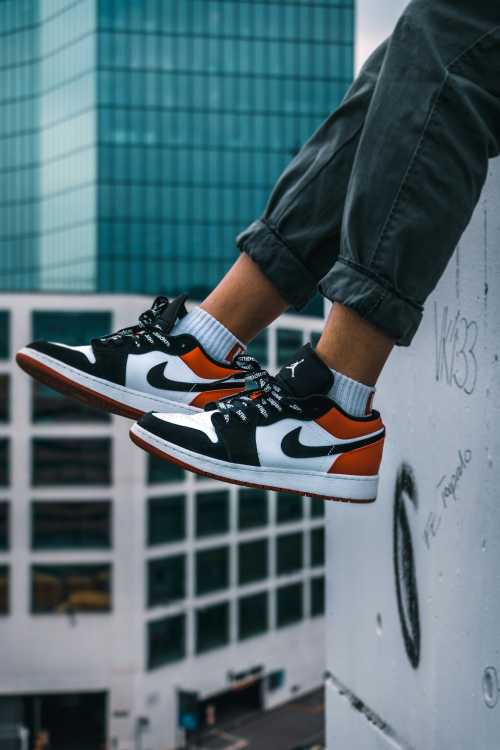
Furthermore, the physical manifestation of this capital flight is the explosive growth of the authenticated secondary market, which is fundamentally decoupling streetwear valuation from primary retail drops and reattaching it to institutional verification. The global infrastructure supporting this secondary trade is massive, with the sneaker resale platform market projected at "$4.6" billion [[6]]. Platforms like StockX and GOAT have effectively transformed the streetwear secondary market into a high-frequency trading floor, where algorithmic pricing models dictate the cultural value of a silhouette before it even ships to the primary consumer. The unseen implication is the permanent devaluation of the unverified physical garment. When the market relies entirely on proprietary authentication centers to validate a $300 sneaker, the primary brand loses control of its secondary liquidity, effectively paying a toll to the verification duopoly every time a piece of its cultural IP changes hands.
The Archival Arbitrage and the Peer-to-Peer Pivot
Conversely, legacy resale executives argue that centralized authentication hubs are a vital mechanism to protect the consumer from the deluge of hyper-realistic counterfeit goods flooding the market from overseas manufacturing nodes. This argument correctly identifies that the secondary market is plagued by severe metric inflation and synthetic fakes. However, it ignores the severe margin compression and fee fatigue it triggers among high-volume traders. As sellers flee the 10% to 15% take-rates of centralized hubs, capital is migrating toward specialized, peer-to-peer archival platforms. Market data confirms that Grailed generated "$38,077,276 in revenue from online sales" in June 2026 alone, highlighting a massive consumer pivot toward curated, archival menswear and vintage streetwear [[30]]. This structural shift destroys the unit economics of the deadstock sneaker flipper, forcing a massive capital migration toward rare, archival clothing pieces that carry higher intrinsic cultural value and bypass the algorithmic price-suppression of mass-market sneaker trading.
Tactical Realignment for Indie Labels and Resellers
For local boutique owners, independent streetwear founders, and secondary market arbitrageurs, the immediate action must be the aggressive pivot toward domestic supply chains and archival curation. Indie labels must abandon the delusion of the trans-Pacific manufacturing playbook, and instead build highly specialized, direct-to-consumer relationships with local, domestic cut-and-sew facilities that bypass the 50% tariff toll-booths and allow for rapid, localized micro-drops. Secondary market resellers must pivot away from the high-volume, low-margin sneaker flip on centralized exchanges, and instead build highly curated, peer-to-peer archival storefronts that cater to the growing demand for rare, vintage streetwear and designer collaborations. Furthermore, local civic groups and retail incubators must establish autonomous, decentralized mutual-aid networks to subsidize the domestic manufacturing tooling required to launch indie streetwear brands, preventing the total privatization of the cultural aesthetic by legacy conglomerates and eyewear monopolies.
The Six-Month Bifurcation Horizon
In six months, as the holiday retail cycle collides with the full enforcement of the new trans-Pacific apparel tariffs, we will witness the first major "blank shortage" scandal, where a prominent mid-tier streetwear label faces catastrophic insolvency after failing to secure domestic heavyweight fleece inventory for its highly anticipated winter drop. Concurrently, the major centralized resale platforms will formally launch proprietary, blockchain-verified digital twins for all authenticated inventory, entirely bypassing the physical shipping of deadstock goods to capture the secondary transaction fees and enforce algorithmic price-floors on their historical IP. The bifurcation of the streetwear economy will be complete: a premium, heavily gated tier of domestically stitched, archivally verified cultural artifacts, and a stagnant, heavily taxed public tier of tariff-burdened, mass-market graphic tees.
Related Articles
The Algorithmic Register: How BAPE’s Dynamic Pricing is Capturing the Secondary Market Arbitrage
Sep 25, 2026
The Tokenized Tribe: How Stüssy’s DAO Sub-Label is Shifting Power from Brand Dictatorship to Community Equity
Sep 25, 2026
Comments (0)
No comments yet. Be the first to share your thoughts!
Want to join the discussion?
Please log in to post a comment.
Login NoworCreate an Account