
The Lemonade Stand Audit: How HMRC’s New Digital Tax Hub is Bringing the UK’s Influencer Economy Out of the Shadows

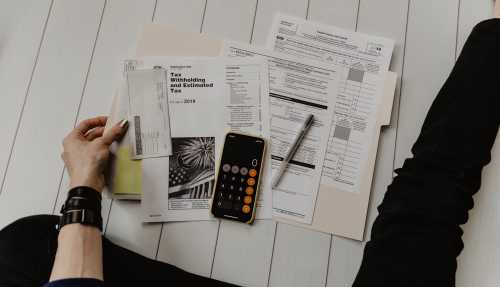
Imagine you and your friends decide to set up a lemonade stand on your street. You sell delicious lemonade, and you make a lot of money. But there is a rule in your town: because you use the town's streets, the town's water, and the town's police to keep you safe, you have to put a little bit of your lemonade money into a giant community piggy bank. This piggy bank pays for the roads, the schools, the hospitals, and the parks. This is what taxes are. For a long time, if you sold lemonade in the real world, the town knew exactly how much you made, and they made sure you put your share in the piggy bank. But when people started selling 'digital lemonade' on the internet, the town lost track. The money was flowing in from all over the world, through secret digital pipes, and the town's piggy bank was missing out on millions of pounds. In the United Kingdom, the government agency in charge of the piggy bank is called HMRC, and in 2026, they have finally built a giant, digital magnifying glass to see exactly who is selling lemonade online.
To understand why this is such a monumental shift, we have to look at the unique nature of the influencer economy. Being an influencer is not just one job; it is a dozen different jobs rolled into one. An influencer might get paid a flat fee by a brand to post a photo. They might get a free hotel stay in exchange for a video. They might earn a small commission every time a fan clicks a link and buys a pair of shoes. They might receive direct cash gifts from fans on a live stream. They might even get paid to speak at a university event. In the early days of YouTube and Instagram, this income was fragmented, messy, and incredibly hard to track. Many young creators, who started making videos just as a fun hobby, suddenly found themselves making thousands of pounds a month. But because they were just kids in their bedrooms, they had no idea that this was a business. They did not know they had to register as self-employed, they did not know how to calculate their expenses, and they certainly did not know they had to pay taxes.
This ignorance created a massive 'tax gap.' The tax gap is the difference between the amount of tax that should be paid to HMRC and the amount that is actually paid. By 2025, HMRC estimated that the digital creator economy was responsible for over five hundred million pounds in unpaid taxes annually. This was not because the influencers were evil or greedy; it was because the system was too complex for them to navigate, and the government lacked the tools to monitor it. The traditional methods of auditing—sending a letter in the mail asking for bank statements—were useless against a global digital economy where money moves in milliseconds through platforms based in California, Dublin, and Beijing.
Enter the 'Creator Economy Tax Hub,' a revolutionary, fully integrated digital system launched by HMRC in early 2026. This is not just a new website; it is a fundamental rewiring of how the UK government interacts with the digital workforce. HMRC has negotiated unprecedented data-sharing agreements with the major social platforms, including TikTok, Instagram, YouTube, and Twitch. Under the new 'Digital Platform Reporting Directive,' these platforms are now legally required to automatically report the earnings of any UK-based creator who makes over a certain threshold. The platforms send the data directly to HMRC's secure servers. The Creator Economy Tax Hub then uses advanced artificial intelligence to match this data with the creator's personal tax return. If the AI sees that a creator made fifty thousand pounds on TikTok, but only declared five thousand pounds on their tax return, it instantly flags the discrepancy and sends an automated, gentle notification to the creator's phone.
The reaction from the UK influencer community was initially one of sheer panic. Social media was flooded with videos of creators crying, claiming that HMRC was going to bankrupt them, take their houses, and ruin their lives. They argued that they were just kids, that they did not understand accounting, and that the government was being cruel. But HMRC anticipated this backlash and launched a massive, multi-million-pound educational campaign called 'Create and Contribute.' They realized that you cannot just punish people for breaking rules they do not understand; you have to teach them the rules first.
The 'Create and Contribute' campaign is a masterpiece of public communication. HMRC partnered with the biggest, most respected creators in the UK—people like the Sidemen, major beauty gurus, and top gaming streamers—to make highly produced, incredibly clear, and surprisingly entertaining videos explaining how taxes work. They explained, in simple, relatable terms, what counts as income (yes, even the free PR packages and the gifted holidays have a cash value that must be declared). They explained what counts as a deductible expense (you can deduct the cost of the camera you use to film, but you cannot deduct the designer clothes you wear in the video). They provided free, step-by-step tutorials on how to use the new, simplified digital tax portal. They even offered a one-time 'amnesty period,' where creators could correct their past tax returns without facing penalties, as long as they came forward before the end of the year.
The economic impact of this initiative on the UK treasury is staggering. In its first quarter of operation, the Creator Economy Tax Hub has already recovered over eighty million pounds in previously unpaid taxes. This is money that will now be used to fund the National Health Service, build new schools, and repair roads. But the impact on the influencer industry itself is even more profound. It is forcing the professionalization of the creator economy. The days of the amateur, bedroom vlogger operating entirely in the shadows are over. To succeed in 2026, a UK influencer must treat their channel like a legitimate, registered business. They are hiring accountants, they are setting up limited companies, and they are managing their finances with a level of sophistication that would make a traditional small business proud.
This professionalization is actually a massive benefit for the creators themselves. By formalizing their businesses, they can now access commercial mortgages to buy proper studio spaces. They can get business loans to invest in better equipment. They can hire staff, like editors and managers, as legitimate employees with benefits. The tax system, once viewed as the enemy of the creator, is actually providing the framework that allows them to scale their operations and build long-term, sustainable wealth. It is transforming the influencer economy from a chaotic, fleeting gig into a stable, respected pillar of the British economy.
Furthermore, the new system has leveled the playing field between digital creators and traditional brick-and-mortar businesses. For years, local shop owners have complained that it is unfair for them to pay strict taxes and business rates, while the digital influencer down the street makes ten times their revenue and pays nothing. The Creator Economy Tax Hub has resolved this inequality. The digital lemonade sellers are now contributing their fair share to the community piggy bank, just like the physical lemonade sellers. This has fostered a new sense of mutual respect between the high street and the digital high street.
The technology behind the Hub is continuously evolving. HMRC is now exploring the use of blockchain technology to track the flow of digital assets and cryptocurrency payments, which are increasingly common in the influencer space. If a brand pays a creator in Bitcoin or a unique digital token, the Hub's algorithms can trace the transaction and calculate its fiat value for tax purposes. The government is ensuring that no matter how the money is disguised, no matter what new digital pipe is invented to transport it, the tax obligation remains clear and inescapable.
As the summer of 2026 progresses, the UK's influencer economy is healthier, more transparent, and more robust than ever before. The panic has subsided, replaced by a new culture of compliance and professionalism. The creators have realized that paying taxes is not a punishment; it is the price of admission for operating in a civilized society that provides the infrastructure, the legal protections, and the educated audience that makes their success possible. HMRC has successfully brought the digital lemonade stand out of the shadows and into the sunlight. The community piggy bank is full, the creators are building real businesses, and the digital economy is finally playing by the same rules as the rest of the world. It is a triumph of modern governance, proving that even the fastest-moving, most elusive digital trends can be gently, firmly guided into the light of civic responsibility.
Official HMRC Updates
The Creator Economy Tax Hub is now live. We are working with digital platforms to ensure UK creators can easily understand and meet their tax obligations. Check out our new 'Create and Contribute' guidance for simple, step-by-step help. https://t.co/hmrctax#HMRC#CreatorEconomy
— HMRC (@HMRCgovuk) June 10, 2026
Read the full guidance at HMRC Official



Comments (0)
No comments yet. Be the first to share your thoughts!
Want to join the discussion?
Please log in to post a comment.
Login NoworCreate an Account