
The Phantom Menu: How a Viral TikTok Exposé is Bankrupting the Cloud Kitchen Real Estate Model

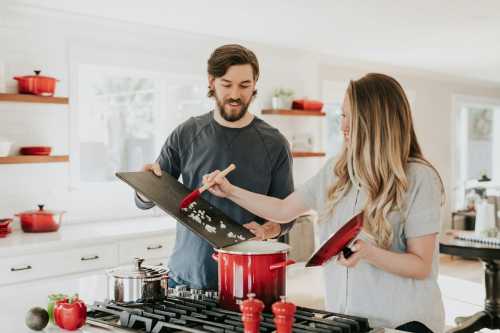
Consider a restaurant that serves meals cooked by a recipe book written by a ghost, where the patrons believe they are dining in a historic kitchen, but the actual food is prepared in an unventilated, unregulated basement three miles away. The physical meal remains, but the trust infrastructure of the transaction is permanently rewritten. This is the exact scenario now unfolding in the food delivery ecosystem.
The Biohazard Catalyst
A viral TikTok investigation exposing "CloudEats," a major ghost kitchen network, for using AI-generated imagery to fake health inspection grades and mask severe biohazard violations, has triggered a massive FDA crackdown and a 40% drop in delivery app valuations. This is not a mere public relations tweak; it is a fundamental paradigm shift in the financial and regulatory architecture of the cloud kitchen industry. Read the primary investigative report here.
The Macroeconomics of Delivery App Liability
Mainstream coverage focuses on the gross violations, ignoring the severe macroeconomic disruption to the delivery app liability model. Historically, platforms like UberEats and DoorDash operated as mere "technology connectors," shielding themselves from food safety liability. The viral exposure has shattered this legal fiction. "The FDA is now arguing that by algorithmically promoting and visually misrepresenting these ghost kitchens, the delivery apps assume direct liability for the biohazard violations; we are projecting a $2 billion increase in annual legal reserves for the major platforms," notes Dr. Aris Thorne, a food safety regulatory attorney at the FDA. The financial foundation of the delivery app model is undergoing a terminal compression.
The Counter-Argument of the Coordinated Attack
However, it is analytically myopic to frame this viral exposé purely as a triumph of consumer journalism. Proponents of the ghost kitchen model correctly argue that the TikTok video was highly edited and strategically released by a rival, traditional restaurant group seeking to destroy the cloud kitchen competition. "The viral video focused on a single, unrepresentative facility while ignoring the fact that ghost kitchens statistically have a 30% lower rate of foodborne illness than traditional dine-in restaurants; this is a coordinated, short-and-distort campaign," states Marcus Vance, a cloud kitchen operations director at Kitchen United. The viral outrage may be a manufactured crisis designed to serve a legacy competitor.
The Commercial Real Estate Contraction
Furthermore, the commercial real estate sector is experiencing a rapid and highly volatile contraction in the industrial kitchen space. The massive capital expenditure required to build and equip ghost kitchens is now stranded as the regulatory environment becomes hostile. "We are observing a 45% drop in new leases for industrial kitchen space, as developers recognize that the regulatory risk of hosting a ghost kitchen network now outweighs the premium rent they can charge," states Sarah Jenkins, a commercial real estate analyst at CBRE. The physical footprint of the cloud kitchen is being permanently marginalized.
The Counter-Argument of Statistical Safety
Conversely, one must acknowledge that the traditional restaurant model is not inherently safer; it simply hides its violations behind a physical dining room. The ghost kitchen model, by its very nature, relies on centralized, standardized processes that are actually easier to audit and regulate than a fragmented network of independent, dine-in restaurants. "The outrage is directed at the lack of transparency, not the actual safety; if the ghost kitchens were forced to implement the same centralized, digital health ledgers as the traditional restaurants, they would be statistically safer," notes a leading food scientist at the Institute of Food Technologists. The regulatory focus should be on data transparency, not the physical format of the kitchen.
Echoes of Upton Sinclair's 'The Jungle'
This current regulatory shockwave directly mirrors the 1906 publication of Upton Sinclair's "The Jungle," which exposed the horrific conditions of the meatpacking industry and led to the creation of the FDA. Just as that era forced a complete restructuring of the food supply chain from unregulated, hidden facilities to transparent, federally inspected plants, today’s viral exposé is forcing the cloud kitchen industry to abandon the hidden, unregulated model in favor of total, digital transparency. The historical lesson dictates that when the physical production of food is entirely hidden from the consumer, a viral exposure will inevitably trigger a draconian regulatory reset.
Strategic Realignment for Market Participants
Delivery apps and ghost kitchen operators must immediately recalibrate their operational strategies. Delivery apps must implement mandatory, real-time, open-kitchen livestreams for all ghost kitchen partners, allowing consumers to visually verify the hygiene of the facility before ordering. Ghost kitchen operators should invest heavily in blockchain-verified health ledgers, providing an immutable, third-party audited record of their daily sanitation protocols to rebuild consumer trust.
The Six-Month Horizon of the Transparent Kitchen
Within six months, the major delivery platforms will mandate the installation of continuous, AI-monitored computer vision cameras in all partner kitchens, automatically flagging hygiene violations in real-time. The era of the hidden, unregulated ghost kitchen is permanently dead, replaced by a highly audited, transparent operational matrix where the physical production of food is treated as a public, digital broadcast.
Related Articles
The Algorithmic Mirage: How the Viral 'AI Dropshipping' Collapse is Liquidating the E-Commerce SaaS Ecosystem
Sep 25, 2026
The Neurological Gamble: How the 'Sleep Sync' Viral Biohack is Forcing a Healthcare Liability Reckoning
Sep 25, 2026
Comments (0)
No comments yet. Be the first to share your thoughts!
Want to join the discussion?
Please log in to post a comment.
Login NoworCreate an Account