
The Premiumization of Escapism: How Yield Management and Audio Arbitrage are Rewiring Entertainment Economics

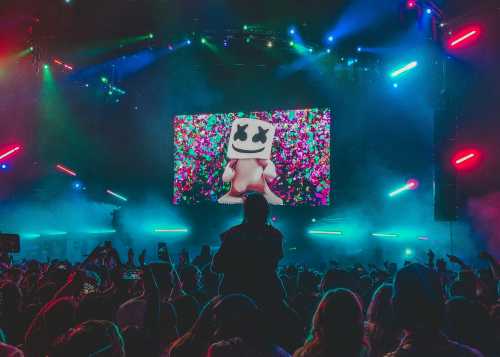
The Premiumization of Escapism
Think of the modern entertainment complex as a sprawling, unregulated municipal transit system that spent a decade building high-speed bullet trains to every remote suburb, only to realize in 2026 that the only profitable routes are the heavily subsidized commuter lines into the downtown stadium and the ad-supported buses looping the local library. This is the precise structural paradox defining the global leisure economy today. The entertainment sector is executing a violent capital reallocation, characterized by record-breaking Broadway yields and premium theme park pricing colliding with a massive migration of advertising dollars into high-retention audio networks. This trifecta, underscored by the ongoing DOJ antitrust probe into live-event ticketing, marks the definitive transition of leisure from a volume-driven utility into a highly stratified, yield-managed asset class.
The Yield Management Cartel
Mainstream financial media celebrates the current live-event renaissance as a simple post-pandemic recovery, ignoring the macroeconomic reality of the middle-class squeeze. Recent data confirms that Disney parks bucked the broader travel slowdown with "domestic attendance up 3% and guest spending up 4%," while Universal reported softening attendance due to higher travel costs. Simultaneously, Broadway generated a staggering weekly gross, with industry reports noting that "Broadway surged 12.50% to $34.86M with attendance jumping to 273,061 at an impressive 94% capacity across 30 shows." The unseen implication for entertainment economics is the structural calcification of the experience economy. Apex properties are no longer competing for foot traffic; they are executing aggressive yield management, pricing out the middle-class day-tripper to maximize the per-capita extraction of high-net-worth multi-day vacationers. Consumers are not abandoning live entertainment; they are abandoning mediocre live entertainment, consolidating their discretionary spend into blue-chip, culturally validated tentpoles. The mid-market theatrical production and the regional amusement park are mathematically insolvent in an environment that demands either massive, global four-quadrant scale or hyper-cheap, high-margin digital retention.
Echoes of the 1970s Blockbuster Pivot
This 2026 convergence perfectly mirrors the mid-1970s stagflation era and the subsequent collapse of the American department store and regional amusement models. When inflation and oil shocks crushed the disposable income of the middle class, the broad-based volume models of second-tier movie studios and local theme parks went bankrupt. In response, Disney executed a massive capital pivot toward EPCOT and premium resort integration, while Hollywood consolidated into the high-budget blockbuster model pioneered by Jaws and Star Wars. The lesson for 2026 is that when consumer wallets contract, the entertainment industry abandons the mid-market entirely, bifurcating into ultra-premium, high-yield physical experiences and ultra-cheap, passive home consumption. Today’s $200 theme park tickets and $400 Broadway orchestra seats are simply the modern equivalent of the 1970s event-cinema ticket, engineered to capture the absolute maximum yield from a shrinking pool of high-net-worth individuals while the mid-market consumer is relegated to algorithmic, ad-supported digital filler.
The Parasocial Audio Arbitrage
While visual digital feeds suffer from severe ad-blindness and synthetic AI saturation, the physical manifestation of this capital flight is the aggressive, private-equity-fueled expansion of audio networks. Industry benchmarks confirm that "podcast ads achieve an average completion rate above 90%," with 55% of listeners confirming they purchased an item after hearing a host-read endorsement. The unseen implication is the massive repricing of audio intimacy. Unlike a 6-second skippable video ad, a host-read podcast endorsement leverages deep parasocial trust, effectively transforming the audio creator into a high-margin, direct-response affiliate marketer. Entertainment conglomerates are quietly shifting their customer acquisition budgets away from fragmented social video and into long-form audio, recognizing that the "lean-back" intimacy of the podcast feed commands a premium CPM that visual platforms can no longer justify. The digital public square is being re-engineered around the acoustic footprint, leaving visually dependent mid-tier influencers structurally defunded.
The Inelastic Memory Tax
Proponents of aggressive theme park and live-event pricing argue that the middle-class consumer has simply reached their absolute price elasticity limit, and that further premiumization will eventually trigger a catastrophic demand cliff that will force a race to the bottom on ticket prices. However, this perspective ignores the "Lipstick Effect" applied to generational memory-making. Even in periods of macroeconomic tightening, parents will ruthlessly cut discretionary spending on physical goods, secondary travel, and dining to fund the singular, culturally mandated family pilgrimage. By treating the apex theme park or the hit Broadway musical not as a recurring entertainment expense but as a non-negotizable, once-in-a-lifetime family milestone, operators ensure that the premium physical experience remains an inelastic luxury good, entirely insulated from the inflationary pressures crushing the broader retail sector.
The Venue Routing Monopsony
Furthermore, the DOJ’s antitrust trial against Live Nation, which began in March 2026, threatens to force the divestiture of Ticketmaster, fundamentally altering the physical routing of live entertainment. The unseen reality is the impending fragmentation of the venue monopoly, but not in the way consumer advocates hope. If the primary ticketing market is fractured, mid-tier independent venues and regional promoters will finally be able to integrate decentralized, white-label ticketing solutions that bypass Live Nation's exorbitant venue-access fees. However, the true margin extraction occurs through the physical real estate and global artist routing guarantees. Live Nation’s absolute control over the amphitheater network means that the primary ticket is merely a loss-leader; the real yield is captured through localized hospitality monopolies, dynamic pricing algorithms, and secondary market liquidity. The independent regional promoter is systematically priced out of the routing logistics required to mount a viable national tour, leaving the live music supply chain entirely dependent on a single, vertically integrated infrastructure provider.
The Divestiture Mirage
Conversely, consumer advocates and federal regulators argue that forcing the divestiture of Ticketmaster will inherently lower ticket prices and restore a free market for live events by introducing software competition. This argument ignores the underlying economics of venue consolidation and artist guarantees. Even if the primary ticketing software is unbundled, Live Nation’s absolute control over the physical amphitheater real estate and global touring routing means that any new ticketing competitor will still be forced to pay exorbitant venue-access fees to secure inventory. The base price of the ticket will remain structurally high regardless of the software monopoly, as the true margin is extracted at the physical turnstile and the VIP hospitality tent, not the digital checkout screen.
Tactical Realignment for Municipal and Independent Operators
For local venues, audio creators, and regional tourism boards, the immediate action must be the aggressive pivot toward high-yield intimacy and decentralized ticketing. Independent venues must form localized booking consortiums to bypass the monopolistic routing fees of major promoters, ensuring they capture the peripheral hospitality and ticketing revenue that currently leaks to corporate conglomerates. Audio creators and podcasters must immediately implement dynamic, host-read affiliate tracking links to capture the massive 55% conversion premium, transitioning from flat-fee sponsorships to revenue-share models that align with the new parasocial arbitrage economy. Furthermore, regional tourism boards must abandon the pursuit of competing directly with Disney on scale, and instead build hyper-niche, localized "anti-theme park" experiential retreats that cater to the high-net-worth demographic suffering from mega-park fatigue and algorithmic exhaustion.
The Six-Month Bifurcation Horizon
In six months, as the holiday travel season collides with the live entertainment Q4 push, we will witness the first major "venue-routing" strike, where a coalition of mid-tier artists refuses to play Live Nation-owned sheds, opting instead for a decentralized network of municipal arenas utilizing open-source ticketing protocols. Concurrently, the podcast advertising bubble will formalize into a standardized "Audio CPM Index," forcing major streaming platforms to heavily gatekeep their top 1% of parasocial creators, effectively walling off the highest-converting audio inventory from independent advertisers. The bifurcation of the entertainment economy will be complete: a premium, heavily gated tier of blue-chip physical escapism and high-yield audio intimacy, and a stagnant, heavily discounted public tier of mid-market attractions and visual digital filler.
Related Articles

The Structural Inversion of Celebrity IP: From Entertainers to Algorithmic Asset Classes
Sep 25, 2026
The Equity Play: How Athlete-Owned Media Empires Are Rendering Traditional Celebrity Endorsements Obsolete
Sep 25, 2026
Comments (0)
No comments yet. Be the first to share your thoughts!
Want to join the discussion?
Please log in to post a comment.
Login NoworCreate an Account