
The Provenance Pivot: How Archival Sourcing and AI Likeness Are Rewiring Celebrity Style Economics


Much like the classic automobile market, where verified provenance and original chassis numbers now command exponential premiums over flawless but soulless restorations, the celebrity styling ecosystem has violently pivoted. The era of disposable, fast-fashion red-carpet moments is collapsing under the weight of regulatory scrutiny, financialization, and synthetic media.
The Convergence of Synthetic and Sustainable Pressures
The celebrity styling landscape in 2026 is defined by a trifecta of disruptive forces: the enforcement of quantifiable sustainability mandates on major red carpets, the saturation of long-term celebrity brand ambassador contracts, and the rapid infiltration of AI-generated likeness endorsements. This convergence has fractured the traditional stylist-muse dynamic, replacing organic creative expression with audited compliance and risk-managed corporate asset allocation.
The Financialization of the Muse
Mainstream fashion coverage frequently romanticizes the red carpet as a canvas for artistic expression, ignoring the rigid financial engineering now dictating wardrobe choices. The celebrity brand ambassador role has evolved from a prestigious honorary title into a highly structured, long-term commercial agreement, typically spanning 12 to 36 months [[14]]. Top-tier ambassadors are now expected to generate upwards of $1.4 million in quantifiable media exposure value per season, transforming stylistic decisions into strict return-on-investment metrics [[10]]. Consequently, stylists are no longer just curating aesthetics; they are executing complex contractual obligations, ensuring that every garment worn aligns with the specific quarterly key performance indicators of the sponsoring conglomerate, often requiring legal counsel to navigate exclusivity clauses.
1 2 3 4 5Archival Fashion as Regulatory Compliance
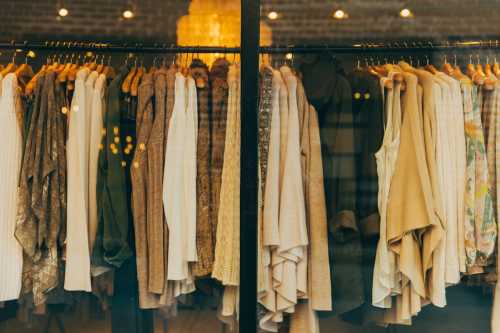
The mainstream narrative celebrates the resurgence of archival fashion as a triumphant return to sustainability and historical homage [[27]]. However, the unseen implication is that wearing vintage has become a defensive compliance mechanism against emerging international sustainability regulations. With regulatory bodies demanding granular detail on product carbon footprints and Scope 3 supply chain transparency, pulling a 1990s couture gown from a vault is the most legally defensible way to avoid greenwashing accusations [[31]]. This shifts the power dynamic away from emerging designers, who cannot compete with the zero-carbon footprint of a decades-old garment, effectively freezing the red carpet ecosystem in a state of nostalgic stasis and stifling new creative talent.
The Exclusivity Erosion via Synthetic Likeness
Simultaneously, the foundational luxury principle of scarcity is being undermined by the proliferation of AI-generated endorsements. Industry data indicates that AI-generated product content in fashion marketing scaled from near zero to 90 percent adoption in a single year, slashing campaign creation timelines from six weeks to mere days [[40]]. While brands initially deployed virtual influencers for cost efficiency, the unauthorized or loosely licensed use of AI to mimic celebrity aesthetics threatens to dilute the exclusivity that underpins luxury valuation. When a digital replica can endorse a product with the same perceived authenticity as the human counterpart, the premium attached to the actual celebrity's physical presence depreciates rapidly, forcing a reevaluation of likeness rights.
The Efficiency and Democratization Defense
Critics of the prevailing skepticism argue that the integration of AI and strict contractual metrics actually democratizes and stabilizes the fashion industry. By relying on AI-generated content and data-driven ambassador selections, mid-tier and emerging brands can bypass the prohibitive costs of traditional celebrity partnerships, allocating those funds toward product development and fair labor practices. Furthermore, the shift toward long-term, quantifiable contracts ensures that celebrities are compensated fairly as skilled professionals rather than being exploited for one-off, underpaid appearances. From this vantage point, the financialization of style is not a corruption of art, but a necessary maturation that brings labor transparency and operational efficiency to a historically opaque industry.
Echoes of the Early 2000s 'It Bag' Saturation
This current inflection point mirrors the early 2000s "It Bag" phenomenon, when luxury houses aggressively licensed their logos and saturated the market with ubiquitous, celebrity-endorsed accessories. Initially, this drove massive short-term revenue, but the resulting overexposure severely diluted brand equity, forcing a painful market correction. The lesson from that era is unequivocal: when exclusivity is compromised for the sake of scalable reach, whether through mass logo licensing in 2003 or AI-generated synthetic endorsements in 2026, the market eventually punishes the brand with a collapse in perceived value. Heritage houses that survive are those that ruthlessly enforce scarcity and authenticity.
The Circularity and Compliance Theater Trap
Conversely, some industry veterans contend that framing archival wearing as a mere compliance mechanism is overly cynical and ignores genuine cultural shifts. As Cate Blanchett observed regarding industry sustainability efforts, "I do think most houses are engaged in the idea of sustainability, but it's how do we turn our business model around" [[30]]. The argument here is that while archival styling may not solve systemic overproduction, it serves as an essential, visible catalyst that forces the broader industry to re-evaluate its relationship with waste. Dismissing these efforts as compliance theater risks alienating the consumer base that is increasingly demanding accountability, thereby stalling the momentum of the circular fashion movement.
Strategic Imperatives for Industry Stakeholders
For Boutique Vintage Dealers and Archivists: Capitalize immediately on the regulatory shift. Formalize your inventory with verifiable provenance documentation and carbon-footprint estimates. Position your archive not merely as historical clothing, but as compliant, zero-emission styling solutions for risk-averse celebrity clients and their legal teams.
1 2 3For Emerging Designers: Do not attempt to compete on the traditional red-carpet placement model dominated by legacy houses. Instead, pivot to cultivating direct-to-consumer digital communities and exploring innovative, legally protected digital fashion assets that cannot be easily replicated by unauthorized AI scraping.
For Consumers and Citizens: Exercise heightened scrutiny toward celebrity-endorsed sustainability claims. Demand transparency regarding whether a garment is a genuine archival piece, a newly manufactured vintage-inspired item, or an AI-generated marketing asset, and allocate your purchasing power accordingly to reward genuine innovation.
The Six-Month Horizon: Litigation and Vertical Consolidation
Within the next six months, the celebrity styling landscape will face a wave of likeness rights litigation as high-profile figures move to legally restrict the unauthorized AI replication of their red-carpet aesthetics under expanding digital identity laws. Concurrently, we will see the emergence of specialized compliance styling agencies that bundle traditional wardrobe curation with legal and environmental auditing services. The mid-tier celebrity brand ambassador market will contract sharply, as conglomerates consolidate their budgets toward a smaller roster of globally recognized, legally protected human icons, leaving synthetic alternatives to dominate only the lowest tiers of fast-fashion marketing.
Related Articles
The Structural Realignment: How Regulatory Shocks and Algorithmic Design Are Rewriting Fashion Economics
Aug 20, 2026
The Algorithmic Atelier: How Regulatory Moats, Synthetic Media, and Resale Cannibalization Are Rewiring the Fashion Industry
Aug 20, 2026
Comments (0)
No comments yet. Be the first to share your thoughts!
Want to join the discussion?
Please log in to post a comment.
Login NoworCreate an Account