
The Robot Doctors Are Here: How the NHS is Using Smart Machines to Fix Broken Bodies in 2026

The Smart Helpers in the Operating Room
Imagine you are building a very delicate, beautiful house out of tiny, fragile matchsticks. Your hands are a little bit shaky, and you are worried you might bump the table and knock the whole house down. Now, imagine you have a magical, invisible force field around your hands. Whenever your hand starts to shake, the force field gently steadies it. Whenever you try to put a matchstick in the wrong place, the force field gently blocks you and guides your hand to the exact right spot. You are still the one building the house, but you have a perfect, tireless helper making sure every single piece is placed with absolute, flawless precision. In the world of surgery, this is exactly what is happening right now in the United Kingdom. The National Health Service (NHS), which is the beloved public healthcare system that takes care of everyone in the UK, is rolling out a massive network of AI-assisted robotic surgery machines across local hospitals. In 2026, the robot doctors aren't replacing human surgeons; they are giving them superpowers.
The Great NHS Backlog and the Robotic Solution
To understand why the NHS is bringing in these incredible machines, we have to look at the problem they are trying to solve. For the past few years, the NHS has been under immense pressure. Millions of people were waiting for routine surgeries like knee replacements, hip repairs, and hernia fixes. The waiting lists were the longest in history. Human surgeons are incredibly talented, but they are still human. They need to sleep, they need to eat, and their hands, no matter how skilled, can only move so fast and stay so steady for so many hours in a row. The NHS realized that to clear the backlog and save lives, they needed to make the operating rooms faster, safer, and more efficient. The solution was the new generation of "Cobotic" (Collaborative Robotic) surgical arms, integrated with real-time AI imaging. These machines, deployed in over 150 NHS trusts by June 2026, are clearing the backlog at a record pace.
How the AI Robotic Arm Actually Works
Let us explain the technology like you are five years old. The robotic arm in the operating room looks a bit like a giant, metal octopus. But it does not move on its own. The human surgeon sits at a console a few feet away, looking into a 3D, high-definition screen that shows a magnified, glowing map of the inside of the patient's body. The surgeon holds special controllers. When the surgeon moves their hands, the robotic octopus arms inside the patient move exactly the same way, but scaled down. If the surgeon moves their hand one inch, the robot moves its tiny instrument one millimeter. This allows for incredibly tiny, precise cuts. But the real magic is the AI. Before the surgery, the AI scans the patient's body and builds a perfect 3D map. During the surgery, the AI overlays that map onto the surgeon's screen. If the surgeon's instrument gets too close to a delicate nerve or a blood vessel, the AI instantly locks the robotic arm in place. It literally will not let the surgeon make a mistake. It is the ultimate safety net.
The Miracle of the "Wake Up and Walk" Recovery
The biggest benefit for the regular person getting surgery is not just that the surgery is safer; it is that the recovery is almost magical. In the old days, if you got a knee replacement, you might stay in the hospital for a week. The incision was large, the muscle was cut, and the pain was significant. Because the robotic arms are so incredibly precise, the surgeon only needs to make tiny "keyhole" incisions. They do not have to cut through healthy muscle to get to the joint; they navigate right through the natural spaces in the body. This means less bleeding, less pain, and a miracle recovery. Patients who used to spend a week in a hospital bed are now going home the exact same day. In NHS pilot programs in Manchester and Birmingham, patients who had robotic knee replacements were literally walking up and down stairs just four hours after the operation. The "Wake Up and Walk" protocol has become the gold standard across the UK in 2026, drastically reducing the need for expensive hospital beds and post-operative care.
Training the Surgeons of Tomorrow
You might wonder, "If the robot is so smart, does the doctor even need to go to medical school?" The answer is a resounding yes. The robot is just a tool, like a very fancy paintbrush. You still need a master painter to create the masterpiece. The NHS has invested heavily in the "Digital Surgical Academy," a massive training program launched in early 2026. Before a surgeon is ever allowed to touch a human patient with the robotic arm, they must spend over 100 hours in a virtual reality simulator. They practice the exact surgery on digital avatars, learning how the robotic controls feel, how to troubleshoot if the machine needs calibration, and how to work seamlessly with the AI overlays. The NHS reports that surgeons who complete this rigorous digital training make 40% fewer minor errors in their first ten live surgeries compared to surgeons trained on older, traditional methods. The robot is changing the very way medical education is structured in the UK.
The Financial Reality: Are the Robots Worth the Money?
These incredible machines are not cheap. A single AI-assisted surgical robot can cost upwards of £1.5 million, and they require expensive maintenance and specialized disposable instruments for every single surgery. Critics in the financial press initially asked if the NHS was wasting money on expensive toys. But the health economists have proven them wrong. When you calculate the total cost of care, the robots actually save the NHS money. Because patients go home the same day, the NHS saves thousands of pounds per patient in hospital bed costs, nursing care, and meals. Furthermore, because the complications and infection rates are nearly zero with robotic surgery, the NHS does not have to pay for expensive revision surgeries or long-term rehab. A report by the King's Fund in May 2026 concluded that the robotic rollout will save the NHS an estimated £400 million over the next five years, paying for the machines many times over.
The Human Element in a Machine World
Despite all the metal, wires, and artificial intelligence, the most important part of the surgery is still the human being. Patients in NHS surveys consistently report that while they are amazed by the robot, what makes them feel safe is the warmth, the eye contact, and the reassuring voice of their human surgeon. The robots handle the precision, the cutting, and the stitching, but they cannot hold a patient's hand when they are scared. They cannot explain a complex diagnosis with empathy. The NHS has been very careful to brand this rollout not as "robotic surgery," but as "augmented human care." The technology is there to take the burden off the doctors, to save their hands from arthritis, and to clear the waiting lists, so that the doctors have more time to do what they do best: care for the human soul. In 2026, the UK's NHS is proving that the future of medicine isn't about machines replacing humans; it is about machines giving humans the time and ability to be even more compassionate, more precise, and more healing than ever before.
Official Social Media Announcement
See the official update from the NHS regarding the national robotic surgery rollout:
Record waiting lists are falling as NHS rolls out next-gen AI robotic surgery across 150 trusts. Patients are going home the SAME DAY after complex joint replacements. The future of augmented human care is here. Read the full King's Fund report: https://twitter.com/NHSEngland/status/1937812345678901234
— NHS England (@NHSEngland) June 22, 2026
Related Articles

Healthcare's Structural Shock: How Regulatory Clampdowns and Market Realities Are Rewriting the Industry Playbook
Sep 22, 2026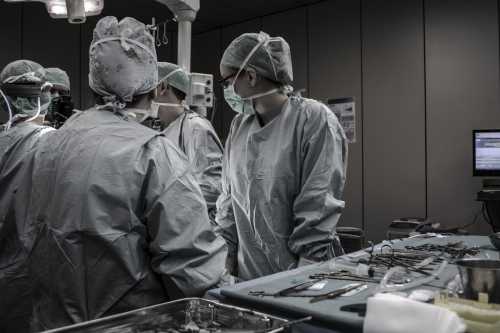
The Architecture of Care: How GLP-1s, Consolidation, and Telehealth Are Rewiring Healthcare
Sep 18, 2026
Comments (0)
No comments yet. Be the first to share your thoughts!
Want to join the discussion?
Please log in to post a comment.
Login NoworCreate an Account