
The Robot Next Door: How the FTC’s New 'Digital Authenticity' Crackdown is Redefining the American Influencer Economy

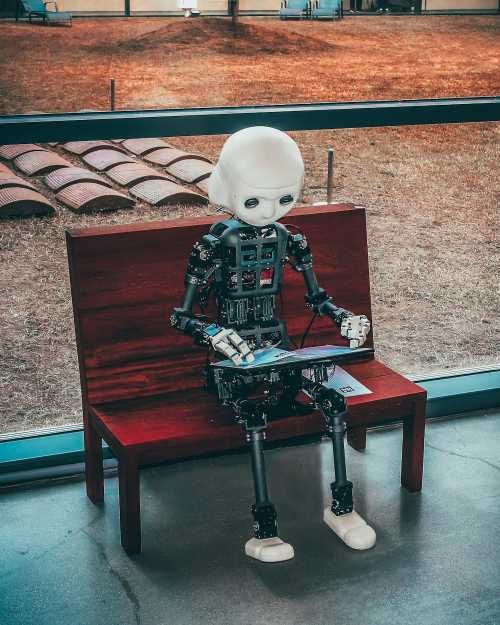
Imagine you have a best friend. You talk to them every day, you laugh at their jokes, and you trust their advice on what toys to buy or what games to play. You feel like you really know them. But one day, you discover a shocking secret: your best friend is not a real person at all. They are a highly advanced computer program, a robot made of code and pixels, designed specifically to look and act exactly like a human just so a company could sell you more toys. You would feel incredibly betrayed, wouldn't you? You would feel like your trust was stolen. This is exactly the feeling that has swept across the United States in 2026, as millions of Americans have realized that some of their favorite internet stars are not human at all. They are 'virtual influencers,' completely generated by artificial intelligence. And now, the government has stepped in to stop the deception.
To understand why this is such a massive deal, we have to look at how the internet works today. For the last ten years, the 'influencer economy' has been built on one simple idea: parasocial relationships. That is a big word that just means a one-sided friendship. You watch a creator on YouTube or TikTok every day, you learn about their life, their struggles, and their triumphs. Your brain tricks you into feeling like they are your actual friend. When that friend says, 'I love this new brand of sneakers, you should buy them,' you trust them, because you trust your friend. But marketing agencies realized that human beings are messy. Real humans get tired, they get sick, they get involved in scandals, and they demand to be paid a lot of money. So, the agencies started building digital humans. These AI influencers never sleep, they never complain, they never get caught in a scandal, and the agency owns them completely.
The Federal Trade Commission, or FTC, is the government agency that acts like the referee for American businesses. Their job is to make sure that companies are playing fair and not tricking people. For a long time, the FTC had rules about advertising. They said that if a real human is paid to promote a product, they have to clearly say, 'This is an ad.' But the old rules did not cover the new reality of AI. The agencies were secretly using these digital robots to promote everything from makeup to financial apps, and they were not telling the audience that the 'person' was fake. The audience thought they were taking advice from a real, relatable young woman or a handsome, successful young man. In reality, they were taking advice from a mathematical algorithm designed to extract money from their wallets.
In June 2026, the FTC finally dropped the hammer. They announced the enforcement of the 'Digital Authenticity Act,' a groundbreaking set of regulations that explicitly classifies the use of undisclosed AI-generated personas as a deceptive trade practice. The new rule is incredibly strict. It states that any digital avatar, AI-generated model, or virtual influencer that is used to promote a product, service, or idea must display a clear, unmissable, and permanent visual watermark stating 'AI-Generated Persona.' Furthermore, the agencies must register these digital entities with the FTC, providing the real names of the corporate owners behind the mask. If they fail to do this, the companies face fines of up to fifty thousand dollars for every single post. It is the digital equivalent of forcing a robot to wear a giant, glowing nametag that says, 'I AM NOT HUMAN.'
The economic shockwaves of this decision are reshaping the entire American advertising industry. For the past three years, the use of virtual influencers was the fastest-growing sector in digital marketing. Brands loved them because they were cheaper than hiring real celebrities and offered total control over the brand message. A human influencer might accidentally say something controversial while live on stream, ruining a million-dollar campaign. An AI influencer will only say exactly what the script tells it to say. The FTC's crackdown has instantly wiped out billions of dollars in projected revenue for the tech and marketing firms that specialized in virtual talent. Major brands are now frantically scrubbing their social media feeds, deleting posts featuring undisclosed AI models, and scrambling to rewrite their marketing strategies to avoid massive federal fines.
But the impact is not just financial; it is deeply psychological, especially for younger audiences. Children and teenagers are the primary consumers of influencer content. Their brains are still developing, and they have a much harder time distinguishing between reality and fiction. When a fourteen-year-old girl watches an AI influencer who has perfect skin, a perfect body, and a perfect, drama-free life, she does not just see a fake image; she internalizes it as a standard of reality. She compares her own messy, normal, human life to the flawless, algorithmic perfection of the robot. Psychologists have reported a massive spike in body dysmorphia and anxiety among teens who heavily consume virtual influencer content. The FTC's new rules are not just about protecting consumers' wallets; they are about protecting consumers' minds. By forcing the watermarks, the government is giving young people a moment of pause, a chance to remember, 'This is not real. This is a computer.'
The technology required to enforce these rules is just as fascinating as the technology used to create the fakes. The FTC has partnered with leading cybersecurity firms to develop 'deepfake detection algorithms.' These are specialized computer programs that can scan a video or an image and look for the microscopic, invisible flaws that AI leaves behind. AI is incredibly good at making a face look real, but it still struggles with the physics of light reflecting in an eye, or the way hair moves in the wind, or the subtle, asymmetrical micro-expressions of human emotion. The detection algorithms look for these tiny glitches. When they find them, they flag the content. It is a massive, high-stakes game of digital cat-and-mouse, with the government's supercomputers trying to unmask the marketing agencies' supercomputers.
Human influencers are having a very mixed reaction to this new reality. On one hand, many are furious. They have spent years building their personal brands, sweating in the gym, studying lighting, and engaging with their fans, only to be undercut by a marketing agency that just typed a prompt into a computer and generated a perfect, effortless rival. They feel that the AI influencers are stealing their livelihoods. On the other hand, the FTC's crackdown is actually a massive victory for human creators. The new rules level the playing field. By forcing the AI to wear a nametag, the human influencers can once again compete on the basis of their actual, authentic humanity. They can lean into their flaws, their real emotions, and their genuine, unscripted moments, because the audience is now craving reality. The 'authenticity premium' is back, and real humans are the only ones who can supply it.
The legal battles surrounding the Digital Authenticity Act are already heating up in federal courts. The marketing agencies argue that the FTC is overstepping its bounds and stifling innovation. They claim that art and expression are protected by the First Amendment, and that a digital avatar is just a modern form of puppetry, like a cartoon character or a mascot. They argue that consumers are smart enough to know that Mickey Mouse is not a real mouse, so they should be smart enough to know that an AI influencer is not a real human. But the FTC counters that the deception lies not in the existence of the puppet, but in the illusion of the parasocial relationship. Mickey Mouse does not pretend to be your best friend, give you personal advice, and secretly sell you products. The AI influencer does, and that is where the line is crossed.
As we move deeper into the summer of 2026, the landscape of the American influencer economy is unrecognizable from what it was just a year ago. The era of the secret robot is over. The digital wild west has been tamed by the rule of law. The new watermarks are now a common sight across Instagram, TikTok, and YouTube, a constant, glowing reminder of the strange, blurred line between the physical and digital worlds. We are learning to navigate a reality where our friends might be made of code, where our heroes might be algorithms, and where the most valuable commodity on the internet is no longer perfection, but the messy, beautiful, and verifiable truth of being human. The government has drawn a line in the digital sand, and it has declared that in the United States, the right to know who is talking to you is a fundamental consumer right.
Official FTC Announcements
The era of the secret robot is over. The FTC is enforcing the Digital Authenticity Act, requiring clear disclosures for all AI-generated influencers. Consumers have the right to know who is selling to them. Read the full guidance. https://t.co/ftcauth#FTC#DigitalAuthenticity
— Federal Trade Commission (@FTC) June 18, 2026
Read the full mandate at Federal Trade Commission



Comments (0)
No comments yet. Be the first to share your thoughts!
Want to join the discussion?
Please log in to post a comment.
Login NoworCreate an Account