
The Sky is Awake: A Historic Solar Storm Sparks a Massive Viral Aurora Citizen-Science Movement in Canada

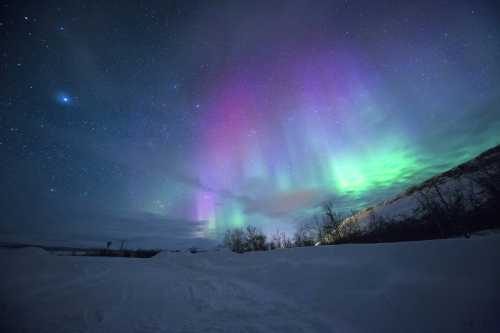
The Magic Nightlight of the North
Imagine the Sun is a giant, fiery ball of energy that sometimes gets a little too excited and blows giant, invisible bubbles of magic dust out into space. These bubbles travel millions of miles across the solar system until they bump into the Earth. But the Earth has a giant, invisible shield around it called a magnetic field, which protects us from getting hurt. When the Sun's magic dust hits this shield, it creates a beautiful, glowing light show in the sky, mostly near the North and South Poles. This is called the Aurora Borealis, or the Northern Lights. For most Canadians, especially those living in big, bright cities far to the south like Toronto, Vancouver, or Montreal, the Northern Lights are a rare treat. You usually have to travel far north into the freezing wilderness to see them. But in the final days of June 2026, something extraordinary and incredibly viral happened. A massive, historic solar storm hit the Earth, pushing the Aurora so far south that the sky above almost every major Canadian city lit up in brilliant shades of neon green, deep purple, and fiery red. It was a breathtaking, unifying national moment that instantly took over every social media platform in the country.
The Science of the Storm: A Coronal Mass Ejection
To understand why the sky suddenly woke up, we need to look at the science of space weather. The Sun goes through cycles, and right now, it is in a period of high activity, known as the solar maximum. During this time, the Sun's surface can erupt in massive explosions called solar flares, which often send billions of tons of magnetized plasma shooting into space. This is called a Coronal Mass Ejection, or CME. Think of a CME like a giant, invisible tsunami of energy racing through the ocean of space at millions of miles per hour. When this tsunami hits the Earth's magnetic shield, it causes a geomagnetic storm. The storm compresses the magnetic field and funnels charged particles down into the atmosphere, where they collide with oxygen and nitrogen gases. When oxygen gets hit, it glows green and red. When nitrogen gets hit, it glows purple and blue. The storm that hit Canada in late June 2026 was classified as a G5 Extreme Geomagnetic Storm, the highest possible rating on the scale. It was the most powerful solar storm to hit the planet in over two decades, and it turned the entire Canadian sky into a giant, glowing canvas of cosmic art.
The Viral Challenge: #MyAuroraCanada
As soon as the sky started to glow, millions of Canadians ran outside, looked up, and did what we all do in the modern age: they pulled out their phones. But capturing the Northern Lights on a smartphone is notoriously difficult. The lights are often faint to the human eye, requiring long exposure times to capture on camera. This sparked a massive, viral citizen-science trend known as the #MyAuroraCanada challenge. The Canadian Space Agency (CSA) and various meteorological groups quickly posted tutorials on social media, teaching everyday citizens how to use the "Night Mode" or "Pro Mode" on their smartphones to capture the lights. They taught people to rest their phones on a fence or a car roof to keep them perfectly still, and to set the exposure time to ten seconds. Suddenly, millions of ordinary Canadians became amateur astrophotographers. The internet was flooded with stunning, high-quality images of the Aurora dancing over the CN Tower in Toronto, reflecting off the waters of English Bay in Vancouver, and swirling above the historic Chateau Frontenac in Quebec City. It was a beautiful, democratic explosion of art and science, shared by people from every walk of life.
Official Social Media Update
Citizen Science: Helping the Experts Track the Storm
This viral trend was not just about taking pretty pictures for social media; it became a massive, decentralized scientific operation. The Canadian Space Agency and university researchers launched a citizen-science portal, asking citizens to upload their time-stamped photos to a national map. Because space weather is incredibly complex and the aurora shifts and dances rapidly, scientists cannot track every movement using satellites alone. By gathering thousands of photos from citizens in different time zones and geographic locations, scientists were able to create a real-time, 3D map of how the geomagnetic storm was interacting with the Earth's atmosphere. High school students in Alberta were uploading data alongside retired physics teachers in Nova Scotia. This collaborative effort provided researchers with an unprecedented dataset that will help them build better predictive models for future solar storms. It proved that when the public is engaged and educated, everyday citizens can make profound contributions to cutting-edge scientific research. The #MyAuroraCanada trend turned the entire country into a giant, open-air laboratory.
The Hidden Danger: Protecting the Power Grid
While the lights in the sky were beautiful and inspiring, the geomagnetic storm that caused them also carried a hidden, serious danger. When massive amounts of charged particles hit the Earth's magnetic field, they create powerful electrical currents in the ground. These currents can travel through long metal objects, like oil pipelines, railway tracks, and most importantly, the electrical power grid. In 1989, a similar solar storm caused a massive blackout in Quebec, leaving millions of people without power in the freezing cold for days. Because of this history, the Canadian government and utility companies take space weather very seriously. As the June 2026 storm approached, grid operators across the country implemented emergency protocols. They temporarily disconnected vulnerable transformers, rerouted power, and put repair crews on standby. The fact that the lights were so bright, but the power stayed on, is a testament to the incredible advancements in infrastructure protection and space weather forecasting over the last thirty years. The viral photos of the Aurora were actually accompanied by a quiet, behind-the-scenes triumph of modern engineering and public safety.
A Moment of National Unity and Awe
Beyond the science, the photography, and the infrastructure, the most profound impact of the June 2026 Aurora event was its effect on the human spirit. In a world that is often divided by politics, stressed by the economy, and isolated by screens, a giant, glowing sky has a unique way of making us all feel very small, and very connected. For those few nights, millions of Canadians stepped out of their homes, looked up at the exact same sky, and shared a collective gasp of awe. Neighbors who had never spoken to each other stood side-by-side on their lawns, pointing at the dancing ribbons of green light. Indigenous elders shared ancient stories about the spirits playing ball in the sky, while young children asked endless questions about the stars. It was a rare, beautiful moment of national unity, driven entirely by the majesty of the natural world. The viral trend was not just about sharing a photo; it was about sharing a feeling of wonder, a reminder that we live on a fragile, beautiful planet floating in a vast, dynamic universe.
Conclusion: Remembering to Look Up
As the solar storm eventually faded and the skies returned to their normal, quiet darkness, the #MyAuroraCanada movement left a lasting legacy on the country. It sparked a renewed interest in astronomy, with telescope sales and planetarium visits skyrocketing across the nation. It reminded a generation that has spent so much time looking down at their screens that the most incredible, high-definition show in the universe is happening right above their heads, completely for free. The historic solar storm of June 2026 was a powerful reminder of our connection to the cosmos. It showed us that the Sun and the Earth are engaged in a constant, invisible dance, and sometimes, the music gets loud enough for us to see it. The viral photos will eventually fade from our social media feeds, but the memory of standing in the cool night air, watching the sky burn with green and purple fire, will remain etched in the minds of millions of Canadians forever. It was a gift from the stars, a moment of pure magic, and a beautiful reminder to always, always remember to look up.
Related Articles

The Digital Cartel: Inside Streaming's Pivot to Sports Monopolies and Mega-Bundles
Aug 12, 2026
The Synthetic Margin Call: How Algorithmic Mandates and FTC Enclosures are Rewiring Internet Culture
Aug 12, 2026
Comments (0)
No comments yet. Be the first to share your thoughts!
Want to join the discussion?
Please log in to post a comment.
Login NoworCreate an Account