
The Sovereign Scarcity Model: How Secondary Market Cannibalization and Real Estate Bottlenecks Are Rewiring Luxury Economics

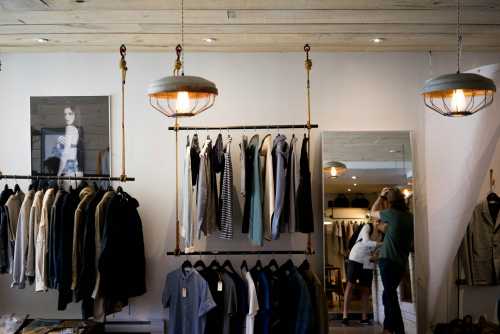
Think of the global luxury sector as a high-stakes private equity firm that spent a decade raising the minimum buy-in for its flagship fund, only to discover that its limited partners are now trading their shares on a secondary exchange, while the firm's physical headquarters are being outbid by sovereign wealth funds. This is the precise structural paradox defining the global luxury goods economy in the third quarter of 2026. We are witnessing the aggressive financialization of heritage assets, packaged into secondary derivatives and gated behind insurmountable real estate monopolies.
The Core Event
In the third quarter of 2026, the luxury sector is undergoing a violent structural bifurcation, characterized by LVMH’s fragile Q2 recovery and Hermès’s continued dominance, simultaneous with a $41.61 billion secondary market boom and an unprecedented scarcity in prime luxury retail real estate [[4], [28]]. This convergence marks the definitive end of the broad-based aspirational luxury boom and the dawn of a hyper-consolidated, asset-backed luxury cartel.
The Unseen Implications
The mainstream financial press frames LVMH's Q2 fashion division rise as a sector-wide rebound, ignoring the underlying capital flight from aspirational consumers wwd.com . The unseen implication for [[Luxury Brand Economics and Capital Allocation]] is the permanent stratification of the consumer base. As Bain & Company notes, "China's personal luxury goods market to see modest growth in 2026, albeit with continued volatility," signaling that the middle-class tourist is gone www.bain.com . Brands are now entirely dependent on the top 1% of ultra-high-net-worth individuals (UHNWI). This forces a brutal portfolio purge—dubbed the "Great Luxury Garage Sale"—where conglomerates like Kering are divesting non-core assets to focus exclusively on Very Important Client (VIC) retention and ultra-high-margin hard luxury the-silent-luxury.com . The mid-tier contemporary brand is being structurally priced out of the luxury ecosystem.
Simultaneously, the physical retail landscape has transitioned from a point of distribution to a sovereign territory. Savills' Global Luxury Retail Outlook 2026 identifies that "access has now emerged as the defining real estate challenge of 2026" www.savills.com . With a "scarcity of quality real estate in top markets and overwhelming brand demand," legacy houses are executing aggressive land-grabs in secondary luxury hubs, effectively locking out emerging designers who cannot afford the premium per-square-foot required to secure a flagship footprint brobstongroup.com . The unseen reality is that the modern boutique is a loss-leader marketing expense designed to validate the brand's digital pricing architecture. By monopolizing the physical streetscape of Paris, Milan, and New York, heritage conglomerates are artificially engineering a barrier to entry that ensures no independent designer can achieve the cultural cachet required to challenge their pricing power.
Furthermore, the secondary market is actively cannibalizing primary margins. The luxury resale market has exploded to $41.61 billion in 2026, growing faster than the primary market www.thebusinessresearchcompany.com . When platforms establish a transparent, secondary price floor for heritage assets, the primary maisons can no longer execute annual 15% price hikes without triggering a mass migration to the secondary market. As industry analysts note, "Luxury brands are split on how to respond," with some launching proprietary Certified Pre-Owned (CPO) channels to recapture the margin, while others attempt futile litigation to suppress the secondary trade www.thefashionlaw.com . The unseen implication is the loss of absolute pricing authority; the value of a Birkin or a Classic Flap is no longer dictated by the maison's MSRP, but by the algorithmic clearing price of the secondary auction block.
Counter-Argument: The Aspirational Return Fallacy
Proponents of the luxury sector argue that stabilizing macroeconomic indicators in China will trigger a resurgence of the aspirational middle-class consumer, restoring volume growth to the sector cib.bnpparibas . However, this ignores the permanent psychological shift in consumer behavior. The post-pandemic wealth effect has been replaced by a pragmatic "quiet luxury" mentality; aspirational buyers are permanently locked out by cumulative price hikes and are structurally migrating to the secondary market or premium contemporary brands, meaning volume growth for primary luxury is mathematically capped.
The Historical Precedent
This 2026 divergence perfectly mirrors the 1990s Japanese luxury boom and subsequent bust. When the Japanese asset bubble burst in 1991, the explosive volume growth of European luxury in Asia evaporated overnight. The maisons that survived were those that pivoted from volume-driven licensing to extreme scarcity and VIC-centric hard luxury. The lesson for 2026 is that when a geographic monopoly on aspirational wealth collapses, the sector must artificially engineer scarcity to maintain pricing power, permanently abandoning the middle-class consumer to protect the brand equity of the apex tier.
Counter-Argument: The Real Estate Moat Illusion
Conversely, retail strategists argue that securing prime flagship real estate is a vital defensive moat that guarantees brand visibility and foot traffic in an increasingly digital world. This argument ignores the severe capital inefficiency of the modern flagship. With the cost of build-outs and leases in top-tier markets exceeding the lifetime value of the walk-in traffic, the physical store is a depreciating liability. The true moat is not the real estate; it is the proprietary clienteling data and the exclusive access to UHNWI allocation lists, rendering the physical storefront a mere billboard for the digital ledger.
Official Industry Signal: "Global luxury stocks posted their steepest first-quarter losses on record in 2026," forcing a massive realignment in capital allocation and portfolio management across the sector www.instagram.com .
Actionable Takeaways
For local real estate investors, independent designers, and citizens, the immediate action must be the aggressive capitalization on the secondary market and the circumvention of physical retail monopolies. Commercial real estate investors must acquire distressed light-industrial and last-mile warehousing properties in secondary luxury hubs, anticipating the massive land-grab by heritage brands desperate to establish localized, direct-to-VIC fulfillment nodes outside the exorbitant primary retail corridors. Independent designers must abandon the pursuit of physical flagship leases and instead build hyper-niche, digital-first allocation models that natively comply with the UHNWI demand for exclusivity, using regulatory compliance and digital provenance as a premium marketing moat. Furthermore, citizens and collectors must shift their discretionary capital away from seasonal, trend-driven luxury purchases and instead allocate funds into high-liquidity, historically appreciating heritage assets, which now function as uncorrelated alternative asset classes in the booming secondary market.
Future Forecast
In six months, as the holiday retail cycle collides with the full enforcement of global digital transparency mandates, we will witness the first major luxury conglomerate execute a multi-billion-dollar acquisition of a leading secondary authentication platform, effectively internalizing the secondary market to control the depreciation curve of its own assets. Concurrently, the European Commission will issue its first catastrophic non-compliance fine against a mid-tier heritage brand, triggering a rapid M&A wave where luxury conglomerates acquire independent houses solely for their pre-existing, compliant digital traceability infrastructure. The bifurcation of the luxury economy will be complete: a premium, heavily regulated tier of circular, proprietary CPO luxury, and a localized, heavily capitalized shadow-economy of algorithmic fast fashion operating out of domestic bonded warehouses.
Related Articles

The Glass Cockpit of Clinical Care: How Ambient AI and Autonomous Triage are Restructuring the Healthcare Monopoly
Sep 25, 2026
The Yield Management of Human Biology: How Regulatory Fractures and Algorithmic Triage Are Permanently Rewiring the Healthcare Economy
Sep 24, 2026
Comments (0)
No comments yet. Be the first to share your thoughts!
Want to join the discussion?
Please log in to post a comment.
Login NoworCreate an Account