
The Streaming Paradox: Consolidation, Churn, and the Rebirth of Cable 2.0

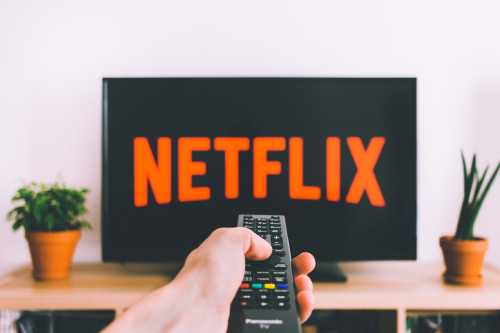
Just as the early 20th-century transition from à la carte diner menus to overwhelming cafeteria buffets eventually triggered a consumer revolt and a return to curated dining, the modern streaming landscape has reached a similar inflection point of choice paralysis and financial unsustainability.
The Convergence Catalyst
The architecture of digital media is undergoing a seismic restructuring, defined by three simultaneous vectors: massive studio consolidation, the aggressive migration of live sports to exclusive streaming silos, and unprecedented subscriber attrition. In 2026, legacy networks like YES and MSG are abandoning traditional cable to move their streaming sports operations entirely to DAZN variety.com . Concurrently, Amazon Prime Video has secured a 12-year exclusive broadcast agreement for NHL games with Rogers Communications, signaling a permanent shift of premium live sports away from linear television deadline.com . This fragmentation is occurring alongside monumental showbiz consolidation, such as the protracted mega-merger negotiations between Paramount and Warner Bros. Discovery, which aim to pool content libraries to survive mounting macroeconomic headwinds www.facebook.com .
The Cable 2.0 Paradox
Mainstream financial commentary frequently frames streaming unbundling as a consumer-friendly evolution, yet this perspective ignores a glaring contradiction. The industry is inadvertently reconstructing the very tiered cable packages it once promised to destroy. For instance, YouTube TV is actively developing genre-specific, cheaper subscription plans for 2026 that segregate sports, news, and entertainment into distinct, walled gardens variety.com . This is not liberation; it is the re-bundling of media under a new digital nomenclature. Consumers who initially fled cable to avoid paying for unwanted channels are now being forced to purchase multiple niche streaming subscriptions to access fragmented live sports and premium drama, effectively replicating the legacy cable bundle at a higher aggregate cost and with inferior user experience.
The Regional Sports Monopoly
Beyond consumer pricing, the collapse of the Regional Sports Network (RSN) model carries profound implications for local market economics that remain largely unreported. As entities like DAZN absorb former RSN assets, we are witnessing the centralization of local sports media into the hands of a few globalized streaming monopolies variety.com . This consolidation strips local communities of tailored, region-specific sports journalism and replaces it with homogenized, algorithmically driven content designed for maximum global engagement rather than local relevance. The loss of this decentralized media infrastructure threatens the financial viability of minor league sports and local athletic programs that historically relied on RSN cross-promotion and community-focused advertising revenue.
The Retention Illusion and Market Maturity
The prevailing narrative surrounding subscriber attrition paints a picture of an industry in freefall, but this alarmism lacks empirical nuance. A recent study indicates that the average annualized churn rate for streaming video services in the U.S. has hit 47 percent worldscreen.com . However, framing this solely as a crisis ignores the mechanics of a mature subscription economy. Primary research on customer retention benchmarks reveals that premium SVOD services average roughly 4.6% monthly churn, a metric that remains highly sustainable provided the customer lifetime value (LTV) significantly exceeds the customer acquisition cost (CAC) getperspective.ai . High churn is increasingly a feature, not a bug, representing a rational "subscription rotation" behavior among financially literate consumers rather than a fundamental rejection of the streaming model.
The Balance Sheet Imperative
Critics of the current merger mania, particularly regarding the Paramount and Warner Bros. Discovery consolidation, frequently argue that such mega-deals inherently stifle market competition and reduce consumer choice. While valid, this argument is dangerously one-sided and ignores the brutal mathematics of modern media. Streaming platforms are projected to spend more than $14 billion on sports rights in 2026 alone, with generalist streamers representing 44% of that expenditure www.instagram.com . Only entities possessing massive, combined balance sheets can absorb these capital-intensive rights fees while simultaneously funding original scripted content. In this environment, consolidation is not merely an exercise in corporate greed; it is a fundamental survival tactic required to achieve the scale necessary for profitability in a post-growth market.
Echoes of the Dot-Com Merger Mania
This current wave of media consolidation directly mirrors the late 1990s telecommunications boom, most notably the disastrous AOL-Time Warner merger. The historical lesson is twofold. First, vertical integration without deep cultural and operational alignment inevitably leads to massive asset write-downs and internal friction. Second, despite the financial failures of the merged entities, the underlying broadband infrastructure they funded became the indispensable foundation of the modern internet. Similarly, today’s streaming mergers may result in short-term shareholder value destruction and regulatory headaches, but the unified technological pipelines and data architectures they build will ultimately dictate the next decade of digital content delivery.
Strategic Imperatives for Stakeholders
For local businesses and regional advertisers, the immediate imperative is to abandon broad, demographic-based ad buys in favor of micro-sponsorships within niche genre bundles. As platforms like YouTube TV segment their offerings, advertisers must negotiate direct, contextual integrations within specific sports or news tiers to maintain ROI variety.com . For individual consumers and households, the optimal financial strategy is aggressive subscription rotation: maintaining only one or two core services at any given time and systematically cycling through platforms to consume specific high-value content, thereby neutralizing the impact of the 47% industry churn rate worldscreen.com . For further context on these shifting media dynamics, review this primary industry analysis.
The Six-Month Horizon
Within the next six months, the regulatory landscape will inevitably intervene. We anticipate the Federal Trade Commission or the Department of Justice will initiate formal antitrust scrutiny targeting joint sports streaming ventures, citing concerns over monopolistic pricing power. Concurrently, to arrest the bleeding of subscriber churn, major platforms will aggressively pivot toward ad-supported, hyper-localized micro-bundles, effectively formalizing the "Cable 2.0" model under the guise of consumer choice and algorithmic personalization.
Related Articles

The Streaming Reckoning: How Algorithmic Fatigue and Margin Compression Are Rewiring Digital Entertainment
Aug 18, 2026
The Great Reversion: Ad-Tier Dominance and the Cable 2.0 Mirage in 2026 Streaming
Aug 18, 2026
Comments (0)
No comments yet. Be the first to share your thoughts!
Want to join the discussion?
Please log in to post a comment.
Login NoworCreate an Account