
The Synthetic Ledger: Structural Realignment in the Global Beauty Economy

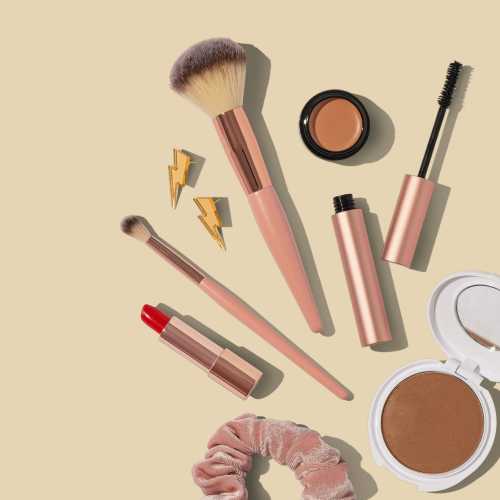
Managing the modern beauty industry is akin to operating a high-frequency trading desk disguised as a wellness sanctuary: the outward presentation is curated and exclusive, but the underlying mechanics are driven by ruthless algorithmic arbitrage, volatile supply chain leverage, and the constant threat of regulatory margin compression.
The Convergence of Systemic Pressures
The global beauty sector is simultaneously navigating a severe structural realignment, defined by aggressive M&A consolidation, stringent regulatory crackdowns on "clean" marketing claims, and the rapid saturation of influencer-led brands. This convergence signals a definitive pivot from an era of unchecked experiential growth to a highly regulated, margin-driven operational reality where synthetic leverage is rapidly being repriced.
The Regulatory Moat: Unmasking the Clean Beauty Mirage
Mainstream coverage frequently celebrates the "clean beauty" movement as a consumer empowerment initiative driven by transparency and wellness. However, the unseen implication is a severe regulatory chokehold that will fundamentally alter market access. Industry analysis reveals that six of the most common "clean" beauty label claims, ranging from "Dermatologist Tested" to "Non-Toxic," are either unregulated, undefined, or actively misleading [[16]]. As the FTC and FDA escalate enforcement against greenwashing, the hidden consequence is the creation of a massive compliance moat. Legacy conglomerates possess the capital to absorb the costs of third-party clinical testing and legal audits, while independent formulators face existential liability risks. This regulatory friction will force a severe market correction, eliminating smaller, marketing-driven labels that cannot afford enterprise-grade compliance infrastructure.
Critics frequently argue that aggressive federal enforcement against vague marketing terms will stifle indie brand innovation and burden small formulators with prohibitive compliance costs. However, this perspective ignores the macroeconomic reality of consumer trust. Unregulated "clean" claims inherently destroy the provenance required for any transaction to occur. Establishing strict liability frameworks is not an impediment to innovation; rather, it is a pragmatic prerequisite for sustainable market adoption, ensuring that the industry does not collapse under the weight of its own fraudulent output.
The Algorithmic Pivot: AI Diagnostics and the K-Beauty Surge
Simultaneously, the integration of artificial intelligence into skincare is creating a profound valuation shift, moving the industry from subjective marketing to objective, data-driven efficacy. The global AI skincare market was valued at USD 948 million in 2025 and is projected to increase at an 18.74% compound annual growth rate through 2035 [[19]]. Concurrently, K-beauty is defying macroeconomic headwinds and tariff anxieties, with U.S. sales reaching $2.8 billion in early 2026, representing a roughly 48% increase year-over-year [[29]]. The unseen implication is a rapid bifurcation of the market. Legacy brands leveraging AI for hyper-personalization and predictive ingredient matching will capture high-margin, sticky consumer loyalty. Conversely, mid-tier brands relying on generic, one-size-fits-all formulations will be commoditized and systematically squeezed out by agile, tech-forward Korean conglomerates that dominate both innovation and supply chain efficiency.
The Saturation Point: Influencer Fatigue and Founder Insolvency
The creator economy's spillover into the beauty sector is experiencing a brutal valuation correction. High-profile entities, including Pat McGrath Labs, are facing Chapter 11 bankruptcy proceedings as the market disciplines overvalued, influencer-driven portfolios [[42]]. The root cause is a fundamental shift in consumer psychology and platform dynamics. As industry experts note, beauty brands are not losing attention because of algorithms; they are losing it because their creator programs are bloated [[39]]. This saturation has led to severe "Get Ready With Me" (GRWM) fatigue, falling engagement rates, and a collapse in the return on investment for macro-influencer partnerships. The unseen implication is that the barrier to entry has been eliminated, but the barrier to economic viability has intensified, transforming the independent sector into a vast, unpaid farm system for a microscopic elite.
Some industry defenders argue that influencer-led brand bankruptcies represent a natural, healthy market correction that weeds out weak business models, ultimately strengthening the sector's long-term viability. Yet, this viewpoint dangerously underestimates the systemic risk of platform dependency. When a brand's entire customer acquisition cost is tied to a single algorithmic feed or a founder's transient cultural relevance, any shift in platform policy or public sentiment triggers an immediate, catastrophic liquidity crisis. This proves that influencer equity is a highly depreciating asset, not a sustainable foundation for enterprise value.
Echoes of the 1990s Celebrity Fragrance Bubble
To understand the trajectory of this market correction, one must examine the late 1990s celebrity fragrance and infomercial boom. During that era, massive conglomerates acquired vast arrays of niche, personality-driven brands, promising increased efficiency and diverse distribution. Instead, it triggered severe homogenization, where high-risk, innovative indie projects were systematically defunded in favor of safe, mass-market celebrity scents that ultimately stifled organic growth. The current consolidation of beauty tech and influencer brands is following an identical trajectory. Without proactive antitrust oversight and rigorous due diligence, the beauty ecosystem will devolve into a sterile, corporate-controlled monoculture where independent innovation is acquired and shelved rather than nurtured.
Strategic Imperatives for Market Participants
Local beauty retailers and independent formulators must immediately decouple their revenue models from reliance on single-platform algorithmic distribution and vague "clean" marketing. Instead, they should capitalize on owned-and-operated channels, leveraging direct-to-consumer community platforms and verifiable, third-party audited ingredient transparency. For citizens and retail investors, the imperative is rigorous digital skepticism. Treat viral beauty endorsements with forensic scrutiny, demand transparent disclosure of AI usage in marketing, and recognize that the creator economy's current valuation is heavily inflated by speculative multiples rather than sustainable, long-term unit economics.
The Six-Month Horizon: Regulatory Friction and Market Contraction
Within the next six months, the beauty ecosystem will face a definitive regulatory and operational correction. Expect the FTC to finalize stringent guidelines targeting unsubstantiated "clean" claims and undisclosed AI usage, triggering immediate operational friction for agencies relying heavily on synthetic marketing to fulfill campaign deliverables. Concurrently, the market will witness its first major wave of distressed asset acquisitions, as mid-tier influencer brands facing severe compliance liabilities and declining engagement are absorbed by mega-conglomerates at distressed valuations. The overarching landscape will pivot from a growth-at-all-costs attention gold rush to a highly regulated, trust-based ecosystem where verifiable human authenticity and strict regulatory compliance dictate market survival.
Related Articles

The Valuation Correction: How Regulatory Squeeze and Resale Dominance Are Rewiring Streetwear
Sep 14, 2026
The Liquidity Crunch: How Regulatory Friction and Subcultural Dilution Are Rewiring Streetwear Economics
Sep 14, 2026
Comments (0)
No comments yet. Be the first to share your thoughts!
Want to join the discussion?
Please log in to post a comment.
Login NoworCreate an Account