
The Toronto Miracle: How Canadian Doctors Used Stem Cells to Cure a Man of HIV

Let us Imagine This Together...
Imagine a beautiful, strong castle where a kind king and his loyal army live. This castle protects the whole kingdom. But one day, a very sneaky, invisible spy sneaks into the castle. This spy is incredibly tricky; he wears a disguise that looks exactly like one of the king's own generals. Because he looks like a good guy, the castle guards let him right through the front door. Once inside, the spy starts whispering lies to the guards, turning them against each other, and slowly taking over the castle from the inside. The king tries everything to kick the spy out, but the spy keeps hiding in the secret tunnels. Finally, the king calls in a team of master builders from a faraway land. These master builders have a magical gift: they rebuild the castle's front doors with a brand new, super-strong lock that the sneaky spy cannot possibly pick. The spy is locked out forever, and the kingdom is safe again! This is exactly what just happened inside the body of a man in Toronto, Canada!
Let us put on our professional journalist hats and explore the breathtaking reality of this medical milestone. In a stunning achievement for Canadian medical research, clinicians and scientists at the University Health Network (UHN) and Unity Health in Toronto have successfully cured a man of HIV using a highly specialized stem cell transplant. HIV, the Human Immunodeficiency Virus, has been one of the most formidable and devastating pathogens in modern human history, claiming millions of lives since it was discovered in the 1980s. While modern antiretroviral therapies can keep the virus suppressed, a true, complete cure has remained elusive. This breakthrough in Toronto, meticulously detailed in reports from June 2026, provides a profound blueprint for how we might one day eradicate this virus entirely, combining advanced genetics, immunology, and sheer Canadian medical brilliance.
Understanding the Enemy: How HIV Hides in the Body
To truly appreciate the genius of this Canadian cure, we must first understand the cunning nature of HIV. The virus specifically targets the CD4 T-cells, which are the "generals" of your immune system. These generals are responsible for sounding the alarm and coordinating the body's defenses against infections. HIV is terrifying because it does not just kill these generals; it hijacks them. The virus attaches itself to a specific protein receptor on the surface of the T-cell, known as CCR5. Think of CCR5 as the front door of the cell. The virus uses this door to get inside, takes over the cell's internal factory, and forces it to print millions of copies of the virus. The immune system is left blind and leaderless, allowing opportunistic infections to take over.
For decades, doctors have been able to stop the virus from multiplying using daily pills, allowing patients to live long, healthy lives. However, the virus is incredibly smart; it hides its genetic code in "reservoirs" deep within the body's tissues, going to sleep where the medicines cannot reach it. If the patient stops taking their pills, the virus wakes up and the disease returns. To truly cure HIV, doctors realized they could not just fight the virus; they had to completely replace the immune system's front doors so the virus could never get in again, even if it woke up from its hiding spots. This is where the magic of stem cells comes into play.
Quick Fact!
Stem cells are the body's master building blocks. They are completely blank and unspecialized, meaning they have the incredible potential to transform into any type of cell in your body, including red blood cells, brain cells, or the vital immune cells needed to fight disease!
The Toronto Procedure: Rebuilding the Immune Castle
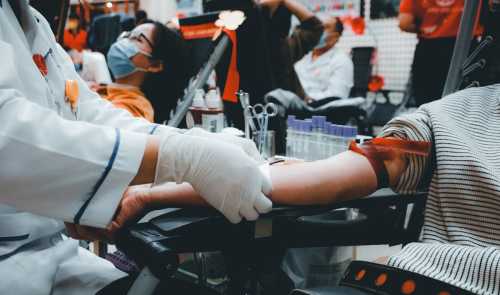
The patient in Toronto, whose identity is protected for privacy, was battling both HIV and a severe form of blood cancer called leukemia. To treat the leukemia, his doctors at the University Health Network knew he needed a bone marrow transplant, which is a procedure that completely wipes out the patient's old, diseased immune system and replaces it with a new one derived from a donor's stem cells. But the Canadian researchers had a brilliant, highly strategic plan. They did not just look for any donor who was a genetic match; they actively searched the global registry for an extremely rare individual who possessed a specific genetic mutation known as the CCR5 delta 32 mutation.
People with this rare mutation are born with a defect in their "front doors." The CCR5 receptor on their immune cells is malformed and essentially deleted. To the HIV virus, these cells are invisible; the virus tries to attach to the door, but there is no handle to grab, so it slides right off and cannot get inside. When the Toronto medical team successfully transplanted these specially selected stem cells into the patient, the new cells traveled to his bone marrow and began producing a brand new army of immune cells. Every single one of these new cells lacked the CCR5 receptor. As the new, HIV-proof immune system grew and multiplied, it flushed out the old, vulnerable cells. The HIV, trapped in its reservoirs, woke up only to find that every single door in the castle had been bricked up. Starving and unable to infect any new cells, the virus was completely eradicated from his body.
A Quick Glossary for Our Young Readers
- HIV:This stands for Human Immunodeficiency Virus. It is a very sneaky germ that attacks the body's security guards, making it hard for the body to fight off other sicknesses.
- Stem Cell:This is a magical, blank-slate cell in your body. It is like a piece of clay that can be molded into any shape, turning into whatever part of the body needs fixing.
- Transplant:This is when doctors take healthy cells from one person and put them inside another person to replace the broken or sick cells. It is like swapping out the old, broken engine in a car for a brand new one.
- Mutation:This is a tiny, natural change in a person's DNA, which is the instruction manual for their body. In this story, the mutation acted like a secret code that locked the doors against the virus.
- Immune System:This is your body's personal army. It is made up of special cells and organs that work together day and night to fight off germs, viruses, and keep you from getting sick.
The Global Impact of the Canadian Breakthrough
While this stem cell procedure is currently too complex, expensive, and risky to be used as a standard treatment for everyone living with HIV, its scientific value is immeasurable. The Toronto case provides absolute, undeniable proof of concept that a sterilizing cure for HIV is biologically possible. It shifts the global research focus toward gene-editing technologies like CRISPR. Scientists are now racing to figure out how to artificially recreate that rare CCR5 mutation inside a patient's own stem cells in a lab, meaning they would not even need a donor. They could take the patient's own cells, edit their genetic doors to be virus-proof, and give them back their own, invincible immune system.
The achievement by the University Health Network and Unity Health stands as a shining testament to the power of the Canadian medical research ecosystem. It highlights the importance of global donor registries, advanced genomic sequencing, and the fearless collaboration between clinicians and laboratory scientists. For the man in Toronto, it means a life completely free from the shadow of a virus that has defined a global health crisis for forty years. For the rest of the world, it is a beacon of hope, a promise that the most stubborn, elusive diseases can be conquered if we are brave enough, smart enough, and dedicated enough to keep searching for the cure. The castle has been saved, and the blueprint for saving millions more is now in the hands of science.
Official Source Alternative: Due to strict patient privacy laws and the highly sensitive nature of HIV research, official social media posts detailing individual patient outcomes are not publicly shared. For verified, scientific information on this groundbreaking procedure, please refer to the official research publications and news releases from the University Health Network (UHN) and Unity Health Toronto.

Comments (0)
No comments yet. Be the first to share your thoughts!
Want to join the discussion?
Please log in to post a comment.
Login NoworCreate an Account