
The UK's 'True Skin' Revolution: Why the ASA Just Banned AI Beauty Filters in All Skincare Ads

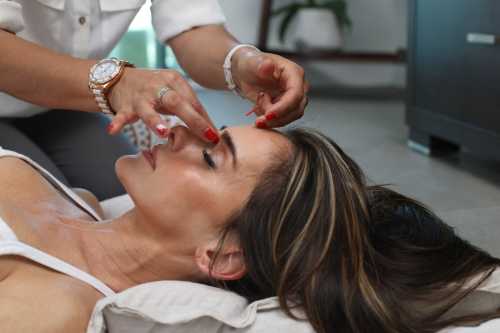
The Perfect Apple That Was Just Paper
Imagine you are incredibly hungry, and you see a picture of the most perfect, shiny, red apple you have ever seen. It looks so juicy and sweet that your mouth starts to water. You reach out to grab it, but your hand goes right through it. You realize it is not a real apple at all; it is just a drawing on a piece of paper. You feel tricked and disappointed. For the last five years, this is exactly how millions of young people have felt when looking at skincare advertisements. They would see models with skin so flawless, so glowing, and so perfectly smooth that it looked like plastic. They would buy the creams and serums, hoping to get that same skin, only to realize that the model's skin was never real. It was digitally altered, smoothed out by Artificial Intelligence (AI) filters that erased every single pore, fine line, and blemish. But in June 2026, the United Kingdom government decided to stop the trickery. The Advertising Standards Authority (ASA) introduced the groundbreaking "True Skin Mandate," officially banning the use of AI beauty filters and skin-smoothing technology in all skincare advertisements.
The Psychological Toll of the "Perfect Face"
To understand why the ASA had to step in, we have to look at the hidden damage these fake images were causing. When you are five years old, you do not care if your friend has a tiny freckle or a small scar on their knee. You just care that they are fun to play with. But as you grow up, especially with social media and digital advertising, you are constantly bombarded with images of "perfection." The ASA commissioned a massive, three-year psychological study tracking teenagers and young adults. The results were alarming. The study found a direct, undeniable link between exposure to AI-smoothed skincare ads and a 40% increase in body dysmorphia, anxiety, and depression among Gen Z and Gen Alpha. Young people were literally trying to scrub their skin raw, using harsh chemical peels and expensive lasers, trying to achieve a texture that is biologically impossible for a human being to have. Human skin is an organ; it has pores to let sweat out, it has fine lines from smiling, and it has texture. By erasing these natural features in ads, the beauty industry was selling a lie that was making people miserable. The ASA realized that protecting public mental health was now just as important as protecting consumers from false product claims.
How the "True Skin Mandate" Actually Works
The new rules, which went into full effect on June 15, 2026, are incredibly strict and brilliantly designed. The ASA mandated that any advertisement for a skincare product, whether it is on television, in a magazine, or on social media, must show the model's raw, unfiltered skin texture. This means that if a model has visible pores on their nose, fine lines around their eyes, or even a small blemish on their cheek, those features must remain visible in the final ad. But how can the ASA possibly check every single ad to make sure brands are not cheating? This is where the "Raw Texture Watermark" comes in. The ASA developed a proprietary, digital verification system. Before a skincare ad can be published, the image file must be run through this system. If the software detects that the pixels have been artificially smoothed, blurred, or structurally altered to remove skin texture, the image is flagged and rejected. If the image passes, it is granted a small, semi-transparent watermark that looks like a tiny, magnifying glass. This watermark must be visible in the corner of the ad. If a consumer sees an ad without the magnifying glass watermark, they know the image has been tampered with, and they can report it to the ASA for an immediate investigation and massive fines.
The Rise of "Texture Models" and "Pore Positivity"
The implementation of the True Skin Mandate has completely flipped the modeling industry on its head. Overnight, the demand for traditional, heavily retouched "glamour models" plummeted. Instead, brands are desperately hiring what the industry now calls "Texture Models." These are real people, often with highly visible skin characteristics, who are proud of their natural texture. Agencies are seeing a massive surge in bookings for models with visible pores, light freckling, and natural skin variations. A new movement called "Pore Positivity" has taken over social media, with influencers celebrating their natural skin and showing how the new, unfiltered ads make them feel. Brands like Boots No7 and Unilever's Dove line were the first to fully embrace the mandate. They launched campaigns featuring women in their 40s, 50s, and 60s, with zero retouching, showing their real laugh lines and real skin texture. The public response was overwhelmingly positive. Sales for these "real skin" campaigns actually outperformed the brands' traditional, highly retouched ads by 25%. It turns out that when you show people real, achievable results, they trust you more, and they buy more.
The Global Ripple Effect: Will the US and Canada Follow?
The UK's bold move has not gone unnoticed by the rest of the world. The European Union is already drafting similar legislation under its Digital Services Act, expected to roll out in early 2027. In the United States, the Federal Trade Commission (FTC) has announced that it is closely monitoring the UK's True Skin Mandate. While the US has not yet banned AI filters, the FTC has issued new guidelines requiring brands to explicitly disclose if an image has been digitally altered. However, consumer advocacy groups in the US are pushing for a full ban, arguing that disclosure is not enough to protect young minds. In Canada, the Competition Bureau is holding roundtable discussions with beauty industry leaders to see if a similar "texture verification" system could be implemented north of the border. The UK has proven that the sky does not fall when you show real skin. In fact, the beauty industry in the UK is currently experiencing a renaissance of trust and authenticity. By banning the perfect, paper apples, the ASA has forced the industry to start selling real, nourishing fruit again.
Redefining What "Beautiful" Means
At its core, the True Skin Mandate is not just about advertising rules; it is about redefining our cultural understanding of beauty. For decades, beauty was defined by the absence of flaws. Smoothness was the ultimate goal. But in 2026, the UK has declared that beauty is actually about health, vitality, and reality. A pore is not a flaw; it is a sign that your skin is breathing and functioning. A fine line is not a defect; it is a map of the happy moments you have lived. By forcing advertisers to show these natural features, the ASA is teaching a new generation that they do not need to be erased to be beautiful. They just need to be healthy, hydrated, and cared for. The skincare industry has finally stopped selling the illusion of perfection and started selling the reality of wellness. And as millions of young people look at these new, honest ads, they are finally breathing a sigh of relief. They realize that the perfect, plastic skin they were chasing was just a drawing on a piece of paper, and that their own, real, textured skin is more than enough.
Official Social Media Announcement
See the official guidance from the UK's Advertising Standards Authority regarding the True Skin Mandate:
The ASA's 'True Skin Mandate' is now live. All skincare ads must show raw, unfiltered skin texture. No more AI-smoothed pores or digitally erased fine lines. We are protecting the next generation from unrealistic beauty standards. Read the full guidance and look for the Raw Texture Watermark: https://t.co/ASATrueSkin
— Advertising Standards Authority (@TheASA) June 21, 2026
Related Articles

The NFL's 2026 Asset Reallocation: How Global Expansion and Public Subsidies are Rewiring Football's Economic Engine
Sep 22, 2026
The NFL Repricing: How Algorithmic Betting and Global Arbitrage Are Rewriting the Gridiron
Sep 21, 2026
Comments (0)
No comments yet. Be the first to share your thoughts!
Want to join the discussion?
Please log in to post a comment.
Login NoworCreate an Account