
The Utility Grid Illusion: A Structural Realignment in the Streaming Economy

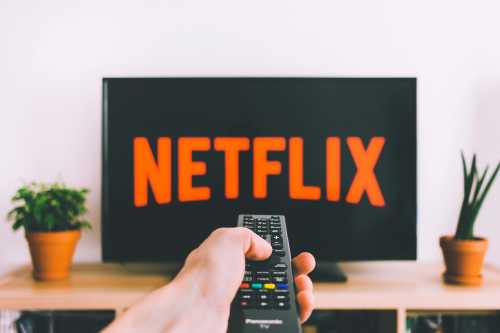
Managing a modern streaming portfolio is akin to navigating a fragmented municipal utility grid: the infrastructure is sprawling, the maintenance costs are hidden in complex tiered pricing, and the end user is increasingly penalized for simply trying to keep the lights on.
The Convergence of Systemic Pressures
The global streaming ecosystem has simultaneously pivoted toward enforced profitability through aggressive ad-supported tier adoption, stringent password-sharing crackdowns, and the aggressive consolidation of fragmented live sports rights into mega-bundles. This structural realignment marks the definitive end of the subscriber-growth-at-all-costs era, replacing it with a ruthless focus on average revenue per user (ARPU) expansion and operational efficiency.
The ARPU Mirage and the Ad-Supported Paradigm
Mainstream financial coverage routinely celebrates milestones such as Netflix targeting $3 billion in ad revenue for 2026 and Disney achieving streaming profitability [[1]]. However, this aggregate optimism masks a severe degradation in long-term content investment. Industry analysis indicates that the introduction of ad-supported tiers increased average revenue per user (ARPU) by 15-25% across major platforms [[8]]. The unseen implication is that platforms are substituting genuine subscriber growth with monetization extraction from existing user bases. By relying on ad-tier conversions rather than expanding the total addressable market, streamers are effectively capping their own top-line growth potential, creating a fragile ecosystem dependent on perpetual ad-rate inflation rather than organic audience expansion.
The Fragmentation Tax on Live Sports Consumption
Simultaneously, the migration of live sports streaming rights to over-the-top (OTT) platforms is fundamentally altering the viewer experience. Networks are paying massive premiums, such as $200 million per year, to secure exclusive digital sports rights [[24]]. The unseen implication is a compounding fragmentation tax levied on consumers. As niche sports and major leagues splinter across disparate, exclusive platforms, fans are forced to subscribe to multiple services just to follow a single season. This dynamic actively recreates the bloated, inconvenient cable bundles that the streaming revolution originally promised to destroy, ultimately driving casual viewers back to pirated streams or out of the market entirely.
The Efficiency Imperative: Nuancing the Password Crackdown
Critics frequently frame the industry-wide password-sharing crackdowns as pure corporate greed designed to extract maximum rent from loyal consumers. However, this perspective overlooks the baseline economic reality of the subscription model. Unmonetized shared accounts represent a massive, structural leakage in platform revenue. Industry data confirms that the streaming password-sharing crackdown became a major turning point in the subscription economy because it directly impacts churn and monetization [[9]]. From a corporate governance standpoint, enforcing household limits is not an arbitrary penalty; it is a necessary correction to align actual viewership with financial reporting, ensuring the business model remains mathematically viable in a high-interest-rate environment.
The FAST Channel Saturation and Measurement Void
As subscription video on demand (SVOD) platforms tighten their belts, capital has flooded into Free Ad-Supported Streaming TV (FAST) channels. While this sector is expanding rapidly, it is approaching a critical saturation point. Market analysis notes that FAST channels typically feature a lower advertising load, but significant challenges remain as demand catches up with supply and measurement improves [[34]]. The unseen implication is an impending valuation correction for FAST aggregators. Without standardized, third-party audience measurement akin to legacy Nielsen ratings, advertisers are growing skeptical of inflated viewership claims. This measurement void will soon force a consolidation phase, where only platforms with verifiable, premium content libraries will survive the impending CPM compression.
The Bundling Necessity: A Consumer Utility Defense
Conversely, some antitrust advocates argue that the emergence of mega-bundles, such as Comcast’s StreamSaver combining Peacock, Netflix, and Apple TV+, represents a dangerous step backward toward anti-competitive consolidation [[19]]. Yet, this viewpoint ignores the severe discovery fatigue experienced by modern consumers. Navigating dozens of siloed applications to find content is highly frictional. Bundled aggregation solves this utility problem by providing a streamlined, unified interface that mimics the convenience of legacy cable without the long-term hardware lock-in or predatory early-termination fees. In this context, bundling is not a monopolistic trap, but a pragmatic market response to user experience degradation.
Echoes of the 1984 Cable Consolidation
To understand the trajectory of this market correction, one must examine the Cable Communications Policy Act of 1984. That legislation dismantled local franchise monopolies, promising increased efficiency and diverse, localized programming. Instead, it triggered massive Multiple System Operator (MSO) consolidation, homogenizing content and prioritizing syndicated, low-risk programming over independent voices. The current consolidation of streaming bundles and live sports rights is following an identical trajectory. Without proactive regulatory oversight, the streaming landscape will devolve into a sterile, algorithmically optimized monoculture, where only the most heavily capitalized entities can afford to participate.
Strategic Imperatives for Market Participants
Local businesses and independent media buyers must immediately pivot their advertising spend away from saturated, premium SVOD programmatic buys. Instead, they should capitalize on targeted FAST channel placements where cost-per-thousand (CPM) rates remain undervalued and audience intent is high. For citizens and consumers, the imperative is rigorous digital hygiene: audit streaming subscriptions quarterly, treat them as a discretionary financial portfolio, and actively leverage bundled offerings to minimize the fragmentation tax while canceling redundant, underutilized services.
The Six-Month Horizon: Regulatory Friction and Market Contraction
Within the next six months, the streaming ecosystem will face a definitive regulatory correction. Expect the Federal Trade Commission to initiate formal inquiries into the exclusivity clauses of emerging streaming bundles, citing concerns over anti-competitive market foreclosure. Concurrently, the FAST channel market will witness its first major wave of distressed asset acquisitions, as platforms with unverified audience metrics fail to secure renewed advertising commitments. The overarching landscape will pivot from a growth-at-all-costs digital gold rush to a highly regulated, trust-based ecosystem where diversified revenue models and transparent measurement dictate market survival.
Related Articles

How a Major Streaming Platform’s AI-Powered Content Factory Is Reshaping the Future of TV
Sep 11, 2026
The Streaming Oligopoly: How Sports Rights and Mega-Mergers Are Rewiring Digital Media
Sep 08, 2026
Comments (0)
No comments yet. Be the first to share your thoughts!
Want to join the discussion?
Please log in to post a comment.
Login NoworCreate an Account