
The Velvet Rope of the Analog Age: Why Nantucket's 'No Influencers' Sign Signals the End of Spatial Arbitrage

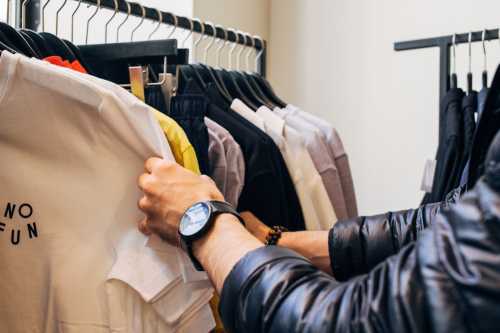
Consider the jazz clubs of 1920s Harlem that quietly blackballed syndicated gossip columnists to preserve the room's authentic rhythm, only to have the exclusivity become the very rumor that drew the crowds. Today’s equivalent is not a velvet rope but a piece of taped cardboard, and the bouncer is a small-business owner tired of ring lights reflecting off his inventory. The core event is this: The Four Winds Craft Guild, a Nantucket antique shop owned by John Sylvia, hung a "No Influencers" sign that rapidly metastasized into a global viral flashpoint regarding digital etiquette, spatial rights, and the gig economy [[33], [35]]. Although Sylvia maintained the placard was "more of a joke" aimed at deterring disruptive content setups, high-profile creators with millions of followers have condemned the policy, with some explicitly labeling the ban "sexist" due to the industry's female-heavy demographics [[38], [39]].
The Collapse of Attention Arbitrage
The creator economy is undergoing a violent valuation correction. As Jason Davis noted in Forbes regarding the 2026 era of consolidation, "The early creator economy ran on attention arbitrage," but that arbitrage has collapsed under the weight of market saturation www.forbes.com . A recent Wall Street Journal report indicates that around 45 percent of influencer marketing spend is now migrating away from traditional reach-based models toward micro-communities and owned channels www.instagram.com . The Nantucket sign is the physical manifestation of a macroeconomic reality: brick-and-mortar businesses no longer view digital footprint as a zero-cost subsidy; they view it as a spatial tax that disrupts their actual paying customers.The Tragedy of the Experiential Commons
Retail spaces and hospitality venues are realizing that "free exposure" has a carrying capacity. When TikTok's official 2026 Trend Report notes that "as the gloss of influencer culture wears off, consumers are choosing substance over stunt products," it signals a consumer demand for unmediated physical experiences ads.tiktok.com . Small businesses are beginning to treat unauthorized content creation not as an advertising vector, but as an environmental pollutant that degrades the premium, slow-commerce atmosphere they are trying to sell to their high-net-worth clientele.The Gig-Economy Flashpoint
The backlash to the sign exposes a critical labor vulnerability. With creator economy data for 2026 showing that just 3 percent of YouTubers earn 90 percent of the platform's money, the vast majority of "influencers" are effectively gig workers operating on razor-thin margins www.digitalapplied.com . Banning them from public spaces disproportionately penalizes the 97 percent who rely on localized content to secure the micro-sponsorships required to survive, turning a critique of mega-star entitlement into a barrier against working-class digital labor.Counter-Argument: The Sexism and Gatekeeping Nuance
Critics of the "No Influencers" movement correctly identify its latent misogynistic undertones. Because the influencer and lifestyle-creator demographic skews heavily female, blanket bans on "influencers" often function as a socially acceptable form of gatekeeping, targeting women's digital entrepreneurship while ignoring the equally disruptive behavior of male-dominated domains like sports podcasting or tech reviewers. To equate a woman vlogging a boutique shopping trip with a hostile nuisance is often to penalize her for occupying public space in a manner traditionally reserved for male-dominated commerce.Counter-Argument: The 'Free Marketing' Fallacy
Conversely, the creator lobby’s insistence that their presence provides "free marketing" ignores the fundamental mathematics of modern retail conversion. The customer who is filming a reel is statistically highly unlikely to be the customer purchasing the $400 antique lamp; they are extracting spatial value to monetize it on a third-party platform (the algorithm), leaving the physical merchant with the cost of the disrupted ambiance and zero share of the ad revenue. The sign is not merely misanthropy; it is a rational attempt to close a negative externality loop.The Precedent of the Michelin Luddites
The closest historical analogue is the aggressive "No Photography" and "No Cellphone" mandates enforced by high-end Michelin-starred restaurants in the early 2010s, most notably at David Chang’s Momofuku Ko or Grant Achatz’s Next. Initially mocked by the tech press as Luddite elitism, these policies eventually became the industry standard for luxury hospitality. The lesson for 2026 is that exclusivity in the experience economy requires the active curation of the environment, and once a digital behavior degrades the core product (the meal, or in this case, the quiet antiquing experience), the premium market will always price the behavior out of the room.Operationalizing the Analog Boundary
For local businesses, the mandate is clear: Do not rely on hostile, viral cardboard signs. Draft explicit, legally sound "Digital Etiquette" policies that prohibit tripods, ring lights, and commercial filming without a location agreement, protecting your space without inviting a PR crisis. For citizens and creators, the pivot must be from "capture-first" content to "consent-based" storytelling. The creators who will survive the 2026 algorithm shift are those who partner with local businesses via paid location micro-licensing, turning themselves from spatial parasites into contracted marketing assets.February 2027: The Rise of Digital Sanctuaries
By February 2027, expect the physical environment to bifurcate into "Creator-Friendly" zones and "Digital Sanctuaries." High-end retail and hospitality will increasingly charge a premium for "analog-only" environments, utilizing RF-blocking wallpaper and strict no-device policies as luxury amenities. Meanwhile, the creator economy will consolidate further, with the middle-class creator forced to abandon public-space vlogging in favor of controlled studio environments and licensed private properties, effectively ending the era of the "run-and-gun" street-level lifestyle influencer.Related Articles

The Nostalgia Arbitrage: Inside Pop Culture's Pivot to Dividend-Yielding IP
Aug 12, 2026
The Cognitive Margin Call: How Psychiatric Audits and Neural Load Management are Rewiring Sports Economics
Aug 11, 2026
Comments (0)
No comments yet. Be the first to share your thoughts!
Want to join the discussion?
Please log in to post a comment.
Login NoworCreate an Account