
UK Parliament Passes Landmark AI Regulation and Automation Tax Bill Following Nationwide Protests

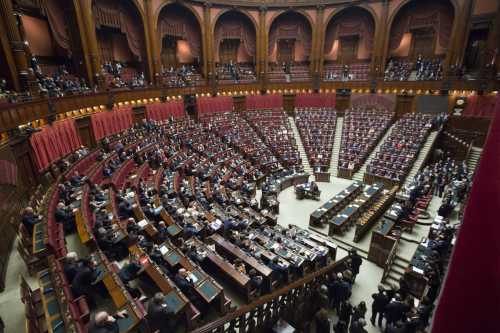
London, United Kingdom — In a historic and deeply controversial legislative session that stretched deep into the night, the UK Parliament has officially passed the groundbreaking Artificial Intelligence and Automation Dividend Act. The sweeping legislation, which introduces the world's first comprehensive tax on corporate automation and establishes strict safety protocols for advanced machine learning models, was approved by a narrow margin of just twelve votes. The passage of the bill comes immediately on the heels of the largest coordinated protests seen in London since the anti-poll tax riots of the 1990s, with an estimated half a million demonstrators gathering in Trafalgar Square and along the Mall to demand urgent government intervention against the rapid displacement of workers by artificial intelligence systems.
Legislative Milestone: The new Automation Dividend Tax will levy a 4.5% charge on the gross cost savings achieved by UK companies replacing human workers with AI-driven systems, with revenues directly funding a universal retraining program.
The core of the new legislation, often referred to by economists as the "Robot Tax," mandates that any corporation operating within the United Kingdom that reduces its human headcount by more than five percent through the deployment of automated systems or generative AI must pay a substantial levy into the National Retraining and Transition Fund. This fund is specifically earmarked to provide extended unemployment benefits, comprehensive retraining programs, and universal basic income pilot projects for workers in the creative, administrative, and logistical sectors who have been rendered obsolete by rapid technological advancement. Additionally, the bill establishes the UK AI Safety Authority, a powerful new regulatory body with the legal mandate to audit, pause, or outright ban the deployment of any artificial intelligence model deemed to pose a risk to national security, public health, or democratic integrity.
The political atmosphere surrounding the vote was incredibly tense, reflecting the deep divisions within British society over the pace of technological change. Prime Minister Rishi Sunak, in a final push to secure the votes of skeptical backbenchers, argued passionately that the bill strikes a necessary balance between fostering innovation and protecting the social contract. He stated that the UK must lead the world not just in developing artificial intelligence, but in ensuring that the immense wealth generated by automation is shared equitably across society, rather than being concentrated in the hands of a few Silicon Valley and Shoreditch tech elites. However, the Opposition Labour Party, while supporting the intent of the retraining fund, heavily criticized the implementation timeline as too slow and the tax thresholds as too generous to multinational technology conglomerates.
Historic moment in the House of Commons. The AI Regulation and Automation Tax bill has just passed its third reading. The UK is now the first major economy to implement a comprehensive automation dividend tax. Full debate replay available on Parliament TV. https://twitter.com/UKParliament
— UK Parliament (@UKParliament) June 19, 2026
Outside the walls of Westminster, the mood was far less celebratory and significantly more volatile. The Metropolitan Police reported that the protests, initially organized by a coalition of trade unions including the TUC, the Writers Guild, and the Transport Salaried Staffs Association, turned confrontational shortly after the final vote was announced. Riot police were deployed to secure the perimeter of Downing Street as small groups of agitators attempted to breach the barricades, throwing projectiles and setting off flares. The police federation has strongly condemned the government's handling of the situation, citing severe strain on resources, while union leaders have maintained that the peaceful nature of the main demonstration was undermined by a minority of provocateurs seeking to incite violence.
Industry Impact: Major UK banks and insurance firms have already announced a temporary freeze on all domestic AI recruitment and deployment projects, pending further clarity from the newly formed UK AI Safety Authority on how the automation tax will be calculated and enforced.
The immediate economic impact of the legislation is already being felt across the City of London. Several major multinational technology firms, including deep learning startups and established financial services giants, have issued statements warning that the new tax burden could make the UK an uncompetitive location for AI research and development. Some industry leaders have threatened to relocate their European headquarters to more regulation-friendly jurisdictions in Asia or the Middle East. However, proponents of the bill argue that the UK's stable legal system, world-class university network, and the newly established retraining fund will ultimately create a more sustainable and socially cohesive tech ecosystem that other nations will be forced to emulate.
The global implications of the UK's bold legislative experiment are profound. The European Union, which has been struggling to finalize its own AI Act for over three years, is closely monitoring the implementation of the UK's automation tax. Brussels officials have indicated that the UK's move could serve as a catalyst for similar measures across the bloc, potentially leading to a fragmented global regulatory landscape that could hinder the development of cross-border artificial intelligence systems. Meanwhile, the United States Congress has largely dismissed the UK approach as "socialist overreach," with American lawmakers doubling down on a laissez-faire strategy intended to maintain US dominance in the global AI arms race.
As the dust settles on a tumultuous week in British politics, the focus now shifts to the practical implementation of the new laws. The UK AI Safety Authority is expected to publish its first set of binding guidelines by the end of the third quarter, and the Treasury is already facing immense pressure to detail the exact mechanics of the automation dividend tax collection. For the hundreds of thousands of workers who took to the streets this week, the passage of the bill is seen not as an end, but as a crucial first step in a long, arduous battle to secure their economic future in an increasingly automated world. The coming months will test the resilience of the UK's tech sector and the resolve of its government to navigate the uncharted waters of the post-AI economy.
Related Articles

The Algorithmic Squeeze: How AI Antitrust Crackdowns and Monetary Tightening Are Rewiring Global Markets
Sep 16, 2026
The Labor Circuit Breaker: How the 2026 Athlete Employment Ruling Shatters the Sports Media Ecosystem
Sep 15, 2026
Comments (0)
No comments yet. Be the first to share your thoughts!
Want to join the discussion?
Please log in to post a comment.
Login NoworCreate an Account