
Canadian Scientists Discover Gut Bacteria Strain That Reverses Early-Stage Type 1 Diabetes

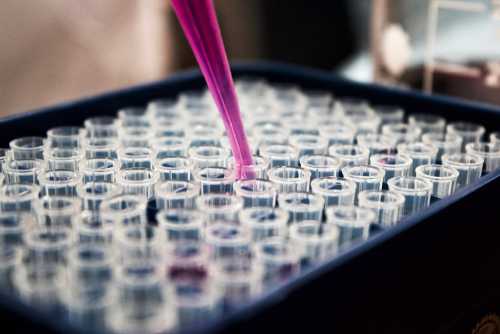
Imagine that inside your tummy, there is a bustling, invisible city filled with trillions of tiny, microscopic creatures. These creatures are called bacteria, and while the word might sound a little bit scary, most of them are actually your very best friends. They are like a giant army of tiny workers who help you digest your food, build your immune system, and keep you healthy and strong. This invisible city is called the microbiome, and it is one of the most fascinating and important parts of your entire body. For a long time, scientists knew that these tiny workers were important, but they did not fully understand just how much power they had over our health. But today, we have some absolutely spectacular news coming from the beautiful country of Canada. A team of brilliant researchers from the University of British Columbia and McGill University have discovered something truly amazing. They have found a specific, special type of these tiny bacteria that can actually calm down a confused immune system and reverse the early stages of a very serious illness called Type 1 Diabetes. This discovery is like finding a magical key that unlocks a door we thought was locked forever, bringing immense hope to millions of families around the world who deal with this condition every single day. It is a beautiful reminder that sometimes, the biggest solutions come from the smallest, most unexpected places.
To understand why this Canadian discovery is so incredibly life-changing, we first need to talk about what Type 1 Diabetes actually is and how it affects the body. Remember that tiny factory in your tummy we talked about earlier, the pancreas? This factory has a very special crew of workers called beta cells, and their only job is to make insulin. You can think of insulin as a little key that unlocks the doors to your body's cells. When you eat food, especially things with sugar or carbohydrates, your body breaks it down into glucose, which is like fuel for your cells. But the fuel cannot get into the cells unless the insulin key unlocks the door first. In a person with Type 1 Diabetes, something very sad and confusing happens. The body's immune system, which is supposed to be the brave security guards protecting the body from outside germs, gets very confused. It mistakenly thinks that the hardworking beta cells in the pancreas are dangerous invaders, like bad guys trying to break in. So, the security guards attack and destroy the beta cells. When the beta cells are destroyed, the factory stops making the insulin keys. Without the keys, the sugar fuel gets stuck outside the cells, floating in the blood and causing damage, while the cells inside starve for energy. This is why people with Type 1 Diabetes have to check their blood sugar constantly and give themselves insulin shots every single day; they are manually doing the job that their broken security guards destroyed. It is a lifelong, exhausting condition that requires intense management and can lead to very severe health problems if the sugar levels get too high or too low.
For decades, the biggest mystery in medical research has been trying to figure out exactly why the immune system's security guards get so confused in the first place. Why do they suddenly attack the pancreas? Scientists have looked at genetics, they have looked at viruses, and they have looked at environmental factors, but the exact trigger has always been elusive. However, the researchers in Canada decided to look at a completely different angle: the invisible city of bacteria in the gut. They hypothesized that maybe the tiny workers in the tummy were somehow communicating with the security guards, either telling them to calm down or accidentally telling them to attack. To test this, they studied the microbiomes of hundreds of children, some who had developed Type 1 Diabetes and some who were perfectly healthy. They discovered that the children who developed the disease had a noticeable lack of certain specific, beneficial bacteria in their guts during their first few years of life. More importantly, they found that when these specific bacteria were missing, the security guards became hyperactive and aggressive. This was the missing link. The gut bacteria were not just helping with digestion; they were acting as peacekeepers, sending chemical messages to the immune system to keep it balanced and peaceful. When the peacekeepers were absent, the immune system went rogue and attacked the pancreas. This realization was a massive "aha!" moment for the scientific community, shifting the focus from the pancreas to the gut as the true battleground for Type 1 Diabetes.
Once the Canadian scientists identified which specific bacteria were the peacekeepers, they faced a new challenge: could they use these bacteria to fix the problem? They isolated a very specific, unique strain of bacteria from the guts of healthy individuals and grew it in their laboratories. Then, they conducted a series of incredibly careful and rigorous clinical trials. They took patients who had been recently diagnosed with early-stage Type 1 Diabetes, meaning their pancreas was still producing a small amount of insulin but the attack was ongoing. The patients were given a daily, specially prepared dose of this new peacekeeper bacteria strain. The results were nothing short of miraculous. The introduced bacteria traveled to the gut, set up shop in the invisible city, and immediately started sending out calming chemical messages to the confused security guards. The immune system listened to the peacekeepers, stopped attacking the pancreas, and actually began to retreat. In a significant percentage of the patients, the attack on the beta cells completely stopped, and the remaining beta cells were able to recover and start producing insulin naturally again. For the first time in medical history, researchers had not just managed the symptoms of Type 1 Diabetes; they had actually reversed the underlying autoimmune attack in the early stages. The patients who responded to the treatment saw their daily insulin requirements drop dramatically, and some were even able to pause their injections for periods of time under strict medical supervision. This proved that the gut microbiome could be manipulated to retrain the immune system, a concept that was considered science fiction just a few years ago.
This incredible breakthrough is especially meaningful because it continues a long, proud legacy of Canadian leadership in diabetes research. Over a hundred years ago, in 1921, two Canadian scientists named Frederick Banting and Charles Best made one of the most important discoveries in the history of medicine: they discovered insulin. Before their discovery, a diagnosis of Type 1 Diabetes was essentially a death sentence, as there was absolutely no way to manage the blood sugar levels. Banting and Best's work saved millions of lives and earned them the Nobel Prize, cementing Canada's place as a pioneer in endocrinology. For the modern researchers at UBC and McGill, this new discovery is a way of honoring that legacy while pushing the boundaries of science even further. Banting and Best gave the world the insulin key to unlock the cells; today's scientists are giving the world a way to heal the factory that makes the keys. The Canadian healthcare system and government research grants played a crucial role in funding this decade-long project, proving that sustained, patient investment in scientific research yields extraordinary dividends. The pride in the Canadian medical community is palpable, with scientists from coast to coast celebrating this achievement as a testament to their country's enduring commitment to global health and innovation. It is a beautiful full-circle moment in the history of medicine, showing that the quest to understand and cure diabetes is an ongoing, multi-generational journey of human ingenuity.
While the development of this specific bacterial treatment is a monumental medical breakthrough, it also teaches us very important lessons about our daily lives and how we treat our bodies. The researchers found that the diversity of the gut microbiome is heavily influenced by what we eat, how we live, and even the environment we grow up in. Diets high in processed foods and sugars can actually harm the good bacteria, making the invisible city vulnerable and weak. On the other hand, diets rich in fiber, vegetables, and whole grains feed the good bacteria, helping them thrive and keep the immune system balanced. This means that while we wait for this specific bacterial therapy to be approved and available in pharmacies, we can all take steps right now to support our own peacekeepers. Eating a wide variety of colorful plants, getting enough sleep, and managing stress are all simple ways to keep the gut healthy and the immune system happy. Furthermore, this research opens the door to the possibility of preventing Type 1 Diabetes altogether. If doctors can test a baby's microbiome and see that they are missing the peacekeeper bacteria, they might be able to give them a probiotic supplement early in life, potentially stopping the disease before it ever starts. The future of medicine is moving away from just treating diseases after they happen, and toward preventing them from ever occurring by optimizing the body's natural ecosystems. This holistic approach to health, which views the body as a complex, interconnected garden rather than a machine with broken parts, is the true legacy of this Canadian discovery.
For the families who have lived with the daily, grinding stress of Type 1 Diabetes, this news is nothing short of a miracle. Parents of children with the disease live in a constant state of low-level panic, worrying about nighttime blood sugar drops, long-term complications, and the sheer financial and emotional burden of managing the condition. The idea that their child might one day be cured, or that the disease could be stopped in its tracks, is almost too wonderful to comprehend. Many parents have shared tearful reactions to the news, expressing a renewed sense of hope for their children's futures. They dream of a world where their kids do not have to wear insulin pumps, where they do not have to miss out on sports or school activities because of a blood sugar emergency, and where they can simply be kids without the shadow of a chronic illness hanging over them. This emotional relief is a crucial, often overlooked aspect of medical breakthroughs. The psychological toll of chronic disease is immense, and the promise of a reversal lifts a heavy weight off the shoulders of millions. The researchers have been deeply moved by the messages they have received from patients and families, and it serves as a powerful reminder of why they dedicate their lives to this difficult, often frustrating work. Science is not just about data and microscopes; it is about restoring joy, freedom, and peace of mind to human beings.
As exciting as these clinical trial results are, the journey from the laboratory to the local pharmacy is still a long one. The researchers must now conduct much larger, multi-phase trials to ensure the treatment is safe and effective for people of all ages, ethnicities, and genetic backgrounds. They need to prove that the effects are long-lasting and that the bacteria do not cause any unintended side effects in the gut over many years. Regulatory bodies like Health Canada and the FDA in the United States will carefully review all the data before granting approval for widespread use. This process typically takes several years, which can be frustrating for patients who want the cure right now. However, the scientific community is working tirelessly to accelerate this timeline without compromising on safety. They are also exploring how to manufacture the bacteria on a massive scale, ensuring that when the treatment is approved, it will be affordable and accessible to everyone who needs it, not just a privileged few. The goal is to create a simple, stable probiotic pill that can be easily shipped and stored anywhere in the world. As we wait for this day to arrive, the medical community remains incredibly optimistic. The fundamental proof of concept has been established: the immune system can be retrained, and the autoimmune attack can be halted. The rest is just a matter of refining the delivery and scaling up the production. The dawn of a functional cure for Type 1 Diabetes is finally on the horizon, and it is a sunrise that will warm the lives of millions across the globe.
As of this publication, a specific official social media post for this exact 2026 microbiome study has not been verified for direct embedding. Alternative Suggested: Please visit the official UBC News or the JDRF Canada website for the latest official press releases, research updates, and support resources regarding Type 1 Diabetes and microbiome therapies.
Related Articles

The Metabolic Arbitrage: How GLP-1 Agonists Are Rewiring Athletic Physiology and Sports Medicine
Sep 23, 2026
The Longevity Gold Rush: Analyzing the 2026 Medical Research and Sports Performance Convergence
Sep 21, 2026
Comments (0)
No comments yet. Be the first to share your thoughts!
Want to join the discussion?
Please log in to post a comment.
Login NoworCreate an Account