
Digital Time Capsules: Londoners Leave Invisible 'Memory Lanes' Across the City Using Augmented Reality

Drawing with Invisible Ink in the Real World
Imagine you have a piece of invisible ink. When you write a secret message on a piece of paper with this ink, no one can see it. The paper looks completely blank. But, if you hold a special, magical magnifying glass over the paper, the secret message suddenly glows in bright, beautiful colors, and you can read it. Now, imagine that instead of writing on a piece of paper, you are writing your secret message on the actual streets of your city. You write it on the side of a brick wall, on a park bench, or on the steps of a giant, historic castle. To everyone walking by, the wall looks completely normal. But if they hold up their special magical magnifying glass—which, in this case, is their smartphone—they can see your glowing, digital message floating right there in the real world. This is the beautiful, magical reality of the new 'Memory Lanes' trend that has taken over London, in the United Kingdom. Using a technology called Augmented Reality, or AR, people are leaving digital time capsules, secret notes, and glowing holograms all over the city, creating a hidden, magical layer of memories just for their friends and family to find. Let us explore this wonderful technological adventure, explaining how the magic works and why it is bringing people closer together, told with the wonder and precision of a top-tier journalist.
To understand how this magical invisible ink works, you first need to understand what Augmented Reality actually is. The word 'augmented' means to add something to make it better or bigger. 'Reality' is the real world around you, the trees, the buildings, the cars, and the people. So, Augmented Reality is simply the real world, but with extra, digital things added on top of it. Think of it like looking through a window. You see the garden outside, the grass, and the sky. But imagine you take some colorful stickers and stick them on the glass. Now, when you look through the window, you see the real garden, but you also see the digital stickers. The trick with AR on a phone is that the phone uses its camera to look at the real world, and then the computer inside the phone draws the digital stickers right onto the screen, perfectly lined up with the real objects. It makes the digital things look like they are actually sitting right there in the real world.
For a long time, AR was mostly used for silly games, like pretending to catch imaginary monsters in the park, or for trying on digital glasses in a store. But in 2026, the technology became incredibly smart and precise. The phones now know exactly where they are in the world, down to the exact inch. They can recognize the shape of a specific bench or the exact corner of a building. This allowed the creators of the popular app Snapchat, along with a new British tech company, to launch a feature called 'Memory Lanes' specifically for the city of London. This feature allows users to drop a digital 'pin' in a specific physical location. They can attach a photo, a voice recording, a video, or a 3D hologram to that pin. But here is the most important rule: the pin is invisible unless you are standing in the exact spot where it was dropped.
Imagine you are having a wonderful picnic with your best friend in Hyde Park. You are sitting on a specific green bench under a giant oak tree. You are laughing, eating sandwiches, and having the best time. Before you leave, you open your phone, take a picture of your friend smiling, record a voice note saying, 'This was the best day ever,' and you drop a Memory Lane pin right on that bench. You set it so that only your best friend can see it. Months later, your friend walks past that exact bench in Hyde Park. Their phone buzzes in their pocket. They pull it out, open the app, and suddenly, right there on the bench, they see your photo glowing in the air, and they hear your voice note playing. It is like finding a buried treasure chest, but the treasure is a beautiful memory.
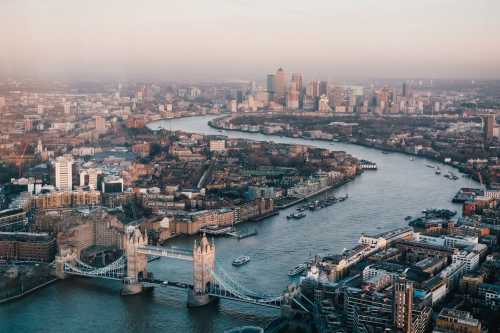
The people of London have absolutely fallen in love with this trend. The city of London is incredibly old and full of history. Every cobblestone, every brick, and every statue has a story. By adding Memory Lanes, the citizens are writing a new, digital history on top of the old one. Teenagers are leaving glowing, digital graffiti for their crushes to find outside their schools. History buffs are dropping pins at the Tower of London, attaching 3D holograms of what the castle looked like five hundred years ago, so when you point your phone at the wall, you see the ancient stones restored to their former glory. It is like having a time machine right in your pocket.
But the most touching use of Memory Lanes is for remembering people who have passed away. Families are using the feature to leave digital memorials for their loved ones. A woman might drop a pin at the exact spot in a quiet garden where her late husband proposed to her forty years ago. When she visits that spot, she can open her phone and see a glowing, digital bouquet of his favorite flowers, and hear a recording of his laugh. It does not bring him back, but it makes the physical space feel filled with his love. It turns a regular park bench or a quiet street corner into a sacred, personal sanctuary. Psychologists say that this helps people process their grief in a very healthy way, because it connects their emotional memories to a physical place they can actually visit and touch.
Of course, when you allow people to draw invisible pictures all over a real city, you have to make sure they do not draw anything bad. The companies that run these apps have created very strict rules, like the rules of a very serious game. You cannot leave a Memory Lane pin inside a private home, because that would be like sneaking into someone's bedroom and leaving a sticker on their mirror. You cannot leave pins that block traffic or are placed in dangerous areas. The apps use artificial intelligence to scan the photos and videos to make sure they are kind, safe, and appropriate before they let them glow in the real world. If someone tries to leave a mean message, the computer blocks it, just like a teacher stopping a bully on the playground.
The local government in London, the Mayor's office, has been surprisingly supportive of the trend. They see it as a way to encourage people to go outside and explore the city. Instead of sitting on the couch looking at a screen, people are walking miles and miles through the streets, looking for hidden digital treasures. They are visiting small cafes, quiet parks, and historic monuments they might have ignored before. The local shops are loving it too. A small bakery might drop a Memory Lane pin outside their door that says, 'Find this pin to get a free digital coupon for a warm croissant!' It is bringing the digital world and the physical, real-world economy together in a beautiful, helpful dance.
As the summer of 2026 warms up, the streets of London are literally glowing with invisible love, history, and fun. If you walk down the Thames with your phone held up, you might see hundreds of glowing digital boats sailing on the river, left by artists. You might see floating messages of encouragement left by strangers for anyone who is having a bad day. The city has become a giant, collaborative canvas. It is no longer just made of brick and concrete; it is made of pixels and memories. It is a shared, digital tapestry woven by millions of hands.
This trend is now spreading to other cities. Paris is lighting up with digital art, New York is filling with hidden musical notes, and Tokyo is glowing with animated characters. But it started here, in the historic, rainy, beautiful streets of London, where the past and the future are holding hands. The Guardian technology section has been documenting these hidden digital trails, showing how a simple app feature has transformed the way we interact with our physical world. It proves that technology does not have to pull us apart and lock us in our rooms; if used with love and creativity, it can make the real world feel more magical, more connected, and more alive than ever before.
London is glowing! ????????✨ The new #MemoryLanes AR feature is letting you leave digital time capsules all over the city. Grab your phone and go find the invisible magic hidden in your neighborhood! ???????? #MemoryLanes#AR
— Snapchat UK (@SnapchatUK) June 29, 2026
So, the next time you walk past an old brick wall, a quiet park bench, or a historic statue, hold up your phone and look closely. You might just find a glowing, digital message left by a friend, a stranger, or even your own past self. Remember that the world is full of invisible ink, waiting for you to write your own beautiful, magical story, one memory at a time.


Comments (0)
No comments yet. Be the first to share your thoughts!
Want to join the discussion?
Please log in to post a comment.
Login NoworCreate an Account