
Luxury's Reckoning: How Premium Brands Lost Their Soul in the Price Game

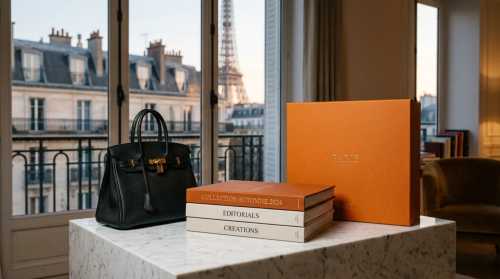
Like a restaurant that keeps raising menu prices while shrinking portions and replacing experienced chefs with microwaves, the luxury industry has spent three years testing how much customers will tolerate before they walk away. The answer, now visible in September 2026 earnings and market data, reveals a sector that confused pricing power with brand equity—and is paying the price.
The Great Unraveling
Luxury prices escalated 30% to 60% across categories since 2021, while service standards declined as brands prioritized expansion over experience jingdaily.com . The aspirational middle-class customer who once saved for one or two specific items annually has been priced out entirely, creating a vacuum that local brands in China and elsewhere are rushing to fill advertisingweek.com .
The numbers tell a brutal story. Kering reported a 9% revenue decline, with Gucci falling dramatically in brand value advertisingweek.com www.instagram.com . LVMH disclosed treasury share transactions in early September while facing another half year with little growth www.tipranks.com asymventures.substack.com . Even Hermès, the sector's standout performer with €8.2 billion in first-half revenue and an exceptional 41% recurring operating margin, missed expectations with only 6% growth in Q1 2026 www.instagram.com finance.yahoo.com .
The Creative Director Carousel: Innovation or Panic?
Nine of the 15 largest luxury brands appointed new creative directors in the 12 months ending September 2025, with four also installing new CEOs www.businessoffashion.com . Matthieu Blazy debuted at Chanel in late 2024, showing his Spring/Summer 2026 collection to critical acclaim en.wikipedia.org graziamagazine.com . Dario Vitale was named creative director of Emporio Armani on September 16, 2026, joining a season of unprecedented leadership turnover numero.com .
Industry Data: "Between 2023 and 2025, around 80 percent of luxury market growth stemmed from price increases rather than volume gains—a lever that cannot be relied on indefinitely" www.businessoffashion.com . This statistic exposes the fundamental weakness in luxury's recent strategy: growth without customer acquisition is merely inflation by another name.
This rapid turnover suggests boards treating creative leadership like tech CEOs—expecting immediate transformation without allowing time for organic evolution. The strategy assumes that new talent automatically translates to renewed desirability, ignoring whether the underlying problem might be operational rather than creative.
The Value Perception Crisis
Sixty-three percent of customers now define luxury by craftsmanship and longevity rather than brand name alone www.instagram.com . This represents a fundamental shift from logo-driven purchases to value-driven decisions, forcing brands to justify premium pricing through tangible quality rather than marketing narratives.
Expert Analysis: Claudia D'Arpizio, Global Head of Fashion and Luxury at Bain & Company, notes that "the personal luxury goods market is expected to return to moderate expansion, with the most plausible scenario pointing to growth of 3% to 5% in 2026" www.linkedin.com . While technically positive, this represents a dramatic slowdown from the double-digit growth rates of 2021-2022.
Counterpoint: Defenders of luxury pricing argue that exclusivity requires price barriers, and that true luxury was never meant for mass consumption. From this perspective, the exodus of aspirational customers represents a return to authenticity rather than a crisis. Brands like Hermès, which maintained pricing discipline while investing in craftsmanship and store experience, continue to outperform—suggesting the problem isn't high prices but unjustified ones.
The Resale Revolution Undermining Primary Markets
The luxury resale market reached $41.61 billion in 2026 and is projected to hit $60.11 billion by 2030, growing at a 9.6% CAGR www.thebusinessresearchcompany.com www.researchandmarkets.com . The secondhand fashion and luxury market is forecast to grow two to three times faster than the firsthand market through 2027 www.mckinsey.com .
This shift fundamentally alters luxury's economics. When customers can access last season's collections at 30-40% discounts through verified resale platforms, the urgency to buy at full price diminishes. Gen Z and Millennials cite exclusivity as a driver for increased luxury spend 11 percentage points above average, yet they're simultaneously driving resale growth—creating a paradox where brands must maintain desirability while accepting reduced control over distribution www.businessoffashion.com .
Historical Parallels: The 2008 Luxury Crash
The current moment echoes 2008-2009, when luxury brands faced similar questions about value and relevance. Houses that survived shared three characteristics: they maintained creative conviction while adapting business models, invested in digital infrastructure before it became mandatory, and cultivated direct consumer relationships that reduced wholesale dependency.
Today's challenge proves more complex. Beyond economic volatility, brands navigate ESG mandates, Gen Z's rejection of traditional luxury signifiers, and the disruptive potential of AI in design and production. The houses thriving in this environment treat customer experience not as an obligation but as a strategic differentiator within omnichannel ecosystems.
Alternative Perspective: Critics of the "crisis" narrative argue that luxury has always been cyclical, and that current pressures represent healthy market correction rather than existential threat. The contraction from 400 million luxury shoppers in 2022 to roughly 340 million in 2026 may actually strengthen brands by refocusing them on high-value customers rather than volume metrics blog.shayaikehassan.com . From this view, the industry isn't dying—it's maturing.
Strategic Imperatives for Market Participants
For Brand Executives: Audit the gap between price and feeling immediately. Walk into your own stores, book your own hotel, experience your brand as a client under financial pressure jingdaily.com . If the experience doesn't justify the price, no amount of marketing will close that gap.
For Investors: Monitor which creative director appointments produce measurable commercial results within two seasons. The rapid leadership churn creates both risk and opportunity—houses that stabilize creative vision while modernizing operations will outperform those treating creativity as a revolving door.
For Retail Partners: Prepare for accelerated shift toward direct-to-consumer strategies and pre-collections that reduce fashion week dependency. Traditional seasonal buying cycles are fragmenting, requiring more agile inventory management.
The Six-Month Forecast: Polarization and Consolidation
By March 2027, expect significant polarization between brands that successfully recalibrated their value propositions and those still relying on price increases. Global luxury spending is expected to reach €1,440 to €1,470 billion in 2026, with growth rates between zero and 2% in the base scenario www.bain.com .
Brands that invested in supply chain transparency, craftsmanship preservation, and authentic storytelling will gain market share from competitors who treated luxury as a pricing exercise rather than a meaning-making enterprise. The resale market will continue growing at 10% annually compared to approximately 3.5% for traditional retail, forcing primary market players to either launch their own pre-loved programs or watch value leak to third-party platforms cf-assets-tup.thredup.com www.sourceready.com .
The luxury industry's reckoning isn't about whether brands can charge premium prices—it's about whether they can demonstrate premium value. Those that remember luxury was never about exclusivity alone, but about creating encounters that justify their existence through beauty, meaning, and exceptional execution, will emerge stronger. The rest will become case studies in how not to manage a brand.
Related Articles

The Luxury Repricing: How Regulatory Pincers and Resale Dynamics Are Rewriting the Heritage Playbook
Sep 21, 2026
The Architectural Fracture: How Capital, AI, and Regulation Are Rewiring Luxury Brands
Sep 18, 2026
Comments (0)
No comments yet. Be the first to share your thoughts!
Want to join the discussion?
Please log in to post a comment.
Login NoworCreate an Account