
NIH-Funded Breakthrough Shrinks CRISPR for Precision In-Vivo Delivery

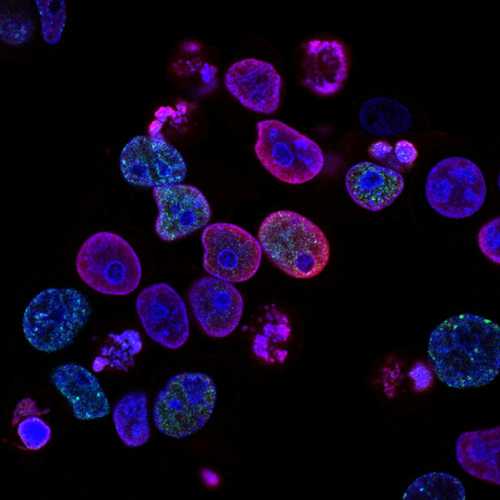
In a landmark development for genomic medicine, a National Institutes of Health (NIH)-funded research consortium has unearthed an enhanced CRISPR gene-editing system capable of targeted delivery inside the human body.
Researchers identified a naturally occurring bacterial nuclease enzyme, designated Al3Cas12f, which is sufficiently compact to be encapsulated within adeno-associated virus (AAV) vectors — a premier targeted delivery mechanism for gene therapies. Subsequent engineering yielded a variant that dramatically augmented gene-editing performance in human cells.
The Structural Advantage: Utilizing cryo-electron microscopy and machine learning algorithms, scientists at the University of Texas at Austin elucidated the enzyme’s architecture. They discovered it forms a more stable and tightly integrated complex than comparable enzymes, enabling superior functionality within the intracellular environment.
“The expanded interface means the enzyme is much more stable,” articulated Dr. David Taylor, corresponding author and molecular bioscience professor at UT Austin. “Compared to the others we evaluated, Al3Cas12f essentially arrives preassembled and operational shortly after its constituent parts are synthesized.”
Among the myriad variants synthesized, the Al3Cas12f RKK configuration distinguished itself. When instructions for RKK were introduced into human cell lines derived from a leukemia patient, the system successfully targeted genes associated with malignancies, atherosclerosis, and amyotrophic lateral sclerosis (ALS) .
Clinical Efficacy: The engineered RKK variant elevated editing efficiency from a baseline of under 10% to an extraordinary 80% across multiple genomic targets, marking a pivotal leap toward viable in vivo therapeutic applications.
This paradigm shift circumvents the historical limitation of ex vivo cell modification, paving the way for direct, site-specific genetic interventions within the human body.
Official Social Media Announcement
The National Institutes of Health officially announced this breakthrough on their verified social media channels, highlighting the potential for expanded treatment options for cancer, ALS, and other genetic conditions.
NIH-funded breakthrough shrinks CRISPR for precision delivery in the body. Smaller gene-editing system could expand treatment options for cancer, ALS and other diseases. https://www.nih.gov/news-events/news-releases/nih-funded-breakthrough-shrinks-crispr-precision-delivery-body
— NIH (@NIH) April 13, 2026
Related Articles
The Molecular Telemetry Paradigm: How Liquid Biopsies and Metabolic Agonists Are Restructuring Clinical Infrastructure
Oct 12, 2026
The Precision Paradigm: An Impact Analysis of 2026's Medical Research Realignment
Oct 11, 2026
Comments (0)
No comments yet. Be the first to share your thoughts!
Want to join the discussion?
Please log in to post a comment.
Login NoworCreate an Account