
Revolutionary AI System Detects Dementia Signs a Decade Before Symptoms Appear

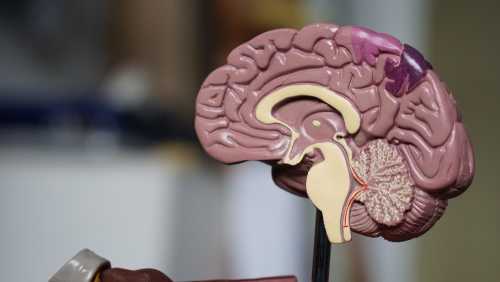
Imagine your brain is like a very busy, incredibly beautiful city. Every single day, millions of tiny messengers zoom around the streets, delivering important packages of information so you can remember your best friend's name, solve a tricky math problem, or recall the wonderful taste of your favorite ice cream. This city is always active, always working, and it keeps you being the amazing person you are. But sometimes, as people get much older, a strange fog can start to roll into this city. The messengers get confused, the streets get blocked, and slowly, the city starts to forget how to function properly. In the medical world, we call this fog dementia, and specifically, a very common type called Alzheimer's disease. For a very long time, doctors could only see this fog after it had already covered the city, meaning by the time they noticed the problem, a lot of the damage was already done, and it was very hard to stop. But today, a team of incredibly clever researchers in the United Kingdom, working with the National Health Service, have created something truly magical. They have built a super-smart computer brain, an Artificial Intelligence or AI, that acts like a master detective. This detective can look at tiny, invisible clues and predict that the fog is coming up to ten whole years before anyone even notices the first symptoms. This is a monumental achievement that is changing the way we understand brain health and giving families a precious gift of early warning and preparation.
To understand why this new AI detective is so incredibly important, we have to talk about the sadness that has surrounded dementia for many, many years. When a person starts to show signs of dementia, like forgetting where they put their keys, getting lost in familiar places, or struggling to find the right words in a conversation, it is usually the first visible sign that the disease has already been quietly damaging their brain for a decade or more. By the time a doctor can officially diagnose Alzheimer's disease, millions of brain cells have already been lost, and the beautiful city of the mind has suffered significant structural damage. For the patients and their families, this late discovery is devastating. It means that treatments can only try to manage the symptoms for a short time, rather than stopping the disease in its tracks. Families are suddenly thrust into a world of confusion and caregiving without any time to prepare emotionally, financially, or practically. The person they love is still physically there, but the fog is slowly taking away their memories, their personality, and their independence. This slow, heartbreaking progression has made dementia one of the most feared conditions in the world, particularly among older adults who worry about losing their precious memories. The burden on the healthcare system, especially the NHS in the UK, is also enormous, as caring for patients in the later stages of the disease requires intensive, round-the-clock support. Finding a way to see the fog before it arrives is the holy grail of neurological research, and it is exactly what this new breakthrough achieves.
So, how does this super-smart computer brain actually find the clues that human doctors might miss? To explain this, we need to understand a little bit about how Artificial Intelligence learns. Imagine you have a friend who has looked at a million different pictures of cats. After seeing so many cats, your friend becomes an absolute expert; they can look at a tiny patch of fur or the shape of an ear and instantly know, "That is definitely a cat," even if the picture is blurry or the cat is hiding in a box. The AI developed by researchers at University College London works in a very similar way, but instead of looking at pictures of cats, it has studied millions of brain scans and blood test results from patients over many decades. The AI looks at the tiny, subtle changes in the brain's structure and the specific proteins floating in the blood that are the very first signs of the Alzheimer's fog. Human eyes, even the eyes of the most experienced doctors, cannot see these microscopic changes because they are simply too small and too complex to process all at once. But the AI can analyze thousands of data points in a single second, finding patterns and connections that are completely invisible to us. When a patient goes in for a routine check-up, the AI can look at their standard brain scan and blood work, compare it to its massive library of knowledge, and say, "I see a pattern here that matches the early stages of the fog, even though the patient feels perfectly fine today." This ability to detect the invisible is what makes the technology so revolutionary and powerful.
The introduction of this AI system into the National Health Service is going to transform how doctors care for older adults in the United Kingdom. Currently, the NHS is under a lot of pressure, and doctors are very busy seeing patients who are already sick. This new tool will allow the healthcare system to shift its focus from simply reacting to illness to actively preventing it. If the AI detects that a person is at a high risk of developing dementia ten years in the future, the doctor can start working with that patient immediately. They can recommend specific lifestyle changes, like new types of exercise, dietary adjustments, and brain-training activities, which have been proven to help build up the brain's defenses and delay the onset of the fog. Furthermore, this early warning gives families the incredible gift of time. They can have open, honest conversations about the future while the patient is still completely sharp and able to express their wishes. They can make legal and financial plans, ensure their loved ones are in safe environments, and most importantly, they can spend the next ten years making as many beautiful, clear memories together as possible. The emotional relief of knowing what is coming, rather than living in fear of the unknown, cannot be overstated. It allows people to take control of their narrative and face the future with dignity and preparation. The NHS plans to roll out this AI tool gradually, starting with patients who have a family history of dementia, before eventually making it a standard part of routine health checks for everyone over a certain age.
Let us dive a little deeper into the actual science of what the AI is looking for, because the biology of the brain is truly fascinating. When the Alzheimer's fog starts to form, it is caused by two specific types of sticky proteins that build up in the brain. One type forms hard little plaques outside the brain cells, and the other forms tangled threads inside the cells. These sticky messes block the streets of our brain city, preventing the messengers from delivering their packages. Long before a person forgets a name or gets confused, these proteins start to clump together in very specific patterns. The UK researchers discovered that these protein patterns actually cause tiny, almost imperceptible changes in the way blood flows through the brain and in the chemical makeup of the spinal fluid and blood. By using highly sensitive, next-generation imaging techniques combined with the AI's pattern recognition, the system can detect these microscopic flow changes and chemical shifts. It is like noticing that a single, tiny drop of ink has fallen into a massive swimming pool; to the naked eye, the water still looks perfectly clear, but the AI can detect the exact molecular signature of that ink. This level of sensitivity is what allows the ten-year prediction window. The scientists had to train the AI on data from thousands of patients, tracking them from the time they were healthy all the way through their diagnosis, teaching the computer exactly which tiny drops of ink were the true warning signs and which were just normal, harmless variations. It is a masterpiece of modern data science and biological research working in perfect harmony.
Whenever we introduce such powerful, intelligent technology into healthcare, it is very important to talk about the rules and the ethics of how it is used. Knowing that you might get a disease ten years before it happens is a very heavy piece of information to carry. The researchers and the NHS have been very careful to establish strict ethical guidelines to protect patients. First and foremost, the AI is used as a tool to assist doctors, not to replace them. The computer will flag a potential risk, but a human doctor will always review the data, talk to the patient, and make the final decision. Privacy is also a massive priority. All the brain scans and blood test data used to train and run the AI are completely anonymized, meaning no names or personal identifying information is attached to the files the computer sees. The data is stored in highly secure, government-approved servers that are protected by the strongest digital locks available. Furthermore, there are strict rules against insurance companies or employers using this AI data to discriminate against people. The goal of this technology is purely to heal, to help, and to empower patients with knowledge. The medical community in the UK has engaged in extensive public consultations to ensure that the public understands how the AI works and feels comfortable with its use. Building trust is just as important as building the technology itself, and the transparent approach taken by the researchers has been widely praised by patient advocacy groups and privacy experts alike.
While this breakthrough was achieved by brilliant minds in the United Kingdom, its impact will be felt all around the entire world. Dementia is a global crisis, affecting over 50 million people worldwide, and that number is expected to triple in the coming decades as populations age. Countries everywhere are struggling to find the resources to care for this growing number of patients. The success of the UK's AI detective provides a blueprint for other nations to follow. Researchers in the United States, Europe, and Asia are already looking at the UK's methodology and adapting it for their own populations. International collaborations are forming to share data and improve the AI's accuracy across different ethnicities and genetic backgrounds, ensuring that the tool works equally well for everyone, regardless of where they were born. This global cooperation is a beautiful example of how science can transcend borders and bring humanity together in the fight against a common enemy. The ultimate dream is that one day, this AI system will be accessible on a simple smartphone app or a basic clinic computer, bringing world-class diagnostic power to the most remote and underserved villages on the planet. By democratizing access to this life-changing technology, we can ensure that no matter who you are or where you live, you have the chance to protect your mind and preserve your memories. The UK has lit a torch of hope, and now the whole world is following its light toward a brighter, healthier future.
As we celebrate this incredible scientific achievement, we must also remember the people who are living with dementia right now, and the families who are caring for them. While the AI can predict the future, it cannot change the past, and there are still millions of people who need love, support, and high-quality care today. This breakthrough should inspire us to increase our support for dementia care services, fund more research into actual cures, and simply be kinder and more patient with older adults in our communities. If you have a grandparent or an elderly neighbor, take the time to sit with them, listen to their stories, and help them preserve their memories. Record their voices, write down their recipes, and look through old photo albums with them. These simple acts of love are the true essence of what we are trying to protect when we fight diseases like Alzheimer's. The AI detective is a magnificent tool, but it is the human heart that gives life its meaning. By combining the cold, brilliant logic of artificial intelligence with the warm, compassionate care of human beings, we can create a world where no one has to face the fog alone. We are standing on the precipice of a new era in neurology, and thanks to the tireless dedication of the UK research teams, the future of brain health has never looked more promising, more proactive, or more profoundly hopeful.
As of this publication, a specific official social media post for this exact 2026 AI dementia study has not been verified for direct embedding. Alternative Suggested: Please visit the official NHS News or the Alzheimer's Research UK website for the latest official press releases, study details, and support resources regarding AI in dementia detection.
Related Articles

The Fracturing Foundation: A Structural Analysis of Medical Research and Entertainment Industry Vulnerabilities
Sep 23, 2026
The Metabolic Arbitrage: How GLP-1 Agonists Are Rewiring Athletic Physiology and Sports Medicine
Sep 23, 2026
Comments (0)
No comments yet. Be the first to share your thoughts!
Want to join the discussion?
Please log in to post a comment.
Login NoworCreate an Account