
The Algorithmic Tollbooth: How Consolidation and Fragmentation Are Rewiring Streaming Economics

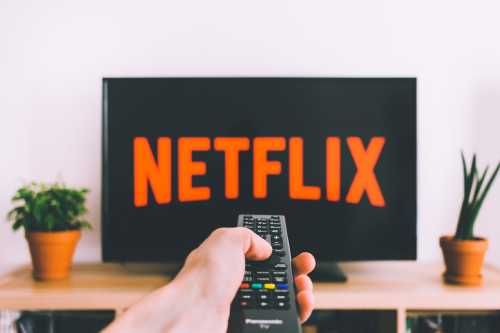
Just as a toll road operator eventually realizes that maximizing revenue requires not merely building more lanes, but charging every single vehicle a premium for the privilege of existing on the asphalt, the modern streaming industry has abandoned its "growth at all costs" subscriber acquisition model in favor of aggressive, multi-tiered monetization. The era of subsidized, frictionless digital entertainment is over, replaced by a hyper-financialized ecosystem where attention is meticulously metered and monetized at every touchpoint.
The Convergence of Systemic Shocks
The streaming landscape has fundamentally fractured, marked by unprecedented consolidation efforts like the proposed Netflix-Warner Bros. acquisition and the aggressive global rollout of password-sharing crackdowns by major platforms like Disney en.wikipedia.org . Concurrently, the industry is pivoting toward absolute profitability through ad-supported tiers, the explosive proliferation of Free Ad-supported Streaming TV (FAST) channels, and the exclusive migration of premium live sports rights to direct-to-consumer platforms www.instagram.com . This triad of developments signals that streamers are no longer competing purely for market share, but are actively engineering a monopolistic environment to extract maximum yield from a captive audience.
The FAST Channel Illusion: Ad Revenue vs. Viewer Reality
Mainstream coverage frequently celebrates the explosion of FAST channels as a democratization of free content and a lifeline for cord-cutters. However, this narrative obscures the severe yield compression facing creators and niche networks. Nielsen/Gracenote reported nearly 1,850 active FAST channels globally in Q3 2025, representing a 76% increase since 2023 www.linkedin.com . While US Connected TV (CTV) ad spending is projected to hit $37.95 billion in 2026, this massive inventory glut is driving down CPMs (cost per mille) www.instagram.com . Platforms are increasingly forced to rely on low-quality, programmatic ads that degrade the user experience, transforming what was marketed as "free television" into a cluttered, low-margin digital wasteland that struggles to sustain high-production-value content.
Counter-Argument: The Accessibility Imperative
Proponents of the FAST model argue that these channels provide essential, low-barrier access to entertainment for lower-income demographics, effectively serving as a digital public utility in an era of rampant subscription fatigue. While this accessibility is undeniably valid, the argument is fundamentally one-sided. It overlooks the fact that these "free" platforms are increasingly functioning as sophisticated data-harvesting operations. By trading content for granular behavioral profiling, these services sell consumer data to third-party brokers, effectively making the viewer the product rather than the beneficiary, which introduces significant privacy vulnerabilities that traditional broadcast television never possessed.
The Sports Rights Arms Race and the Death of the Bundle
A second critical development is the migration of live sports to exclusive streaming silos, fundamentally altering the valuation of media rights. With entities like DAZN securing exclusive direct-to-consumer streaming rights to major regional networks like MSG and YES, the traditional cable bundle that historically subsidized these rights is being systematically dismantled www.mediaplaynews.com . This follows the high-profile bankruptcies of legacy RSN holders, which left a vacuum that streaming giants are eagerly filling. This forces consumers to subscribe to multiple, fragmented services just to follow their local teams, transforming live sports from a communal cultural event into a luxury, à la carte commodity that prices out working-class fans.
Echoes of the 1990s Cable Monopoly
History provides a stark corrective to the current enthusiasm for direct-to-consumer sports streaming. This fragmentation mirrors the early 1990s cable television boom, where regional sports networks were initially hailed as a revolutionary way to deliver hyper-local content. However, as consolidation occurred, these networks leveraged their monopolistic control over local teams to impose exorbitant carriage fees on cable providers, costs that were inevitably passed down to consumers through bloated monthly bills. The lesson is unambiguous: when a single entity controls both the premier content and the exclusive distribution pipeline, competitive pricing vanishes, and consumer choice becomes a carefully managed illusion.
The Retention Mirage: Password Crackdowns and Churn Mechanics
A third largely unreported implication is the industry's relentless, almost desperate focus on streaming profitability through punitive retention tactics. Every major platform, including Disney+, Max, and Paramount+, achieved or approached streaming profitability in 2025 through successive price increases, the forced introduction of ad tiers, and aggressive crackdowns on subscriber churn ibinterviewquestions.com . By weaponizing account-sharing restrictions, platforms are attempting to artificially inflate their Average Revenue Per User (ARPU) metrics to satisfy Wall Street expectations, treating casual, shared viewership as revenue leakage rather than a valuable top-of-funnel marketing mechanism.
Counter-Argument: The Property Rights Defense
Defenders of these aggressive password-sharing crackdowns argue that ending unauthorized access is simply a matter of enforcing basic intellectual property rights and ensuring that users who consume content pay for it, thereby generating the capital required to fund higher-quality original programming. While logically sound in a vacuum, this perspective ignores the macroeconomic reality of household budget constraints. By treating shared viewership as "theft" rather than an organic discovery tool, platforms risk accelerating voluntary churn among price-sensitive households, ultimately shrinking their total addressable market and inviting regulatory scrutiny over anti-consumer practices.
Strategic Imperatives for Enterprises and Consumers
Local businesses, particularly hospitality venues like bars, restaurants, and community centers, must immediately audit their commercial streaming licenses. Consumer-grade subscriptions explicitly violate terms of service for public display, exposing establishments to severe copyright infringement penalties and back-fee liabilities. Owners should negotiate directly with emerging commercial-grade B2B streaming aggregators. For citizens, the imperative is to adopt a "subscribe and churn" methodology, rotating services monthly based on specific content releases rather than maintaining perpetual, overlapping memberships that drain household finances.
The Six-Month Horizon: Bifurcation and Regulatory Pushback
Looking ahead, the streaming landscape will undergo rapid regulatory and market correction. Within six months, anticipate the first major federal antitrust scrutiny regarding the anti-competitive nature of streaming-sports mega-mergers, potentially forcing structural divestitures or behavioral remedies. Concurrently, expect a wave of "skinny bundle" partnerships among surviving, non-integrated streamers to combat churn, as the market collectively realizes that infinite content fragmentation is financially unsustainable for both the consumer and the platform. The entities that survive will be those that balance aggressive monetization with genuine, frictionless user value.

Comments (0)
No comments yet. Be the first to share your thoughts!
Want to join the discussion?
Please log in to post a comment.
Login NoworCreate an Account