
The Architectural Fracture: How Metabolic Shifts, AI, and Regulation Are Rewiring the Beauty Economy

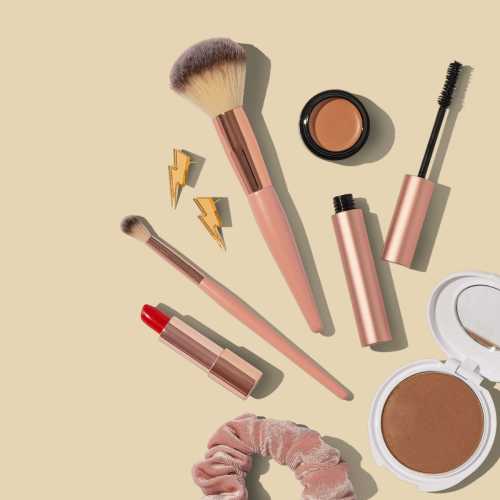
Just as a master architect does not merely drape a building in ivy to hide structural flaws, the modern beauty industry is no longer just selling topical illusions; it is engineering biological and regulatory architectures to survive a rapidly shifting consumer metabolism and a fragmented legal landscape.
The Catalyst: A Structural Realignment in Beauty Capital
The U.S. beauty industry maintained strong momentum through the first half of 2026, with prestige retail sales increasing by 7% to $17.1 billion and mass retail rising by an equal margin to $39.2 billion [[4]]. This dual-digit growth is not a simple triumph of social media marketing, but rather the result of a synchronized convergence of metabolic pharmacology, aggressive state-level ingredient legislation, and the explosive valuation of AI virtual try-on technology reshaping the digital vanity.
The Metabolic Pivot: Redefining Skincare in the Pharmacological Era
Mainstream coverage frequently frames the beauty sector's expansion as a victory for influencer-driven color cosmetics, systematically ignoring the profound structural shift driven by metabolic pharmacology. The rapid adoption of GLP-1 receptor agonists has drastically altered facial volume and skin elasticity, forcing a strategic reset across cosmetic chemistry. As industry observers note, the "GLP-1 pill era is forcing beauty to change again," with brands pivoting from superficial adornment to deep-tissue collagen and firming solutions designed specifically to address medication-induced volume loss [[22]]. The unseen implication is a silent transfer of R&D capital from makeup to clinical-grade dermatology. Beauty conglomerates are being forced to cannibalize their traditional cosmetic lines to fund the development of specialized haircare, peptide-heavy supplements, and structural skincare for a rapidly expanding, highly lucrative demographic of weight-loss patients [[23]]. This shifts the locus of power from the celebrity makeup artist to the clinical formulator, fundamentally altering the retail footprint of the prestige counter.
The Compliance Moat of State-Level Ingredient Bans
While legacy brands consolidate their market share, the migration toward "clean beauty" has triggered a profound regulatory paradox. States are increasingly legislating "clean beauty" mandates, putting cosmetics brands, manufacturers, and retailers at risk for government enforcement if they fail to comply with stringent ingredient bans and transparency requirements [[20]]. The unseen implication is a massive compliance overhead that functions as a defensive moat. Mega-conglomerates can easily absorb the legal and reformulation costs of state-by-state ingredient blacklists, weaponizing transparency mandates to stifle emerging competition. Independent formulators, lacking the bandwidth to audit global supply chains and navigate a patchwork of conflicting state laws, are disproportionately crushed by these regulatory burdens, inadvertently cementing the oligopoly of the very corporations that dominate the prestige landscape.
The Financialization of the Digital Vanity
The integration of artificial intelligence into beauty retail is frequently marketed as a mere tool for consumer convenience, but its most profound impact is the decentralization of the physical counter and the ensuing data arbitrage. The global virtual try-on AI market size is projected to reach $5.1 billion in 2026, registering a compound annual growth rate of 15.8% as it pushes toward $14.2 billion by 2033 [[34]]. However, this technological acceleration is not purely altruistic. As tech analysts point out, a new wave of AI-powered virtual try-on is reframing the technology around accuracy and scalability, but proving sustained consumer adoption remains a significant hurdle [[37]]. The unseen implication is that the digital vanity is no longer just a convenience feature; it is a sophisticated data-harvesting operation. Consumers are unwittingly trading granular biometric and facial mapping data for the illusion of personalized shade matching, creating a lucrative secondary market for tech platforms while the actual product formulation remains opaque.
The Saturation Point: Nuancing the Celebrity Brand Narrative
Proponents of the current celebrity beauty boom argue that star-driven launches are essential mechanisms for democratizing access to prestige formulations. They contend that figures with massive parasocial trust have successfully translated their audiences into accessible, high-quality product lines that resonate deeply with younger demographics [[14]]. While this argument holds merit regarding short-term brand awareness, it conveniently ignores the severe market saturation and fatigue currently plaguing the sector. Industry editors testing virtually every celebrity brand note a stark divide between genuine product innovation and mere name-licensing cash grabs [[13]]. When actors and musicians launch skincare lines without distinct clinical value propositions, they dilute the prestige market, forcing retailers to cull underperforming SKUs and ultimately harming the independent creators who lack the initial capital to secure shelf space.
The Accessibility Imperative: Why State Mandates Aren't Always Predatory
Conversely, the prevailing argument that state-level clean beauty legislation universally harms small businesses ignores the public health imperative of ingredient transparency. Historically, the cosmetics industry has operated with minimal federal oversight, allowing known endocrine disruptors and carcinogens to remain in mass-market products. The patchwork of state laws, while administratively burdensome, acts as a necessary corrective mechanism in the absence of comprehensive FDA modernization. Therefore, characterizing all regulatory intervention as inherently anti-competitive ignores the fact that baseline safety mandates are required to protect vulnerable consumers from systemic toxicity, even if the transition costs temporarily disadvantage undercapitalized startups.
Echoes of the 1990s Cosmetics Consolidation
This current disruption mirrors the late 1990s cosmetics consolidation wave, when established legacy houses feared that the rise of indie, mineral-based, and "natural" brands would destroy the mystique and profitability of their traditional chemical formulations. History demonstrates that this fear was a catalyst for market segmentation, not destruction. Visionary conglomerates adapted by acquiring the indie brands and launching their own "clean" subsidiaries, a pivot that ultimately birthed the modern, highly diversified beauty portfolio model. The lesson for today’s legacy brands is clear: resisting the metabolic shift, AI integration, and new regulatory frameworks is a futile defense of a bygone era. True longevity requires co-opting these disruptive forces before they co-opt you.
Strategic Imperatives for Market Participants
Local businesses and independent creatives must immediately pivot their value proposition. Emerging formulators should bypass traditional, cost-prohibitive retail distribution, investing instead in hyper-local, verifiable storytelling and direct-to-consumer digital channels that retain full margin control and bypass state-level retail compliance traps. For citizens and consumers, the financial and ethical imperative is to audit the brands they support, demanding proof of actual clinical efficacy for GLP-1 targeted skincare rather than accepting "firming" as a blanket marketing shield. Additionally, regional retail incubators must prioritize funding for localized supply chain transparency programs to prevent the cultural and ethical desertification of the independent beauty ecosystem.
The Six-Month Horizon
Within the next six months, expect major retail federations and state legislatures to introduce mandatory Digital Product Passport frameworks for cosmetics, forcing brands to embed scannable lifecycle and ingredient data into every package. Companies that fail to integrate this traceability will face severe tariff penalties and exclusion from major digital distribution channels. Simultaneously, the market will witness the first major wave of consolidation among boutique celebrity beauty brands, as those lacking the capital to navigate complex GLP-1 clinical validation and sustainability audits are acquired by larger conglomerates. Ultimately, the industry will begin to price in a compliance and clinical premium, meaning a brand's commercial viability will be judged as much by its regulatory resilience and metabolic efficacy as by its aesthetic packaging.
Related Articles
The Architecture of Aesthetics: How Regulatory Friction and AI Are Rewiring the Beauty Industry
Sep 18, 2026
The Efficacy Reckoning: How Clinical Validation and Regulatory Friction Are Rewiring the Beauty Industry
Sep 17, 2026
Comments (0)
No comments yet. Be the first to share your thoughts!
Want to join the discussion?
Please log in to post a comment.
Login NoworCreate an Account